Hydro Jetting in Oregon — Pipe Walls Scoured Back to Bare
A cable bores a hole through the clog. A jetter removes the reason the clog formed. If you are clearing the same line more than once a year, you have been buying the wrong service.
- 2 to 4 hours
- Statewide Oregon
- 7 days a week
Signs you may need hydro jetting
Most people arrive here describing a symptom rather than naming a service. These are the three that point this way.
The same line blocks two or three times a year
Recurrence is the evidence. A line that needs clearing on a schedule has material on the pipe wall, and only a scouring method removes it.
A commercial kitchen line slows before the grease trap is due
Fryer volume and run length set the real interval, not the service contract. A line slowing early is telling you the schedule is wrong.
Cabling works but the flow never feels full
A cable can restore drainage without restoring bore. If the fixture drains but sluggishly under real volume, the diameter is still reduced.
What hydro jetting actually is
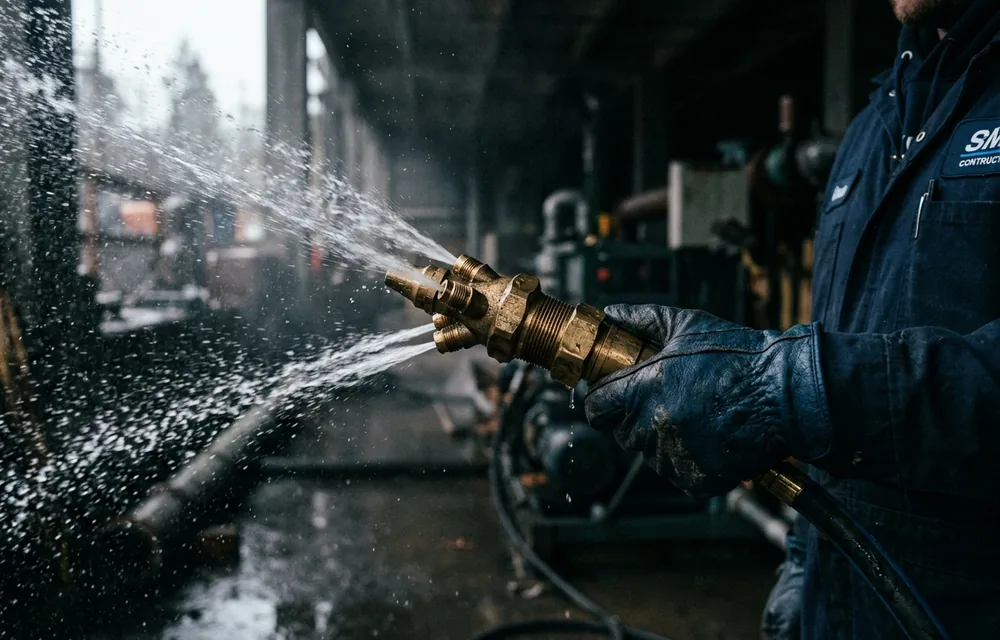
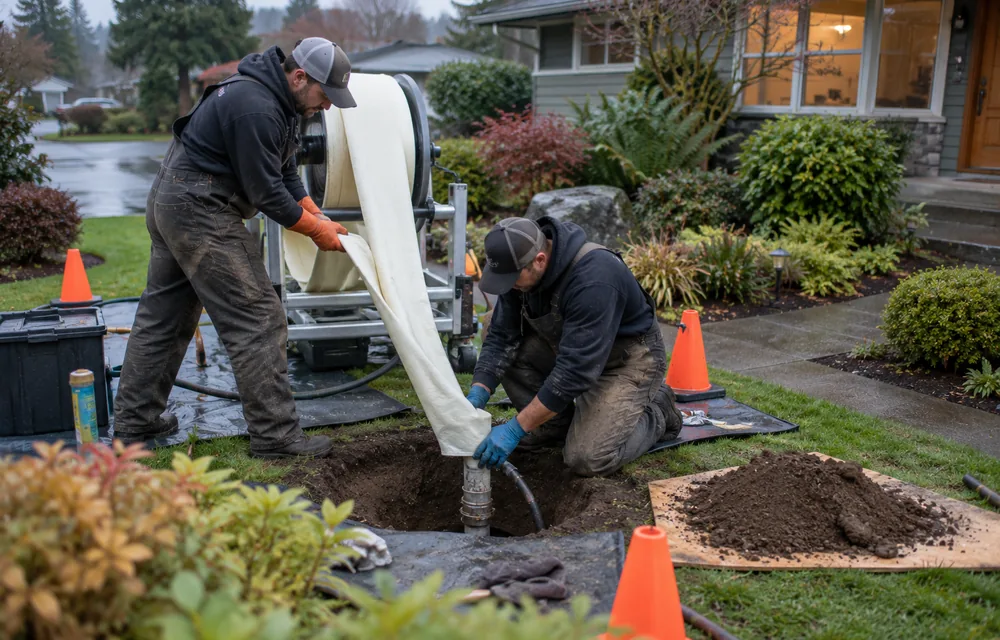
A hydro jetter pushes water through a specialised nozzle at 1,500 to 4,000 PSI. Most of the jets face backward, which does two useful things at once: the reverse thrust drags the hose up the line under its own power, and the angled streams strip the pipe wall as it travels. A forward-facing jet cuts through the obstruction itself.
The distinction that matters to you: a cable machine is a mechanical tool that removes an obstruction. A jetter is a cleaning tool that removes the accumulated layer the obstruction grew on. After a proper jetting, the camera shows original pipe material — not a narrow channel bored through a tube of grease.
This is the same method municipalities use to maintain public sewer mains. It is not an exotic upsell; it is standard practice scaled down to a residential lateral.
When jetting is the right call
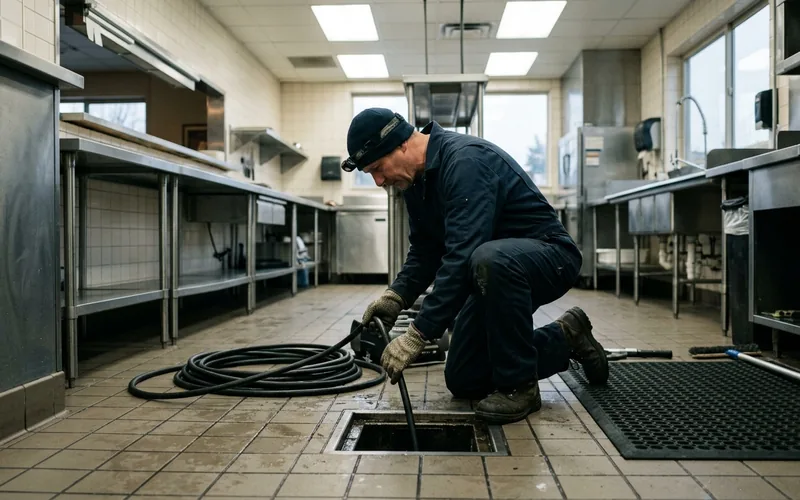
Grease-loaded kitchen and restaurant lines. The flagship use. Grease coats the full circumference of a pipe, and no cable removes a full-circumference coating. Commercial kitchens in Portland, Eugene, Bend and Salem that hold a scheduled jetting interval essentially stop having emergency backups.
Repeat clogs in the same line. Two calls in eighteen months is the signal. The line is progressively narrowing and you are paying to punch through the same restriction over and over.
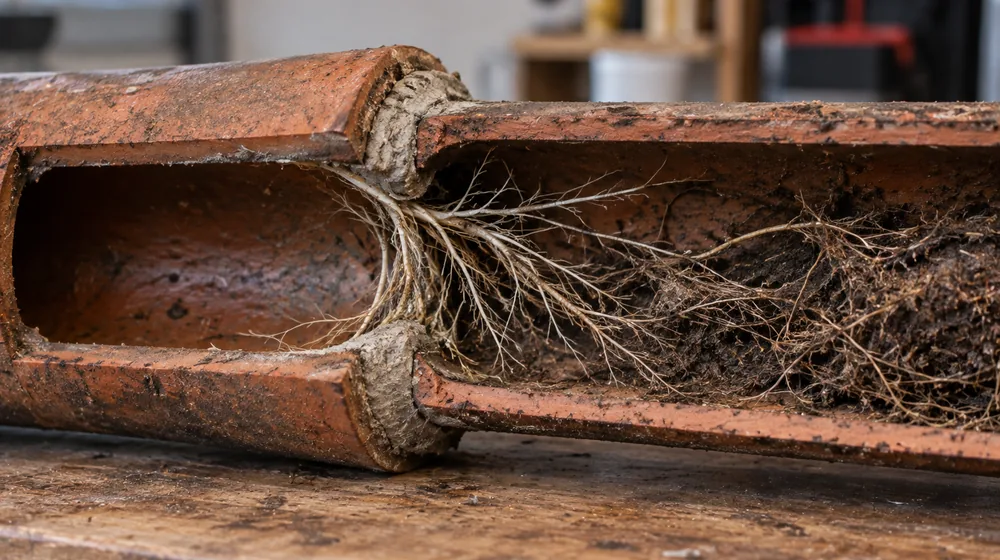
Root intrusion, combined with mechanical cutting. A jetter with a root-cutting nozzle clears fine root hair thoroughly and flushes debris out rather than leaving it to re-lodge downstream. It does not solve the reason roots got in — that is a pipe-joint problem, not a cleaning problem.
Sand, silt and mineral scale. Coastal lines carrying migrated sand, and Central Oregon lines with heavy scale, respond to jetting far better than to cabling.
Before any trenchless lining. A cured-in-place liner requires a genuinely clean host pipe to bond against. Jetting is a prerequisite there, not an add-on.
When jetting must be refused
This deserves more attention than the industry usually gives it. High-pressure water finds weakness. On a pipe that is already structurally compromised, jetting can convert a slow leak into a collapse.
A camera pass comes first, every time. Jetting should be refused outright where it finds:
- Orangeburg pipe. Tar-impregnated wood fibre, installed roughly 1945 to 1972 and extremely common in Portland-area and older valley neighbourhoods. It absorbs water, softens, and deforms with age. Jetting it is an efficient way to turn a $600 service call into a five-figure excavation.
- Badly corroded cast iron with channelling along the invert, where the bottom of the pipe has rusted thin from the inside.
- Cracked or offset clay tile where segments have already shifted out of alignment.
- Visible collapse or a severe belly. Cleaning a broken pipe does not produce a working pipe.
In each case the honest path is camera inspection and then repair or replacement. A contractor who jets without looking first is gambling with your line and charging you for the privilege.
Jetting vs. snaking, decided honestly
| Cable / snaking | Hydro jetting | |
|---|---|---|
| What it removes | A discrete obstruction | The full wall coating |
| Best for | Hair, a toy, an isolated root mass | Grease, scale, sand, repeat clogs |
| Typical cost | $149–$450 | $350–$900 |
| Interval before recurrence | 6–18 months on a coated line | 2–5 years |
| Safe on fragile pipe | Generally, with care | No — camera clearance required first |
| Adequate prep for relining | No | Yes |
Not sure which applies to your line? The free jetting vs. snaking decision tool walks through it in six questions and gives you a recommendation plus a cost delta.
What a jetting job should look like
Camera first, always
Inspection before pressurisation, with no exceptions. If the pipe cannot take it you should be told, and you should not be charged for a jetting that never happened.
Match nozzle to problem
Penetrating nozzles for hard blockages, chain cutters for root and scale, flat-surface nozzles for grease. The wrong nozzle is a wasted trip.
Set pressure to the pipe
PVC, ABS, cast iron and clay each tolerate different working pressures. One setting for every job is a shortcut, and it is the shortcut that cracks pipe.
Work the line in passes
Multiple passes from the far end back, flushing debris toward the cleanout rather than packing it downstream into someone else’s problem.
Camera again
You see the after-footage. That is your proof you paid for cleaning, not merely clearing.
Set a realistic interval
Commercial kitchens usually land on quarterly to semi-annual. Residential grease lines, every two to three years. If a recurring plan is not warranted, you should be told that rather than sold one.
Frequently asked questions
How much does hydro jetting cost in Oregon?
Residential jetting typically runs $350 to $900 depending on line length, access and severity. Commercial kitchen and grease-waste lines vary enormously between a low-volume cafe and a heavy fried-service kitchen, so they are assessed per site. A camera inspection always precedes jetting, and it is part of the job rather than an extra.
Can hydro jetting damage my pipes?
It can, on pipe that is already failing — which is exactly why the line must be cameraed before pressurising. Orangeburg, badly corroded cast iron, and cracked clay are all disqualifying. On sound PVC, ABS, cast iron or clay at correctly matched pressure, jetting is safe and is the standard method municipalities use on public mains.
How often should a restaurant jet its grease line?
Most Oregon commercial kitchens land on quarterly or semi-annual, driven by fryer volume and the length of the run to the main. Heavy fried service with a long run often needs quarterly; a low-volume cafe may comfortably go a full year. The interval should be set from what the first camera pass shows, not from your menu.
Does hydro jetting kill tree roots permanently?
No. A cutting nozzle removes the root mass thoroughly, but roots return to the same joint because the joint is still open and still leaking warm vapour. Permanent resolution means repairing or lining the pipe. Anyone promising permanent root removal from jetting alone is overselling you.
Is hydro jetting worth it over snaking?
It is when the pipe wall is coated — grease, scale, sand — or when you are clearing the same line repeatedly. It is not when you have a one-off hair clog in a bathroom sink. Paying jetting prices for a simple fixture clog is waste, and you should be told so on the phone.
Do I need to be home for a jetting appointment?
Someone with authority to approve the work should be present at the start, because the camera pass may change the recommendation. After that, many owners leave the pro to it. Commercial sites are routinely worked after hours so trading is not interrupted.
Guides that cover this in more depth
How to Unclog a Drain Yourself (and When to Stop)
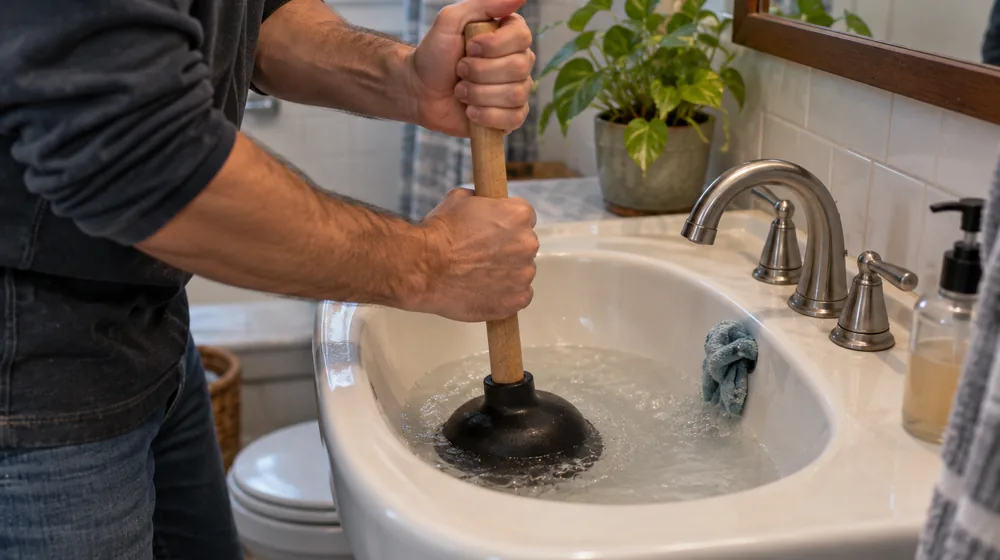
Most single-fixture clogs are genuinely a DIY job. Here is what works, in the order a plumber would try it — and the p…
Tree Roots in Your Sewer Line: Why Oregon Has It Worst
Roots do not break into a healthy pipe. They find the joint that is already leaking. Understanding that single fact te…
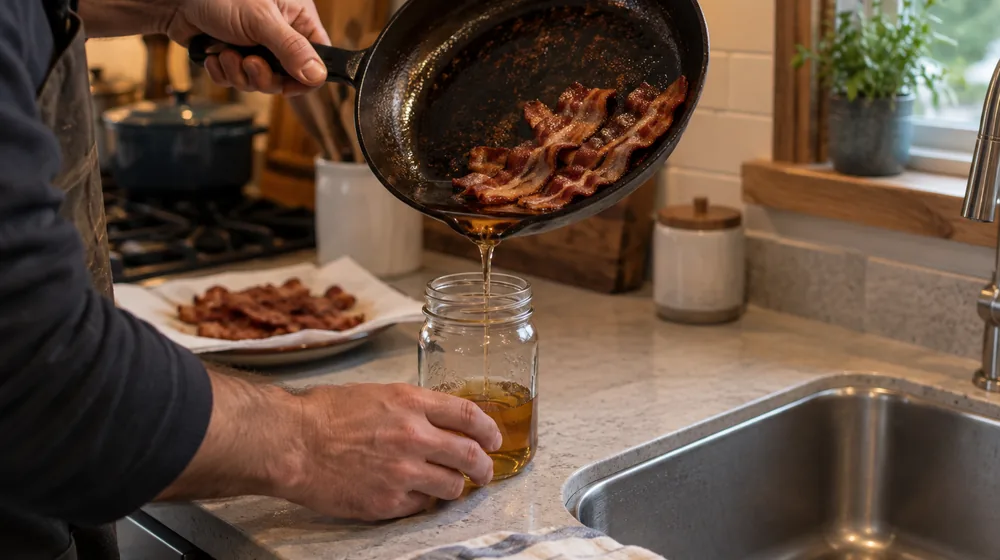
Grease and Kitchen Drains: Why Snaking Keeps Failing
A cable bores a hole through the middle of a grease coating and leaves the coating exactly where it was. That is why t…
Related services
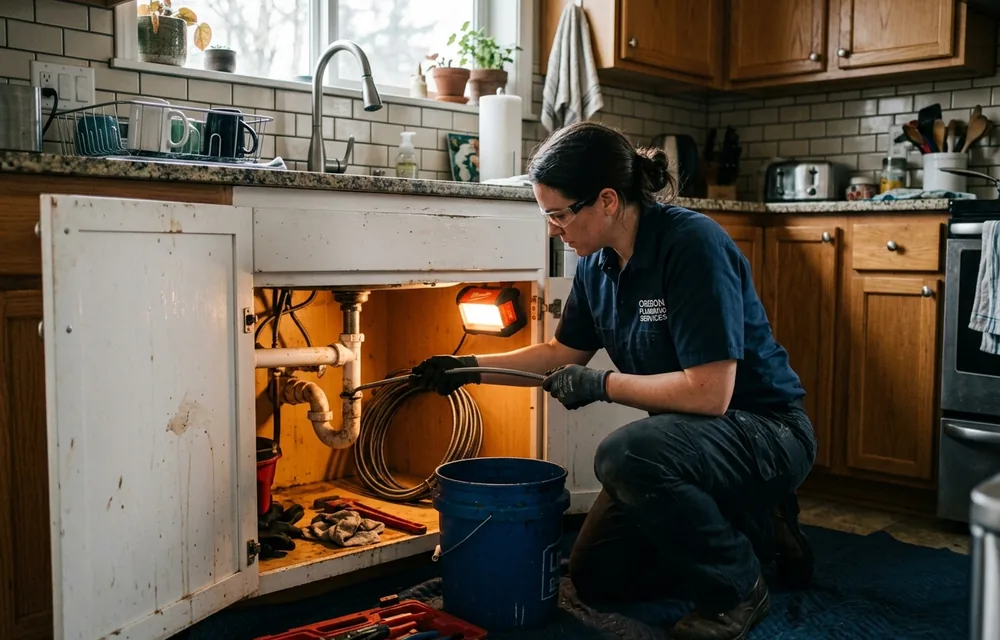
Drain Cleaning
A single slow sink is a nuisance.
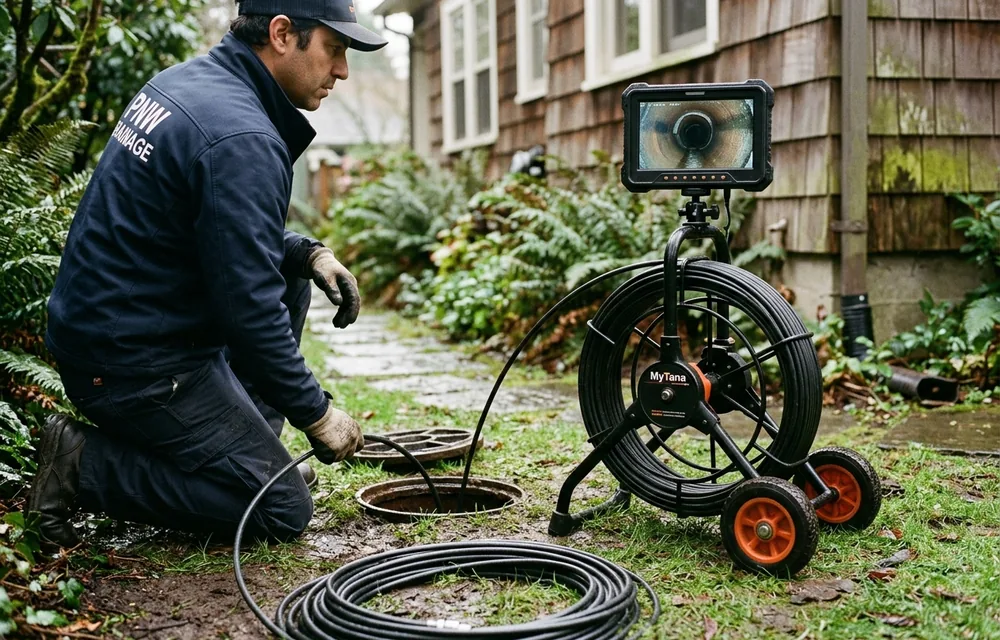
Sewer Camera Inspection
A sewer scope is the cheapest insurance in real estate and the only defensible basis for an excavation quote.
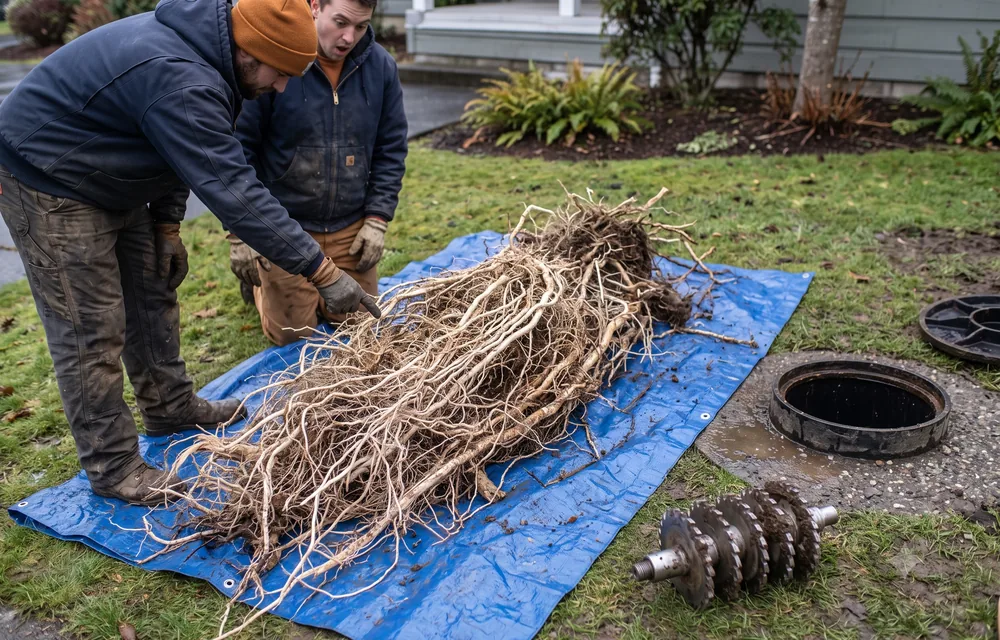
Rooter Service & Tree Root Removal
Roots do not break into a healthy pipe.
Sewer Line Repair & Replacement
Sewer replacement is the largest unexpected bill most Oregon homeowners ever face on their plumbing.
Hydro Jetting across Oregon
Hydro Jetting is covered in 26 Oregon cities. Each local page sets out the housing stock and pipe materials specific to that area.