Water Service Line Replacement in Oregon
The water service line is the pipe carrying potable water from the meter to your house. It is not the sewer, it fails differently, and the failure mode most people notice first is a water bill that doubled for no apparent reason.
- 1 to 2 days
- Statewide Oregon
- 7 days a week
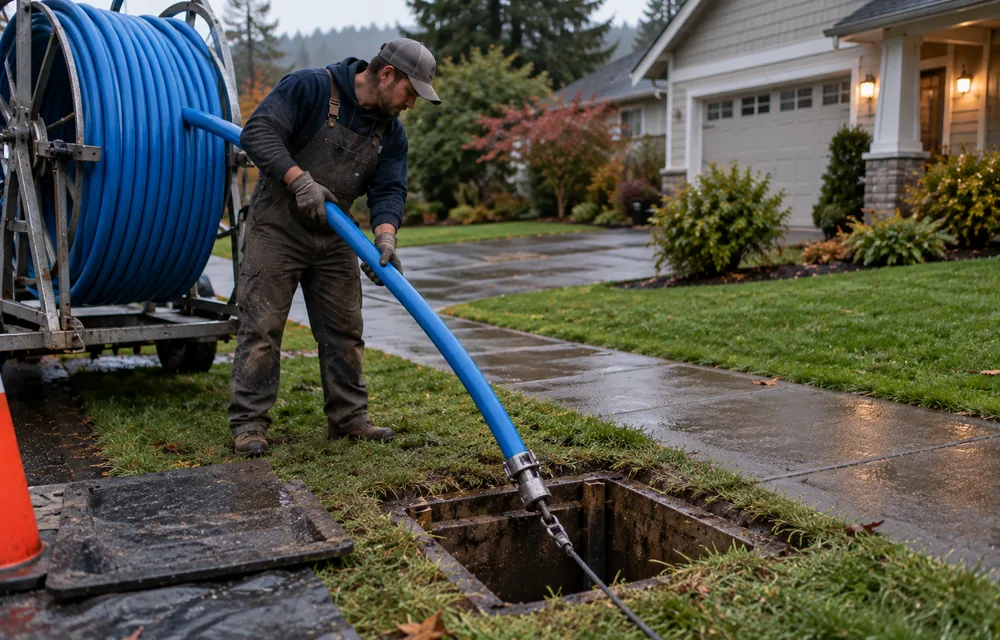
Signs you may need water service line replacement
Most people arrive here describing a symptom rather than naming a service. These are the three that point this way.
Pressure has declined gradually over years
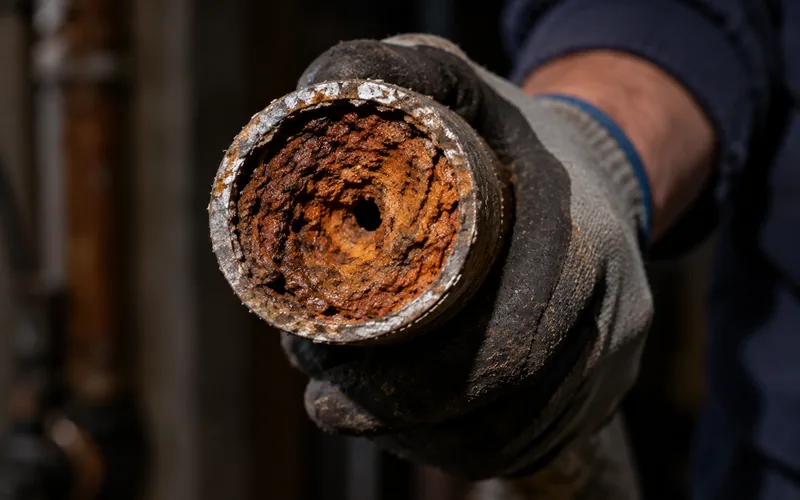
Corrosion narrowing a galvanised service line from the inside. A three-quarter-inch pipe can be down to the effective bore of a pencil while looking sound from outside.
A wet or unusually green patch in the lawn through a dry August
Water arriving at the surface from a leak underground. It costs you on every bill until it is dealt with.
The meter moves with every fixture in the house shut off
The definitive test. Any movement on the low-flow indicator means an active leak between the meter and the house, and that side is yours.
How to tell your water service is failing
- Pressure that has dropped gradually across years. Galvanised steel corrodes inward, and the bore narrows with rust scale until a shower and a dishwasher can no longer run together. Gradual decline is the signature — a sudden drop points to a break or a valve.
- Rusty or brown water, particularly first thing in the morning or after the house has been empty. That is scale shedding from the inside of galvanised pipe.
- A water bill that jumped without a lifestyle change. A buried leak runs continuously and invisibly.
- A permanently green, soft or boggy patch in the lawn or parking strip between the meter and the house, especially if it persists through a dry Oregon August.
- The sound of running water with every fixture closed. Classic buried-leak indicator.
- A meter that advances with all fixtures off. The definitive test, and one you can do yourself: shut every fixture, note the meter reading, wait an hour, read it again. Movement means a leak between meter and house, and that side is yours.
What is probably in the ground, by era
| Era installed | Likely material | How it fails | Typical remaining life |
|---|---|---|---|
| Pre-1960 | Galvanised steel | Internal corrosion, bore narrows, pinholes | Expired — replace |
| 1960s–1970s | Copper (Type K/L) or galvanised | Pinhole leaks, especially in acidic soil | Variable, inspect |
| 1978–1995 | Polybutylene (grey/blue) | Chlorine embrittlement, sudden splits | Expired — replace |
| 1980s–2000s | HDPE / PE | Generally sound; joint and fitting failures | Long |
| 2000s onward | PEX or HDPE | Rare; mechanical damage or bad fittings | Long |
Polybutylene deserves its own warning. Grey or blue flexible plastic pipe installed roughly 1978 to 1995, and used widely in Oregon during that window. It reacts with chlorine in treated municipal water, becoming brittle from the inside, and it fails without warning — usually as a sudden split rather than a slow drip. If you have polybutylene, plan its replacement rather than waiting for it. Many insurers will ask about it, and some price accordingly.
A note on lead. Lead service lines are relatively uncommon in Oregon compared with older Eastern and Midwestern cities, but lead solder on copper joints was permitted until 1986, and some brass fittings contain lead. Under the federal Lead and Copper Rule Revisions, Oregon water systems have been inventorying service line materials — your utility can usually tell you what their records show for your address. If you have any concern, ask them, and get the water tested rather than guessing.
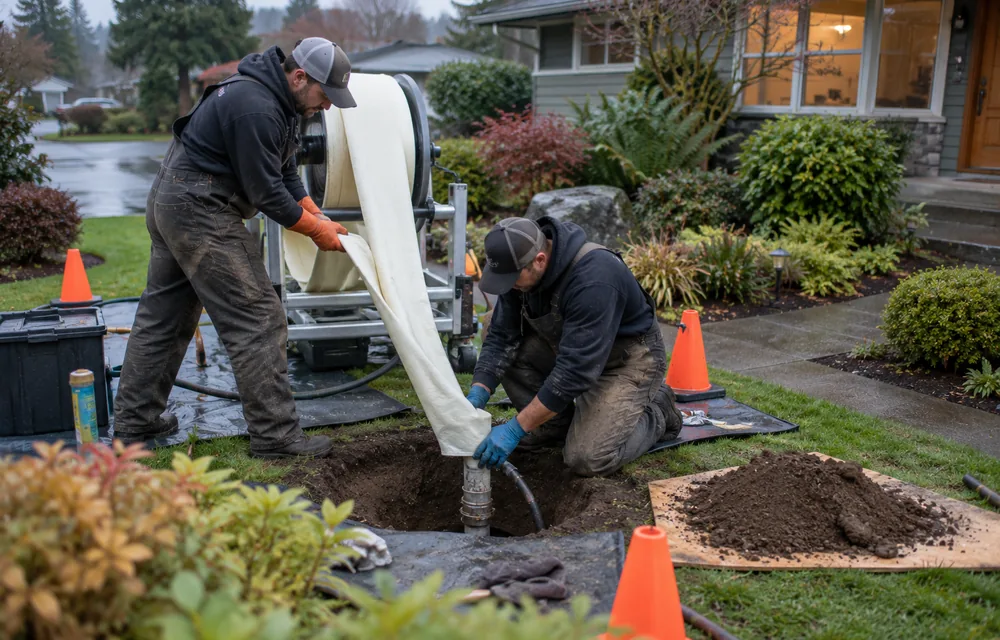
Trenchless replacement, where the route allows
A water service is often a better trenchless candidate than a sewer, because it is a pressure line and does not need to hold a precise gravity slope.
Pipe pulling / bursting draws new HDPE through the old line’s path from a pit at each end. No continuous trench, so a driveway, sidewalk, mature planting or established lawn survives intact.
Directional boring drills a new path entirely, which is the answer when the old route is unusable or when a better line can be taken around an obstacle.
Trenchless is not always possible. Multiple sharp bends, a collapsed old line that will not accept a bursting head, unknown utilities crossing the route, or shallow bedrock can all force open trench. The route should be assessed before anyone commits to trenchless, rather than discovering otherwise on day two.
New service lines go in as HDPE or PEX — both are corrosion-proof, both handle Oregon soil chemistry well, and a properly installed HDPE service is realistically a lifetime component.
Where responsibility divides
The general pattern in Oregon: the utility owns the main and typically the meter; the property owner owns the service line from the meter to the house. That means the wet patch in your parking strip is very likely your bill, even though it is not on your side of the sidewalk.
This differs by jurisdiction and it is worth confirming rather than assuming, because the exception is expensive in your favour. Some utilities own to the property line, some to the meter, and some operate replacement assistance programs. Two things worth checking before you pay for anything: whether your city runs a service line assistance or low-interest loan program, and whether your homeowner’s policy carries a service line endorsement. Many Oregon carriers sell one cheaply, and unlike the sewer situation it often covers water service failure from ordinary deterioration.
Permitting and the required inspections are part of the job. Work in the right-of-way needs a permit in every Oregon jurisdiction, and a water service that connects without inspection is a problem that resurfaces at resale.
What a proper replacement includes
Confirm the leak is actually in the service
Meter test and acoustic or correlator leak location. The failure gets located before anyone commits to a replacement — sometimes it is a $300 fitting, not a $6,000 line.
811 utility locate
Required by Oregon law before excavation. It gets called in and the waiting period observed — a contractor offering to dig tomorrow has skipped it.
Route assessment
Trenchless viability, surface impacts, and what restoration will actually involve, priced into the estimate.
Permit and inspection scheduling
Part of the job, including right-of-way permitting where the run crosses it.
Installation in HDPE or PEX
Correct depth for frost and load, tracer wire so the line can be located in future, and proper transition fittings.
Pressure test, disinfect, restore
Tested and disinfected before it is put into service, and the surface restored to the written scope agreed beforehand.
Frequently asked questions
How much does water line replacement cost in Oregon?
Typically $2,800 to $9,500 depending on run length, depth, and what surface has to be crossed and restored. A short run under plain lawn sits at the low end; a long run under a driveway, sidewalk or mature landscaping sits well above it. Trenchless usually costs more per foot but less in total once restoration is counted.
How do I know if my water line is leaking?
Shut off every fixture and appliance in the house, note the water meter reading, wait an hour without using any water, and read it again. If the meter has advanced, water is escaping between the meter and the house — and that section is the property owner’s responsibility in most Oregon jurisdictions. A persistently green or boggy patch through a dry August is the other reliable sign.
Is polybutylene pipe a problem in Oregon?
Yes. Grey or blue flexible plastic pipe installed roughly between 1978 and 1995 reacts with chlorine in treated water and becomes brittle internally. It tends to fail suddenly as a split rather than as a slow drip, so there is no gradual warning. If you have it, plan replacement proactively — insurers ask about it and the failure mode is a flood, not a drip.
Can a water line be replaced without digging up my driveway?
Usually. Pipe pulling and directional boring both need only an entry and exit pit, so driveways, sidewalks and established landscaping stay intact. Sharp bends in the existing route, a collapsed old line, unknown crossing utilities or shallow bedrock can force open trench, and that should be determined during route assessment rather than mid-job.
Who is responsible for the water line from the street?
In most Oregon jurisdictions the utility owns the main and the meter, and the property owner owns the service line from the meter to the house — which means a leak in the parking strip is typically the owner’s cost even though it is outside the property line. Confirm with your specific utility, and check whether your homeowner’s policy carries a service line endorsement, which often does cover this.
Do I have lead pipes?
Lead service lines are uncommon in Oregon relative to older Eastern cities, but lead solder on copper was permitted until 1986 and some brass fittings contain lead. Oregon water systems have been inventorying service line materials under the federal Lead and Copper Rule Revisions, so your utility can usually tell you what their records show for your address. If you are concerned, ask them and have the water tested rather than guessing from pipe colour.
Guides that cover this in more depth
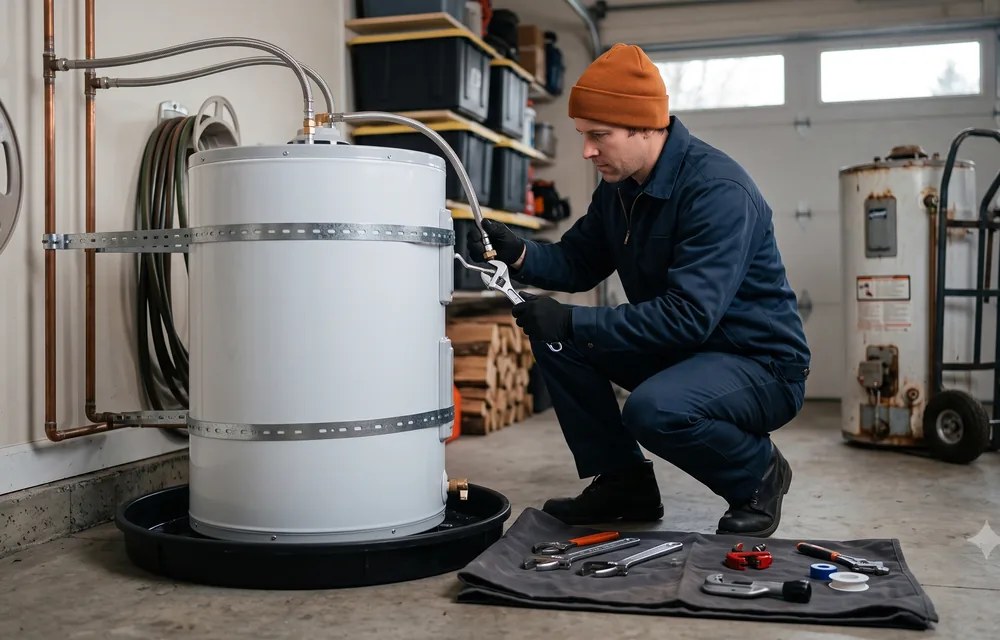
How Long Does a Water Heater Last? 8 Signs Yours Is Failing
A tank water heater in Oregon lasts eight to twelve years. Tankless runs fifteen to twenty. Most tanks give six to twe…
Low Water Pressure in the Whole House: Causes & Fixes
Low water pressure is one of the few plumbing problems you can diagnose properly for twelve dollars. A hose-bib gauge …
Related services
Sewer Line Repair & Replacement
Sewer replacement is the largest unexpected bill most Oregon homeowners ever face on their plumbing.
Water Heater Repair & Replacement
Most water heater calls split cleanly into two groups: a $200 part on a tank worth keeping, and a tank that has already failed and is quietly ruining the floor.
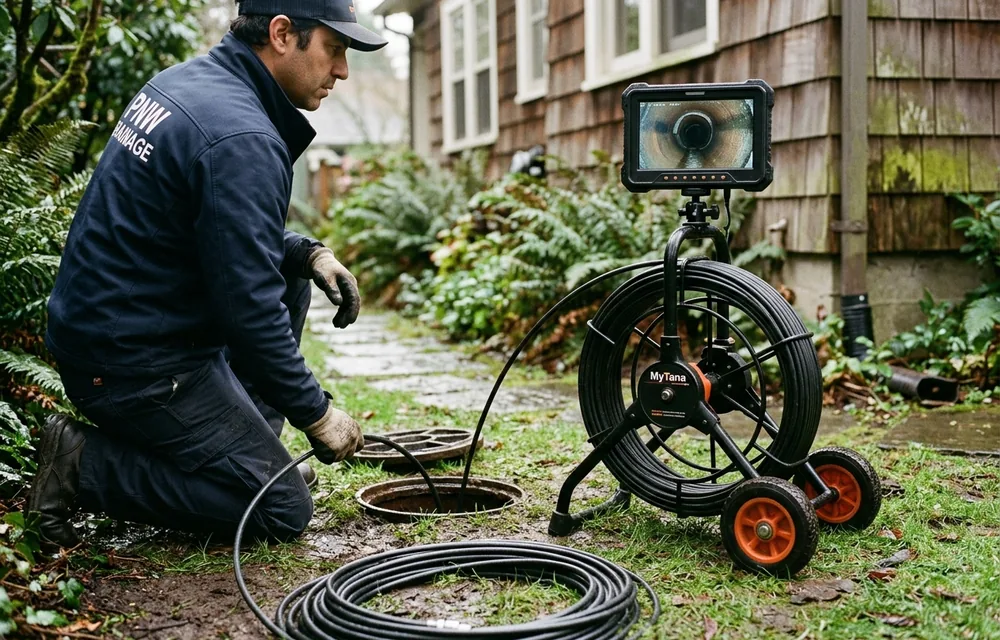
Sewer Camera Inspection
A sewer scope is the cheapest insurance in real estate and the only defensible basis for an excavation quote.
24/7 Emergency Drain & Sewer Service
If sewage is entering your home right now, stop reading and call.
Water Service Line Replacement across Oregon
Water Service Line Replacement is covered in 26 Oregon cities. Each local page sets out the housing stock and pipe materials specific to that area.