Winterizing Your Plumbing in Oregon: A Regional Checklist
Generic winterizing advice is written for the Midwest and it is either overkill or dangerously inadequate depending on which side of the Cascades you live on.
Work out which Oregon you live in
| Region | Main winter risk | Priority |
|---|---|---|
| Willamette Valley | Sustained rain, groundwater infiltration, sump duty | Sump pump and drainage |
| Portland metro | Rain plus occasional hard freeze, Gorge wind in Gresham | Both, with exposed lines insulated |
| Oregon Coast | Very high rainfall, high water table, salt corrosion | Sump pump and corrosion checks |
| Southern Oregon | Moderate freeze, soil movement after dry summer | Exposed lines, watch for joint separation |
| Central Oregon | Hard sustained freeze at elevation | Full freeze protection, vacation rentals especially |
| Eastern Oregon | Most severe and prolonged freeze | Full freeze protection, long rural runs |
West of the Cascades, winter is a water volume problem. East of them, it is a freeze problem. Doing the wrong checklist wastes your money in one direction and your pipes in the other.
The elevation difference is what people underestimate. Eugene sits at about 430 feet and sees a handful of light frosts. Bend is above 3,600 feet and gets sustained sub-freezing spells. Klamath Falls is above 4,100 and gets the most severe cold in the state. Advice that is sensible in Eugene is negligent in Klamath Falls, and advice written for Klamath Falls is wasted money in Eugene.
Everywhere in Oregon: test the sump pump in September
This is the single highest-value thing on this page, and almost nobody does it.
Pour five gallons of water into the sump basin and confirm the pump starts, moves water, and shuts off cleanly. Lift the float by hand and check it swings freely without catching the basin wall or the discharge pipe — a hung float is a flooded crawlspace with a perfectly functional pump sitting in it.
Do it in September, when a replacement is a scheduled appointment. Discovering the pump is dead during a January atmospheric river means an emergency call in the middle of the event it exists to handle. If you have battery backup, unplug the primary pump and confirm the backup actually takes over — and remember backup batteries last three to five years and fail silently.
While you are down there: scoop silt, gravel and (on the coast) sand out of the basin, because that debris is what destroys impellers. Walk the discharge line to its outlet and confirm it is clear, unfrozen and directing water well away from the foundation rather than back toward it.
See sump pump installation and repair for what a properly specified system contains.
Freeze protection, where it actually matters
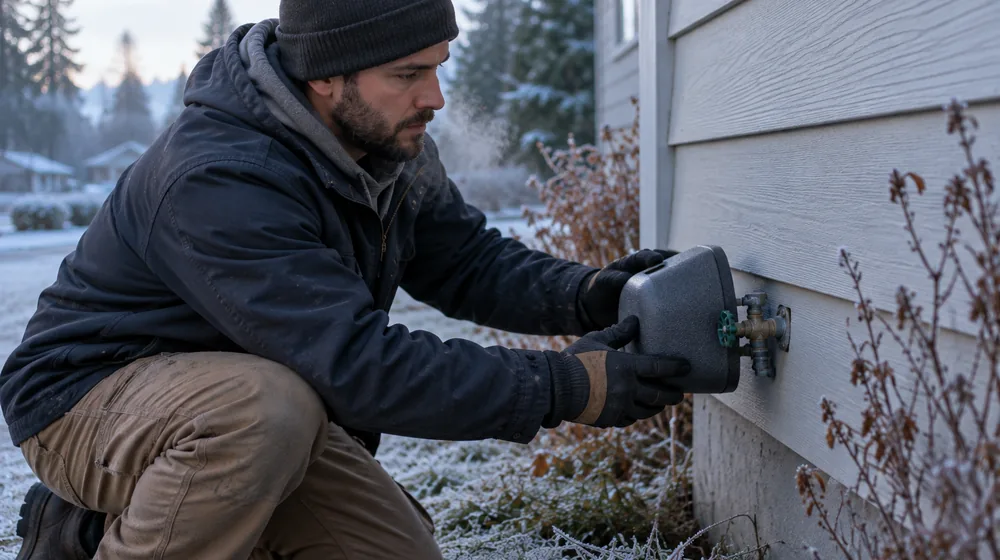
- Disconnect and drain garden hoses. A connected hose holds water against the bib and is the most common single cause of a burst outdoor line.
- Fit insulated hose bib covers. A few dollars each, and they work.
- Insulate exposed crawlspace lines, particularly runs along an exterior wall or near a vent. Foam sleeve is cheap; the labour of crawling is the real cost, so do it once and do it properly.
- Check the sump discharge line. A frozen discharge means the pump runs against a closed pipe until the motor burns out. Ensure it slopes to drain and terminates clear of ground that will ice over.
- Know where your main shutoff is, and confirm it actually turns. Finding out it is seized while water sprays through a ceiling is a bad time to learn. If it does not turn freely, get it replaced before winter, not after a flood.
- Close crawlspace vents in genuinely cold regions, and reopen them in spring — closed year-round traps moisture and creates a different problem.
- Vacation rentals and second homes: this is where Central Oregon and coastal owners lose money. A property left unheated between bookings through a Bend or Klamath Falls freeze can burst lines that then run for days before anyone notices. Set the thermostat to at least 55°F, open cabinet doors under sinks on exterior walls, and have someone physically check it during a cold snap rather than trusting a thermostat app.
If a pipe does freeze
Open the tap it feeds
Before you apply any heat. As the ice melts it needs somewhere to go, and an open tap gives the released pressure a path. A closed system builds pressure between the ice plug and the tap, and that is what actually splits pipes.
Find your main shutoff and be ready
A frozen pipe that has already split will begin discharging the moment it thaws. Know where the valve is before you start warming anything.
Warm it gently, from the tap end backwards
A hair dryer, a heat lamp, or towels soaked in hot water. Work from the fixture toward the frozen section so meltwater can escape as you go.
Never use an open flame
Blowtorches on frozen pipe cause house fires every winter and can boil water inside the pipe into steam, which bursts it violently. This is not a marginal precaution.
Check the whole run afterward
If one section froze, others on the same run were close. Once flow returns, inspect the full length for splits and pinhole leaks — some do not show until pressure returns fully.
Fix the cause, not just the pipe
A pipe that froze once will freeze again in the same place next year. Insulate it, add heat tape, or reroute it. Thawing is the emergency; preventing the repeat is the actual job.
Wet-season drainage, west of the Cascades
Before spending on a pump or a drainage system, verify the water is not being delivered to your foundation by your own roof. Gutters that overflow, and downspouts that discharge two feet from the wall, cause a large share of Oregon crawlspace water and are far cheaper to fix than the alternative.
Clear gutters after the leaf drop — in the valley that means late November, after the big-leaf maples have finished, not October. Extend downspouts well away from the foundation. Check that grading slopes away from the house rather than toward it, which is a surprisingly common defect in homes where landscaping has been built up over decades.
Then, if water still arrives, look at drainage and sump solutions. The sequence matters: installing a pump while a downspout discharges against the foundation is treating a symptom at considerable expense.
Heavy clay soils in Washington County, the South Salem hills and much of the Rogue Valley make this worse, because water that would percolate away elsewhere simply sits. Coastal properties have the opposite soil and the same outcome, because the water table itself is close to the surface.
The autumn sewer question
There is one more item that belongs on an Oregon winterizing list and appears on almost nobody's: get the sewer lateral inspected if it has ever given you trouble.
The reason is the seasonal pattern. Emergency backup volume in Oregon spikes November through February, and the mechanism is groundwater infiltration — a lateral with root-opened joints or cracked segments takes on groundwater through the same defects that were only a slow-drainage nuisance in summer. The line then has no spare capacity for actual household use.
So the line that gave you one slow week in August is, quite specifically, the line that backs up at 11pm in a December storm. A camera inspection in September or early October costs a few hundred dollars and happens on your schedule. The same problem discovered in January costs an emergency call plus whatever the water damages.
This applies most strongly if your home was built before 1980, if there are mature trees between the house and the street, or if you have had any main-line clog in the last two years.
A one-page seasonal schedule
| When | Task | Why then |
|---|---|---|
| September | Test sump pump and backup battery | Replacement is a scheduled job, not an emergency |
| September | Camera the lateral if it has ever clogged | Before infiltration season, on your timetable |
| October | Disconnect hoses, fit bib covers | Ahead of the first hard frost east of the Cascades |
| October | Insulate exposed crawlspace runs | Dry enough to work down there comfortably |
| November | Clear gutters after the leaf drop | Valley maples finish late; earlier is wasted effort |
| November | Confirm main shutoff turns freely | Before you need it in a hurry |
| December–February | Check vacation properties during cold snaps | The unattended burst is the expensive failure |
| March | Reopen crawlspace vents, re-test sump | Trapped moisture causes its own problems |
The water heater checks that belong on this list
Water heaters work hardest in winter, because the incoming water they have to heat is at its coldest. Three quick checks in autumn prevent the two most common cold-weather failures.
Flush the tank. Sediment on the tank bottom insulates the burner from the water, forcing longer cycles and reducing how much hot water you actually get. This matters most in Bend, Redmond, Klamath Falls and Ontario, where harder water deposits scale faster, and it is the difference between a tank reaching twelve years and one failing at eight.
Check the T&P valve discharge is clear and unobstructed. The temperature and pressure relief valve is the tank's safety device. Never cap or plug the discharge line, and if it is dripping, find out why rather than ignoring it — it is sometimes the valve and sometimes genuine over-pressure from thermal expansion.
Confirm seismic strapping is in place and tight. Oregon building code requires water heaters to be seismically braced, and it is frequently missing on older or DIY installations. A toppled heater is a gas leak and a flood simultaneously.
If yours is over eight years old and showing symptoms, replacing it in October is a scheduled job. See water heater repair and replacement.
Services mentioned in this guide
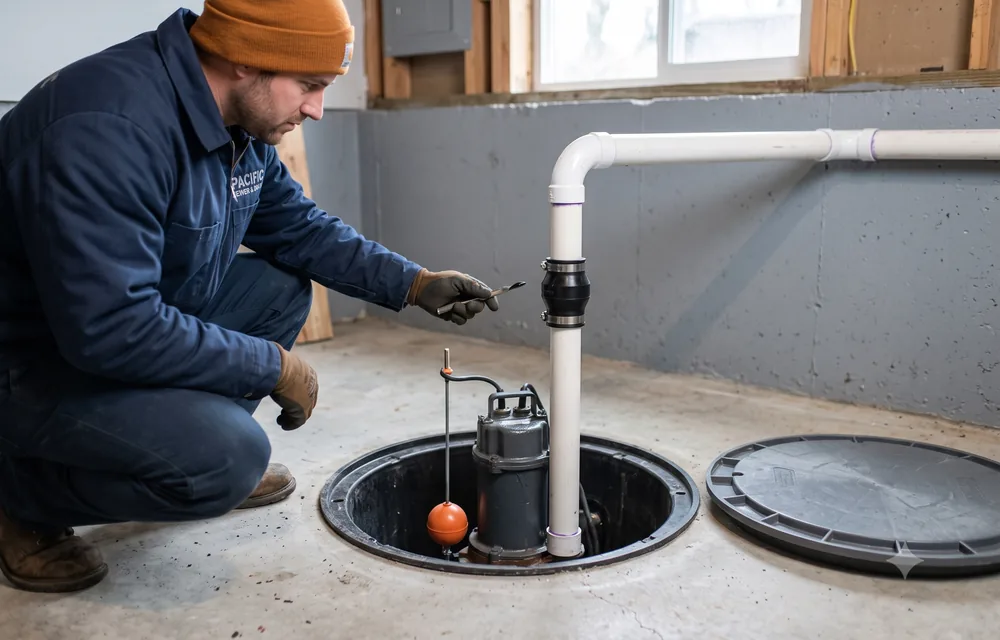
Sump Pump Installation & Repair
A sump pump is the only appliance in your house whose failure you discover at the worst possible moment, in the dark, during a storm, usually after the power has already gone out.
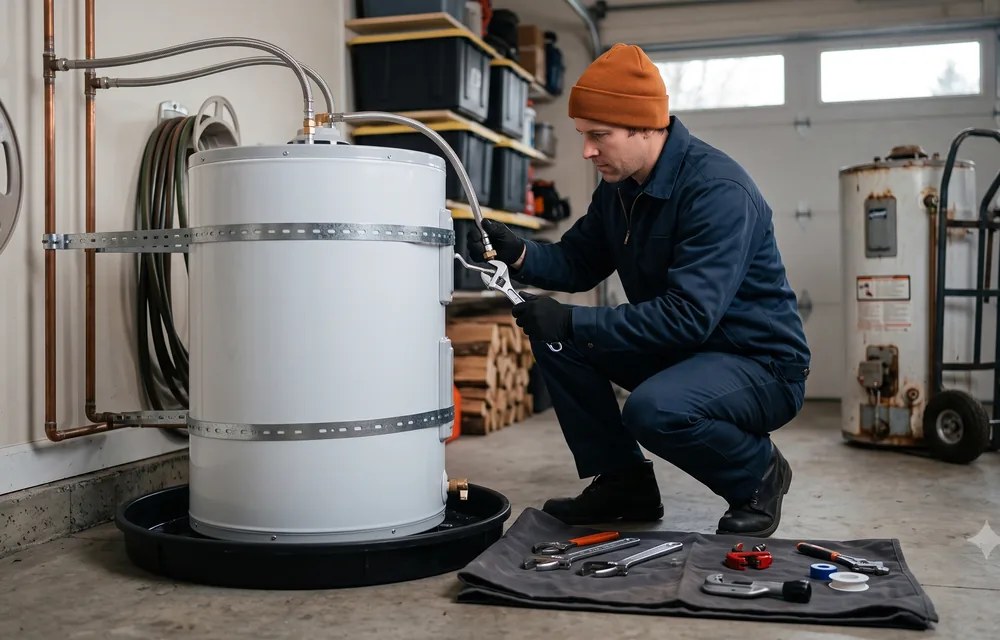
Water Heater Repair & Replacement
Most water heater calls split cleanly into two groups: a $200 part on a tank worth keeping, and a tank that has already failed and is quietly ruining the floor.
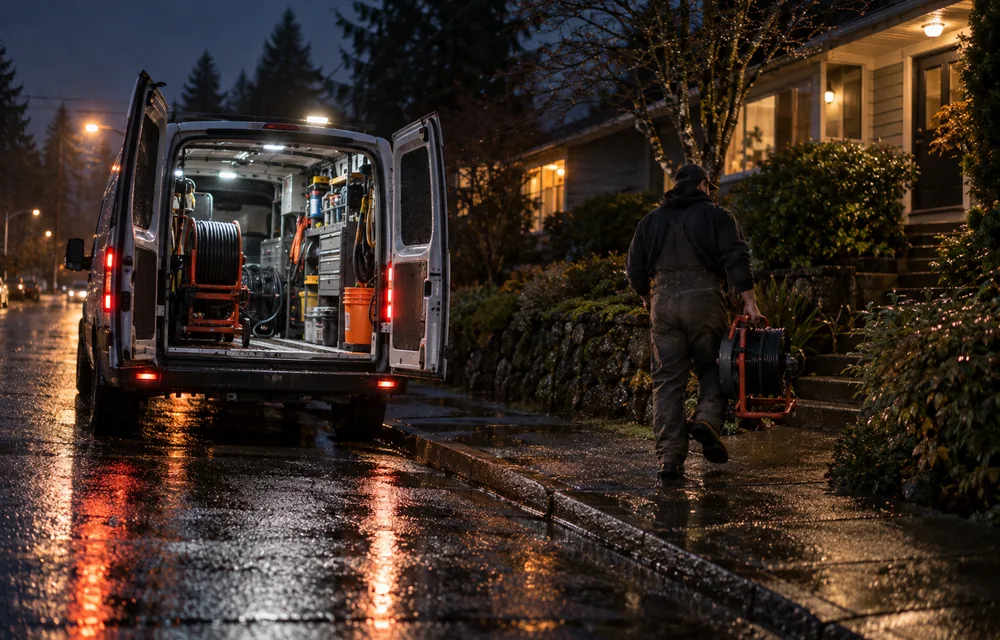
24/7 Emergency Drain & Sewer Service
If sewage is entering your home right now, stop reading and call.
More guides
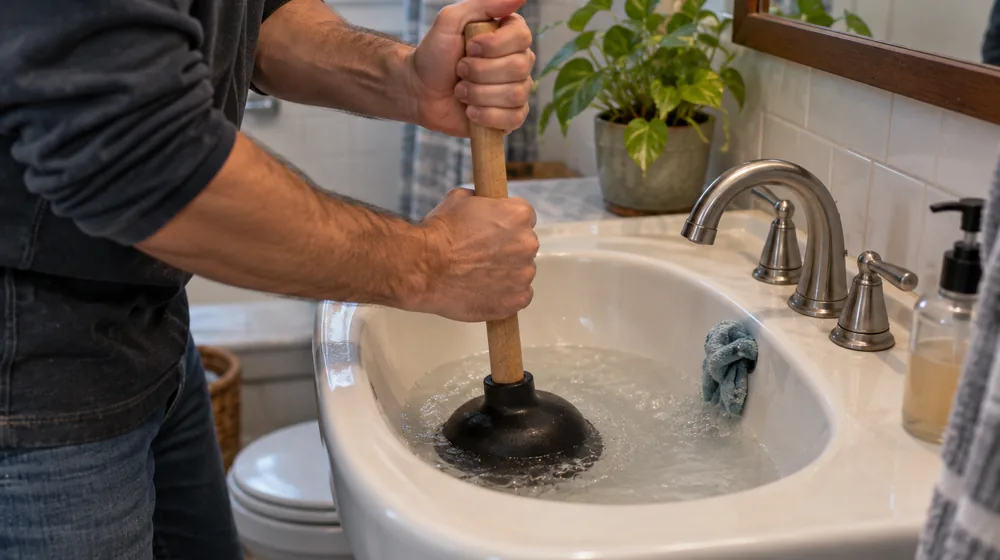
How to Unclog a Drain Yourself (and When to Stop)
Most single-fixture clogs are genuinely a DIY job. Here is what works, in the order a plumber would try it — and the p…
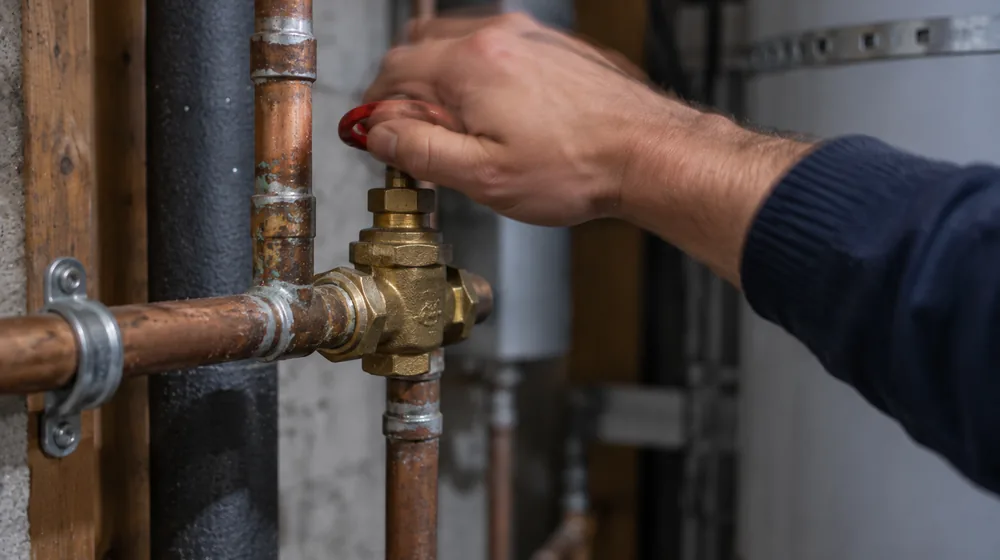
Sewer Backup: What to Do in the First Ten Minutes
A main line backup gets measurably worse with every gallon of water the household uses. What you do in the first ten m…
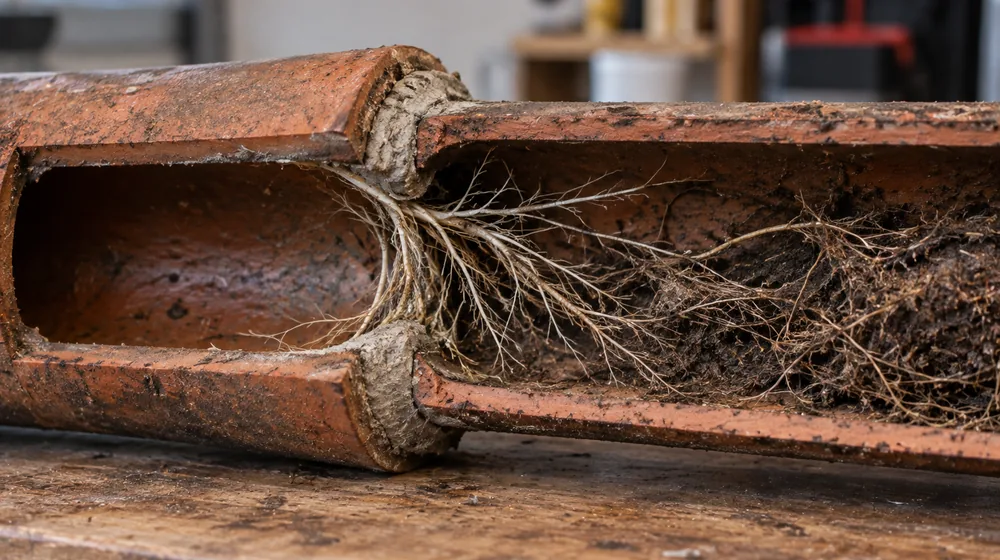
Tree Roots in Your Sewer Line: Why Oregon Has It Worst
Roots do not break into a healthy pipe. They find the joint that is already leaking. Understanding that single fact te…