Drain cleaning and sewer service in Eugene, Oregon
Eugene's drain problems are shaped by two things: a large stock of pre-1960 homes in the neighbourhoods ringing downtown and the university, and an exceptionally dense mature tree canopy over exactly those neighbourhoods. It is close to a textbook root-intrusion environment.
- Lane County
- Willamette Valley
- Same-day and 24/7
What goes wrong with Eugene plumbing
Canopy density over old clay laterals
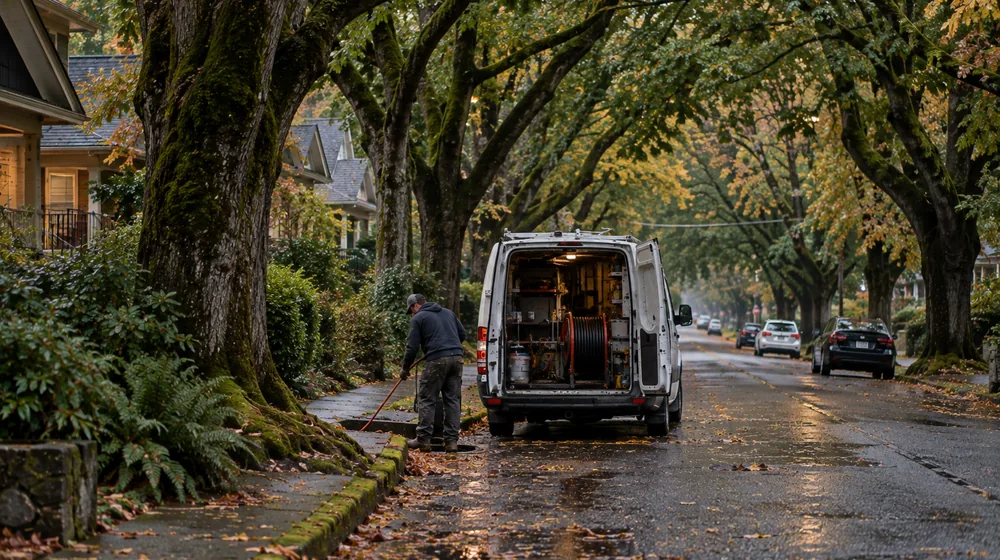
Eugene's older neighbourhoods have some of the densest urban tree cover in the state sitting directly over century-old clay tile. Root intrusion is the single most common main-line cause in Eugene, and it recurs on a predictable annual cycle.
Student rental density and grease loading
The rental stock around the university sees high occupancy turnover and heavy kitchen use in homes whose drain lines were sized for a single family. Grease loading in these lines is disproportionate, and cabling them repeatedly does not address it — jetting does.
Willamette and McKenzie confluence groundwater
Eugene sits near the confluence of two rivers, and winter water tables in low-lying neighbourhoods drive heavy infiltration into any lateral with open joints.
Housing stock and pipe materials
Housing: Extensive pre-1940 and 1940s–1950s housing through the Whiteaker, Friendly, South University and Jefferson Westside areas, with later growth south and west.
Likely pipe materials: Clay tile through the older core, Orangeburg in postwar sections, cast iron interior on most pre-1975 homes.
Who is responsible for the pipe in Eugene
City of Eugene / Metropolitan Wastewater Management Commission. Eugene handles local wastewater collection, while the Metropolitan Wastewater Management Commission — a partnership of Lane County, Eugene and Springfield — operates regional treatment and transmission. The private lateral remains the property owner's responsibility.
Confirm your own boundary with the utility before assuming any part of the run is theirs — and check whether your homeowner's policy carries a service line endorsement, which many Oregon carriers sell cheaply.
A closer look at Eugene
The canopy is the story, neighbourhood by neighbourhood
Eugene has some of the densest urban tree cover in Oregon sitting directly over some of its oldest pipe, and the overlap is not evenly distributed.
Whiteaker, Jefferson Westside and the Friendly Area carry substantial pre-1940 housing with clay-tile laterals under large established trees. Root intrusion here is not an occasional event, it is the baseline condition, and it recurs on a predictable annual cycle — usually late summer when roots are actively seeking moisture, or during the first heavy autumn rains when infiltration adds volume the narrowed line cannot carry.
South University and the campus fringe add occupancy load on top of the same pipe. Bethel, Churchill and Santa Clara skew later, with more postwar and 1970s stock, so the mix shifts toward Orangeburg and cast iron rather than clay and roots.
Student rentals are a loading problem, not a defect problem
A large share of the housing ringing the university was built for single families and now runs at two or three times that occupancy. The drain lines were sized for the original use, and no amount of clearing changes that arithmetic.
Kitchen grease loading is the specific issue. Six occupants cooking independently put far more fat into a branch line than one household does, and it congeals on the pipe wall as a full-circumference coating. Cabling bores a channel through that coating and leaves the coating in place, which is why the interval between calls keeps shortening — eighteen months, then twelve, then eight.
For a landlord with multiple Eugene doors, scheduled preventive jetting between tenancies is straightforwardly cheaper than the emergency calls it replaces, and it protects the pipe rather than just opening it.
Who actually owns what, in Eugene
The City of Eugene handles local wastewater collection. The Metropolitan Wastewater Management Commission — a partnership of Lane County, Eugene and Springfield — operates the regional treatment plant, the biosolids facility, and the pump stations and transmission sewers.
None of that covers your private lateral. The pipe from your house to the public connection is yours, and it is the most expensive component on the property that no home inspection will examine. Confirm the exact boundary with the city for your street, and check your homeowner's declarations page for a service line endorsement — many Oregon carriers sell one cheaply and a surprising number of homeowners already have it without knowing.
Where the line reaches in and around Eugene
Within Eugene that covers Whiteaker, Friendly Area, South University, Jefferson Westside, Bethel, Churchill, Cal Young, Amazon, Santa Clara, Harlow and the surrounding area. Same-day drain cleaning and rooter service is usually available across Eugene, and the line is answered around the clock for an active backup. Confirm coverage for your exact address on the call.
Nearby cities also covered
What the call covers in Eugene
Drain Cleaning
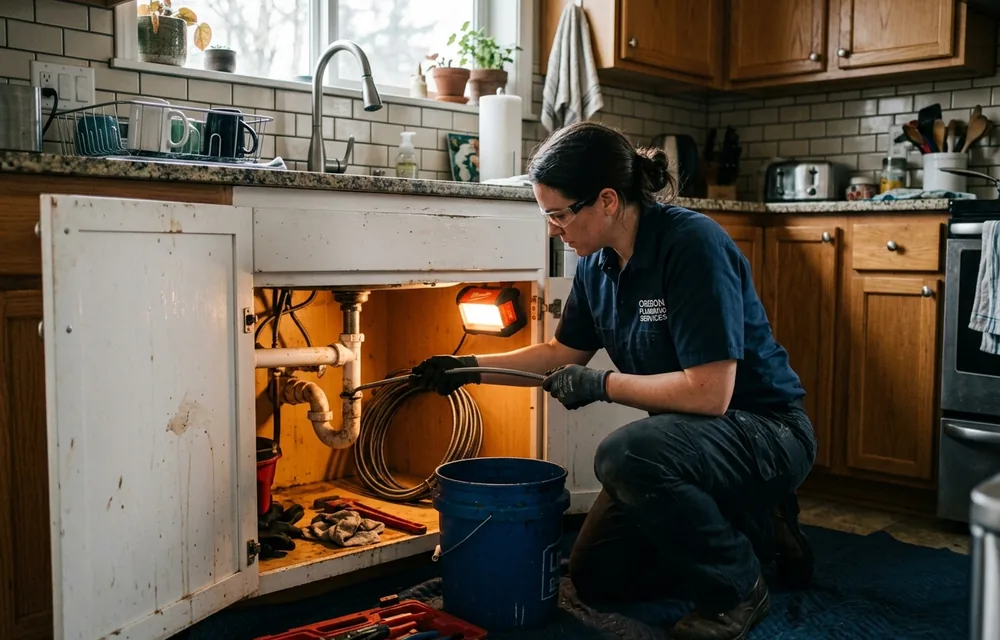
A single slow sink is a nuisance.
Hydro Jetting
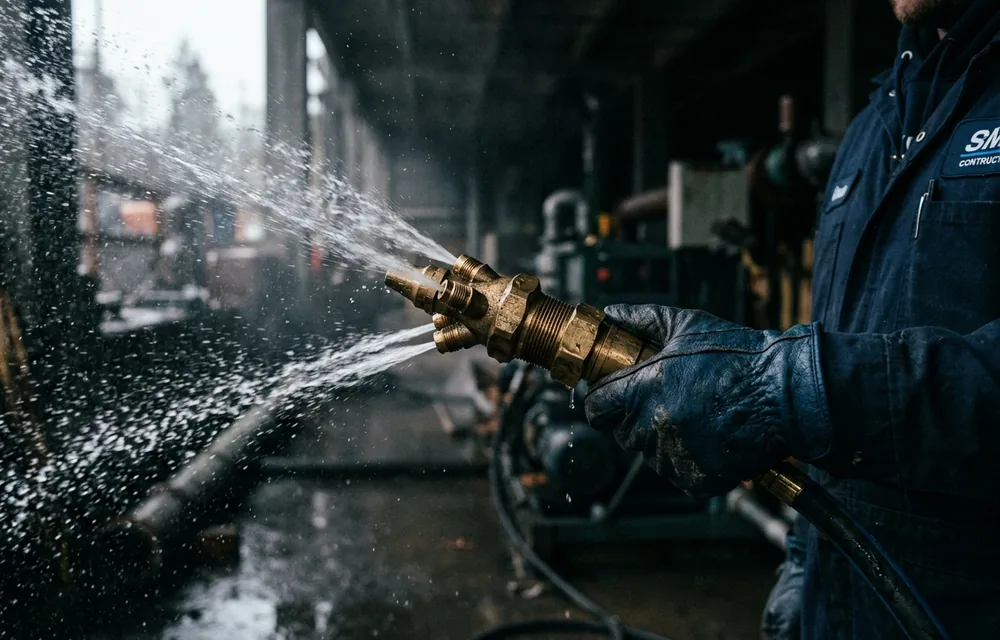
A cable bores a hole through the clog.
Sewer Camera Inspection
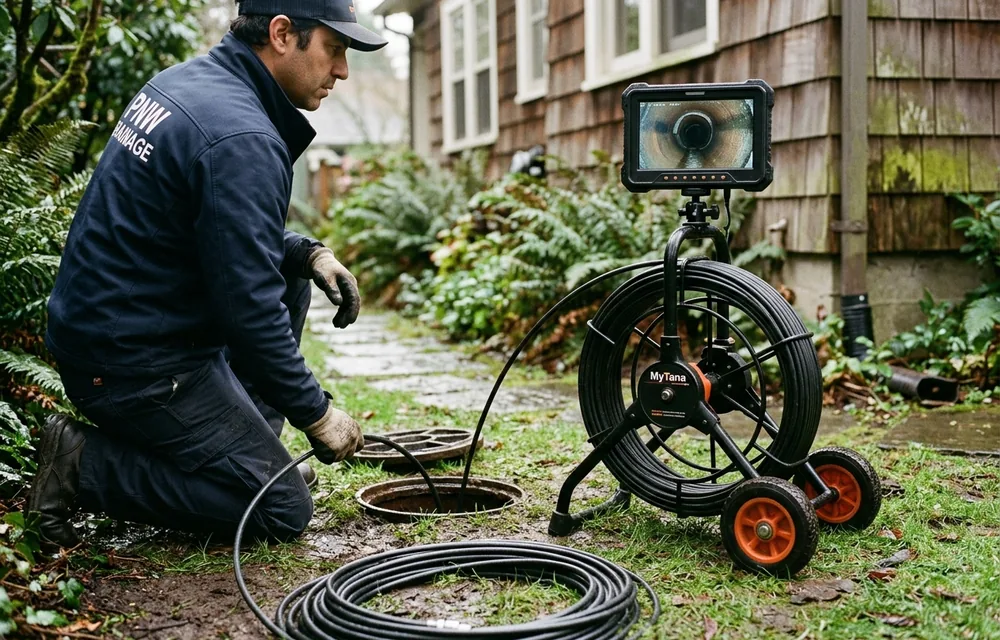
A sewer scope is the cheapest insurance in real estate and the only defensible basis for an excavation quote.
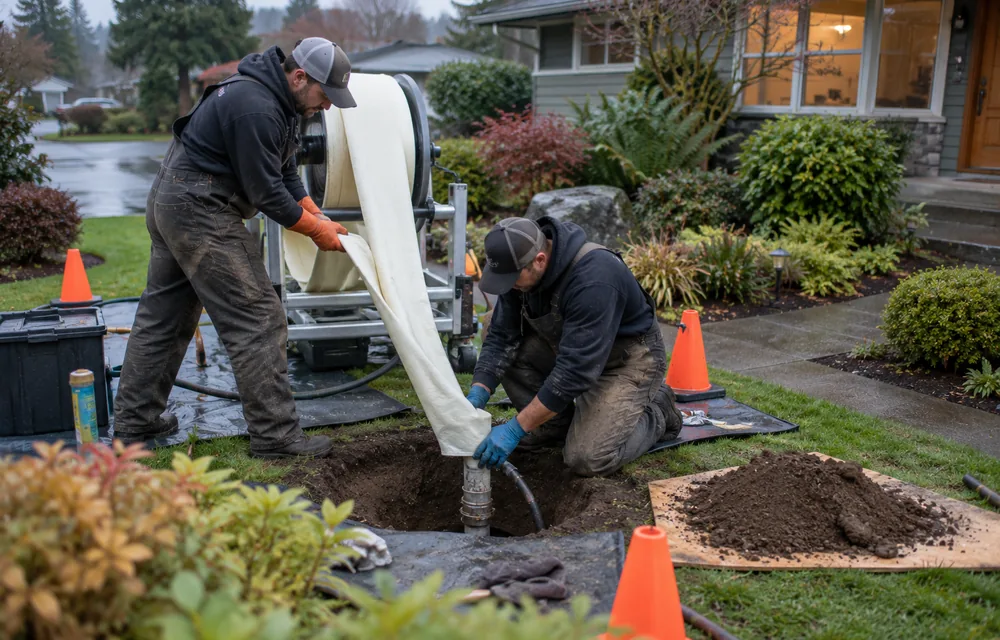
Sewer Line Repair & Replacement
Sewer replacement is the largest unexpected bill most Oregon homeowners ever face on their plumbing.
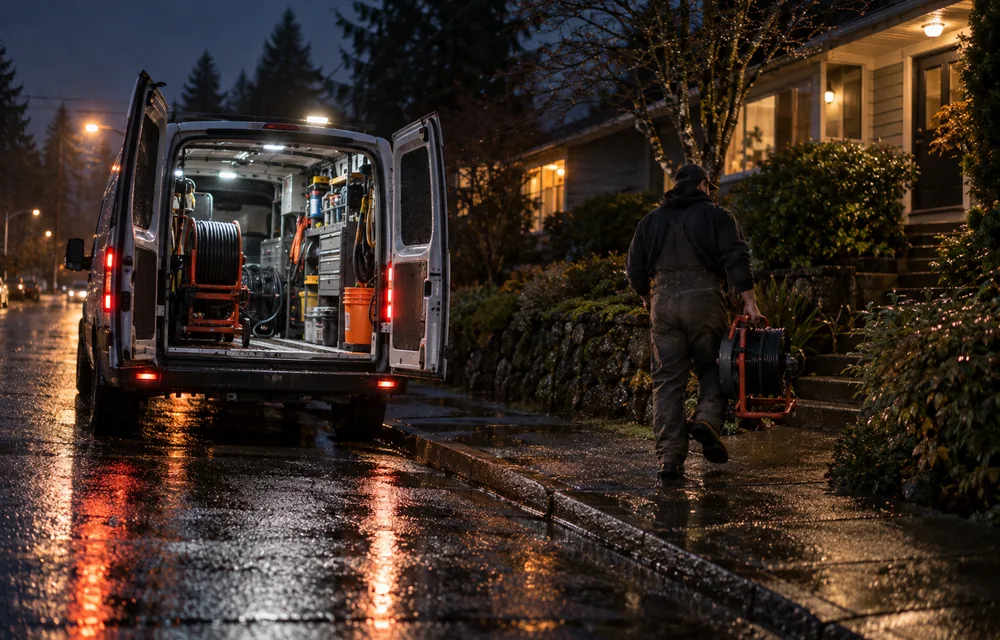
24/7 Emergency Drain & Sewer Service
If sewage is entering your home right now, stop reading and call.
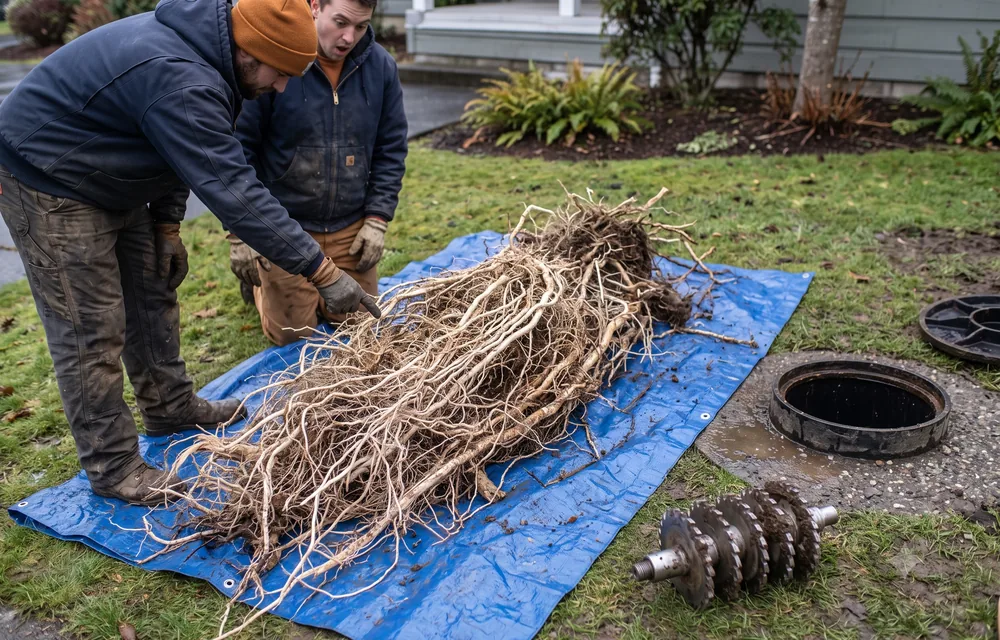
Rooter Service & Tree Root Removal
Roots do not break into a healthy pipe.
Eugene plumbing questions
Why does Eugene have such bad tree root problems?
Eugene's older neighbourhoods combine two things: some of the densest urban tree canopy in Oregon, sitting directly over clay-tile laterals that are often a century old. Roots do not break into sound pipe — they find joints that already weep and thicken there. In Whiteaker, Friendly, Jefferson Westside and South University that combination makes root intrusion the default main-line cause, not an occasional one.
Who is responsible for my sewer lateral in Eugene?
The property owner. The City of Eugene handles local wastewater collection and the Metropolitan Wastewater Management Commission — a Lane County, Eugene and Springfield partnership — operates regional treatment and transmission. None of that covers your private lateral. Confirm the specific boundary with the city, and check whether your homeowner's policy carries a service line endorsement.
I own a student rental near campus. Why does it clog every year?
Loading, not defect. A house built for one family now running six occupants puts several times the intended volume and far more kitchen grease through drain lines sized for the original use. Cabling clears it and it returns on the same cycle. Scheduled preventive jetting between tenancies costs less than the emergency calls it replaces, and it protects the line rather than just opening it.
I am buying a house in Whiteaker or Jefferson Westside. What should I check?
Scope the sewer before your inspection contingency closes. Those neighbourhoods combine pre-1940 clay-tile laterals with some of the densest mature tree canopy in the state, which is the highest-probability root-intrusion combination in Oregon. Insist on a recorded video file you keep, footage marks on every defect, and a surface locate with depth. The depth figure is what determines whether a repair is a few thousand dollars or considerably more.
How often should a Eugene rental property be jetted?
For a student-occupied house near campus, roughly every two to three years on the kitchen line is a reasonable starting interval, tightened if the first camera pass shows heavy coating. The trigger to watch is the gap between calls: if it is shortening year over year you are cabling a coated line rather than clearing a clog, and jetting resets it properly. Scheduling between tenancies avoids the emergency-rate version entirely.