Drain Cleaning in Oregon — Clogs Cleared, Usually Same Day
A single slow sink is a nuisance. Every drain in the house backing up at once is a main-line failure. They need completely different tools and cost very different amounts, so the first job is working out which one you actually have.
- 45 minutes to 3 hours
- Statewide Oregon
- 7 days a week
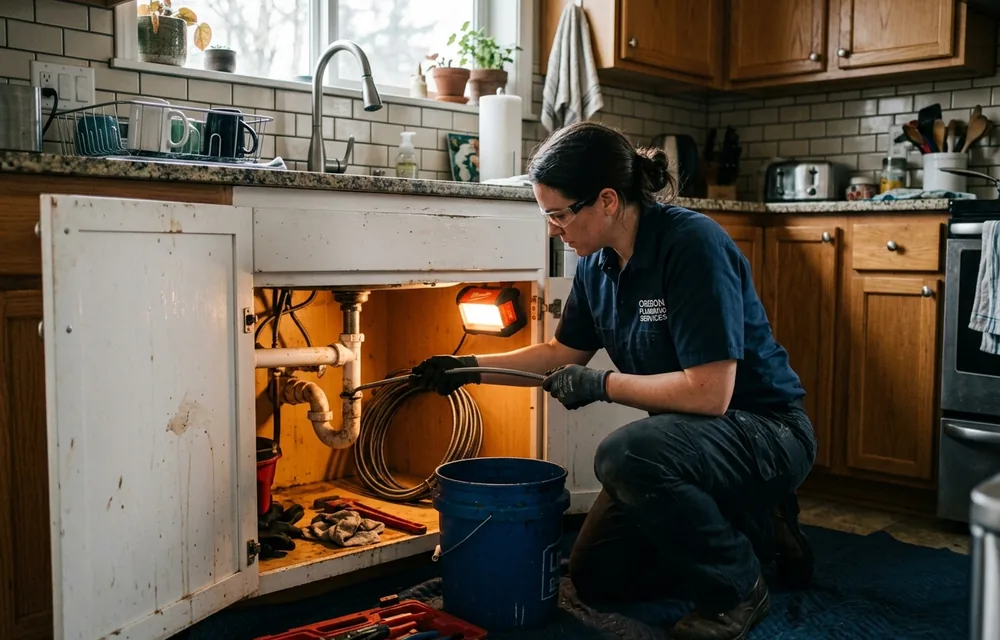
Signs you may need drain cleaning
Most people arrive here describing a symptom rather than naming a service. These are the three that point this way.
One fixture drains slowly and the rest are fine
A localised blockage in the trap or branch arm, within a few feet of the opening. This is the cheap version of the problem, and it is worth dealing with before it becomes the other kind.
Water backs up into a different fixture
Flushing a toilet fills a shower pan, or running the washer backs up a floor drain. Two fixtures interacting means the blockage is downstream of both — a main line problem, not a fixture one.
It clears, then returns within weeks
The line is coated rather than blocked. Cabling bores a channel through a coating and leaves the coating behind, which is why the interval keeps shortening each time.
How to tell a fixture clog from a main-line clog
This is the single most useful thing a homeowner can learn about their own plumbing, because it changes the price by a factor of three.
A fixture clog affects one drain and nothing else. The bathroom sink is slow but the tub and toilet run fine. The blockage sits in the trap or the branch arm within a few feet of the fixture, and it is almost always hair, soap scum, toothpaste solids, or kitchen grease.
A main-line clog shows up as multiple fixtures failing together, and it follows gravity. Flush an upstairs toilet and the downstairs shower gurgles or fills. Run the washing machine and the floor drain backs up. Toilets bubble when a sink drains. Those symptoms mean the blockage is downstream of where the branch lines join — in the building drain, or out in the sewer lateral heading to the street.
If you are seeing main-line symptoms, stop running water immediately. Every gallon you add has to go somewhere, and with the line blocked the lowest opening in the building becomes the overflow point — usually a basement floor drain, a ground-floor shower pan, or the toilet nearest the exterior wall.
What Oregon homes clog with, and why it is regional
Oregon housing stock spans more than a century, and the failure pattern tracks build era and geography closely.
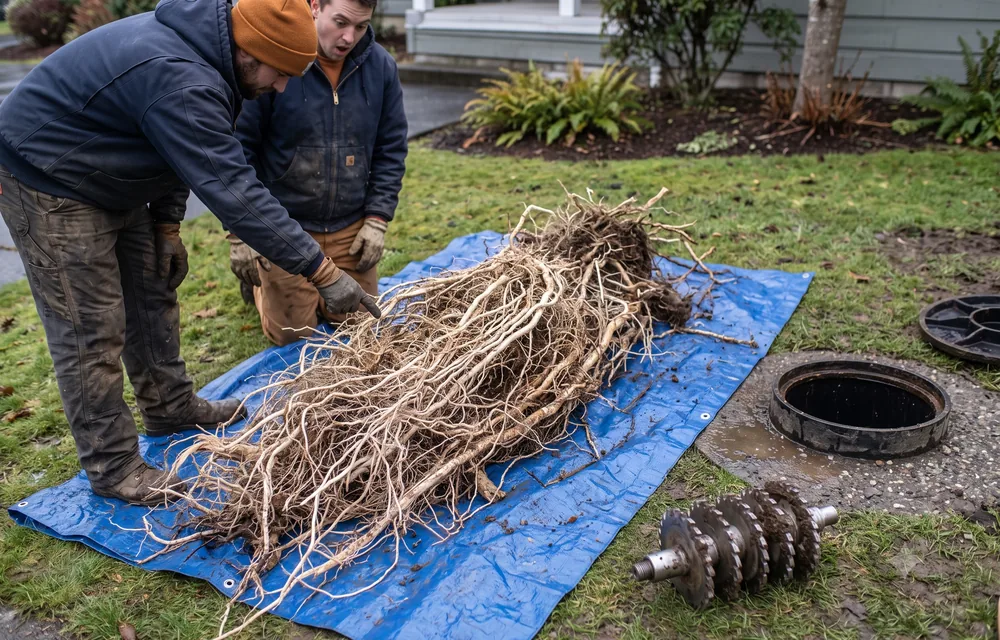
Tree roots dominate main-line failures across the western half of the state. Douglas fir, big-leaf maple, and especially the ornamental plums and cherries planted along mid-century residential streets send hair roots toward the warm, nutrient-rich vapour leaking from clay-tile joints. Roots do not break a sound pipe to get in. They find the joint that is already weeping and thicken there until the line strains like a colander.
Grease dominates kitchen lines everywhere in Oregon. It goes down warm and liquid, then meets the ground temperature around a buried lateral — which sits in the 40s and low 50s Fahrenheit for most of the year here — and congeals onto the pipe wall in layers.
Mineral scale is a Central and Eastern Oregon problem. Bend, Redmond, Klamath Falls and the Ontario area run considerably harder water than the Willamette Valley. Scale narrows drain lines and destroys fixture traps faster than most homeowners expect.
Sand and silt show up on the coast. Homes in Florence, Coos Bay, Reedsport and Lincoln City sit on sand with a high water table, and fine sediment migrates into laterals through failed joints, then settles in any low spot in the line.
Infiltration is the seasonal wildcard. During heavy valley rain, groundwater enters compromised laterals through the same cracks roots use. Call volume climbs sharply in November through February, which is also when same-day slots get tight.
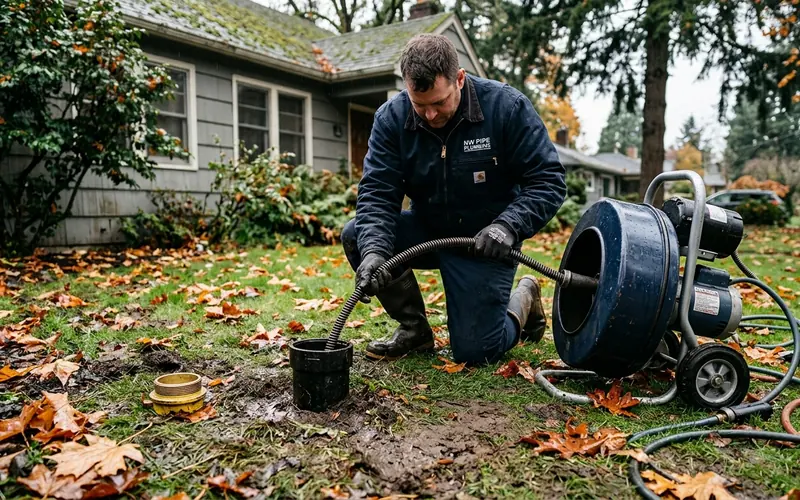
The three tools, and when each one is right
Cable machine (drum auger, or "snake"). A rotating steel cable with a cutter head. This is the right tool for a discrete blockage — a hairball, an isolated root mass, a child’s toy — and for lines you need cleared quickly and cheaply. It punches through the obstruction and pulls back what it can grab. What it does not do is clean the pipe wall. If your line is coated in six years of congealed grease, a cable bores a channel through the middle of that coating and you will be making the same call again inside a year.
Hydro jetting. A high-pressure water nozzle that scours the pipe back toward bare wall. The correct choice for grease, for repeat clogs, for commercial kitchen lines, and for any line where you want the interval between service calls measured in years rather than months. It costs more up front and it is not safe on every pipe — see hydro jetting for the full picture, including the pipe it must never be used on.
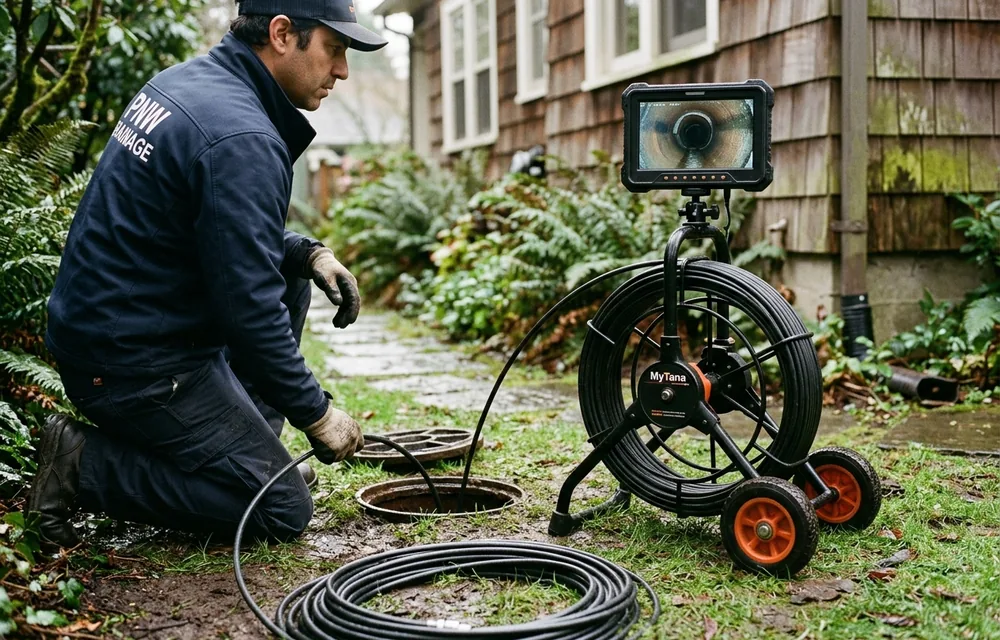
Camera inspection. Not a clearing tool at all, but the only way to learn why the line failed. If this is your second clog in the same line inside eighteen months, clearing it again without looking is throwing money away. See sewer camera inspection.
What actually happens on a drain-cleaning call
Diagnose first
Running the fixtures and reading the pattern establishes fixture clog vs. main line. You should be told which one you have before any tool comes off the truck — it is the fact that changes the job most.
Protect the work area
Drop cloths, boot covers, and a containment plan for the wastewater. Drain work is dirty. Your floors should not show it afterward.
Access the right cleanout
Working from a proper cleanout is faster and safer than pulling a toilet, and cheaper for you. If the property has no accessible cleanout, ask what the alternative costs — including the option of having one installed.
Clear the line
Correct machine and correct cutter head for the pipe diameter, run until the line flows at full bore rather than just until the standing water drops.
Verify under real volume
Fill and flush repeatedly before the visit ends. A line that passes a cable but fails under a full tub draining is not a line that has been fixed, and this is the step most often skipped.
Find out what comes next
If roots came back on the cable, or it hung on an offset joint, you should hear about it — with a camera recommendation and a straight explanation, not a scare pitch.
Honest pricing, and what moves it
Published ranges cover a standard residential call in the areas covered here. The number moves for real reasons, and you should be told which one applies before work starts:
- Accessible cleanout vs. no cleanout. Pulling and resetting a toilet to reach the line adds labour and a new wax ring.
- Line length and diameter. A 100-foot lateral out to a street main is a different job than a 12-foot branch arm under a sink.
- Cause. Roots need cutting heads and repeat passes. Heavy grease may need jetting to genuinely resolve rather than merely open.
- After-hours. Nights, weekends and holidays carry a dispatch premium. It is disclosed on the phone, never as a surprise line on the invoice.
Get a general range in about a minute with the free drain and sewer cost estimator on this site.
When drain cleaning is the wrong answer
Clearing a line does not fix a line that is structurally failing, and paying to have it cleared repeatedly is money spent on a symptom. If any of the following is true, the honest recommendation is a camera inspection first and possibly a repair — not another cabling:
- Third clog in the same line within two years.
- The cable stops hard at the same footage every single time. That is an offset joint, a belly, or a partial collapse — not a clog.
- Sewage smell in the yard, or a strip of lawn noticeably greener and spongier than the rest.
- The home was built between 1945 and 1972 and the lateral has never been inspected. That is the Orangeburg window, and Orangeburg does not improve with age. See sewer line repair.
Frequently asked questions
How much does drain cleaning cost in Oregon?
Most residential drain cleaning runs $149 to $450. A single accessible fixture drain sits at the low end. A main-line clog requiring pulled-toilet or roof-vent access with heavy root cutting sits at the high end. After-hours calls carry a dispatch premium. Where the job lands in that range depends mostly on access: an exterior cleanout keeps it low, pulling a toilet does not.
How much does it typically cost to unclog a drain?
For a single fixture with normal access, $149 to $289 covers most of the market in Oregon. A main line is a different job and runs $249 to $450, more if there is no exterior cleanout and a toilet has to be pulled and reset. What moves the number is access first, then what is actually in the line — a soft blockage clears fast, a heavy root mass does not.
How much does a drain cleaner charge?
Most drain specialists in Oregon price the job rather than the hour, which is better for you: an hourly rate rewards a slow technician. Expect a flat figure for a standard fixture drain, a higher flat figure for the main line, and a separate dispatch premium for nights, weekends and holidays. Camera inspection is priced on its own and is normally credited against a repair that follows. Anyone who will not give you a figure until they are standing in your kitchen is worth a second thought.
Will a chemical drain cleaner fix my clog?
Rarely, and it can make the eventual repair worse. Caustic cleaners generate heat that can deform PVC and accelerate corrosion in old cast iron. They also sit in the standing water above a full blockage, which means that caustic solution is what comes out when a technician opens the line. If you have already poured some in, say so when you call — that is a safety issue for whoever opens the trap, not a judgement.
How long does a drain cleaning appointment take?
A straightforward fixture clog is typically 45 to 90 minutes. A main-line clog with root cutting runs two to three hours. If something structural turns up mid-job, work should stop and you should be shown the camera footage before any more of your money is spent.
Is same-day drain cleaning available?
Usually, across most of the area covered here, and the line is answered around the clock for active backups. Same-day availability is tightest during heavy-rain weeks in the valley, when groundwater infiltration drives call volume up sharply.
Is a slow drain an emergency?
No. A single slow fixture can wait for a scheduled appointment. What cannot wait is sewage entering the home, multiple fixtures failing together, or water rising in a tub when you flush a toilet. That is an active main-line backup and it worsens with every gallon used.
Are rentals and commercial properties covered?
Yes. The pros reached through this line work with property managers, HOAs and commercial kitchens across Oregon, including scheduled preventive jetting on grease-heavy lines. Ask about recurring-service scheduling and per-door pricing.
Guides that cover this in more depth
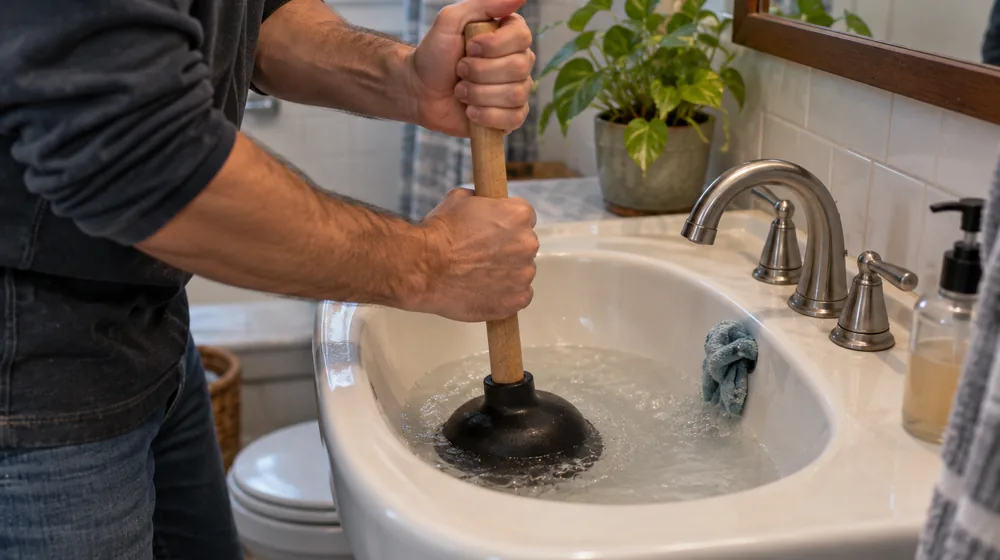
How to Unclog a Drain Yourself (and When to Stop)
Most single-fixture clogs are genuinely a DIY job. Here is what works, in the order a plumber would try it — and the p…

Grease and Kitchen Drains: Why Snaking Keeps Failing
A cable bores a hole through the middle of a grease coating and leaves the coating exactly where it was. That is why t…
Why Your House Smells Like Sewer (and How to Fix It)
A sewer smell in your home is never mysterious. Your drain system is a sealed loop that vents above the roof, so if yo…
Related services
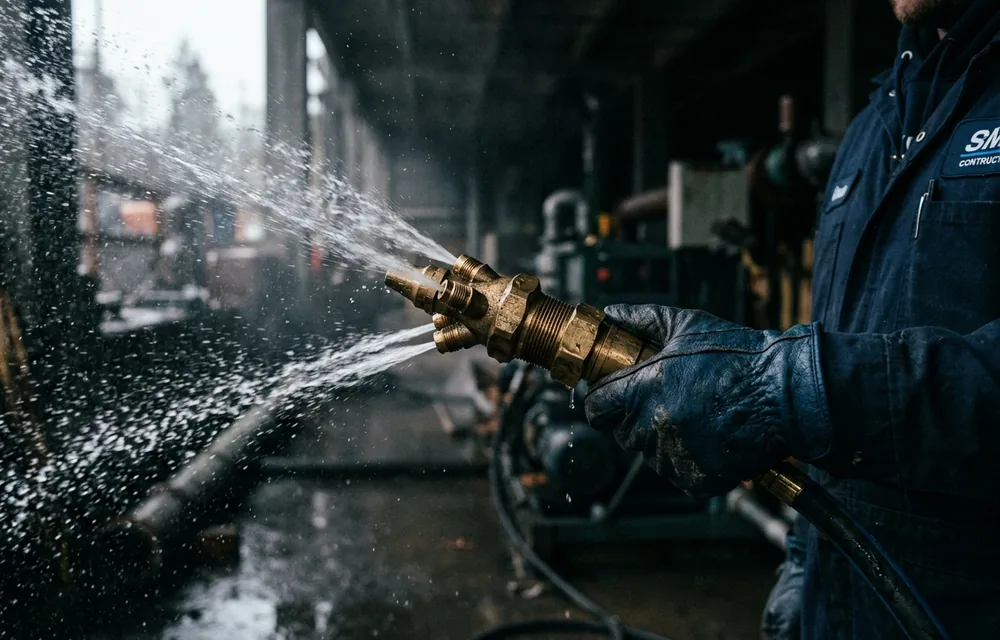
Hydro Jetting
A cable bores a hole through the clog.
Sewer Camera Inspection
A sewer scope is the cheapest insurance in real estate and the only defensible basis for an excavation quote.
Rooter Service & Tree Root Removal
Roots do not break into a healthy pipe.
24/7 Emergency Drain & Sewer Service
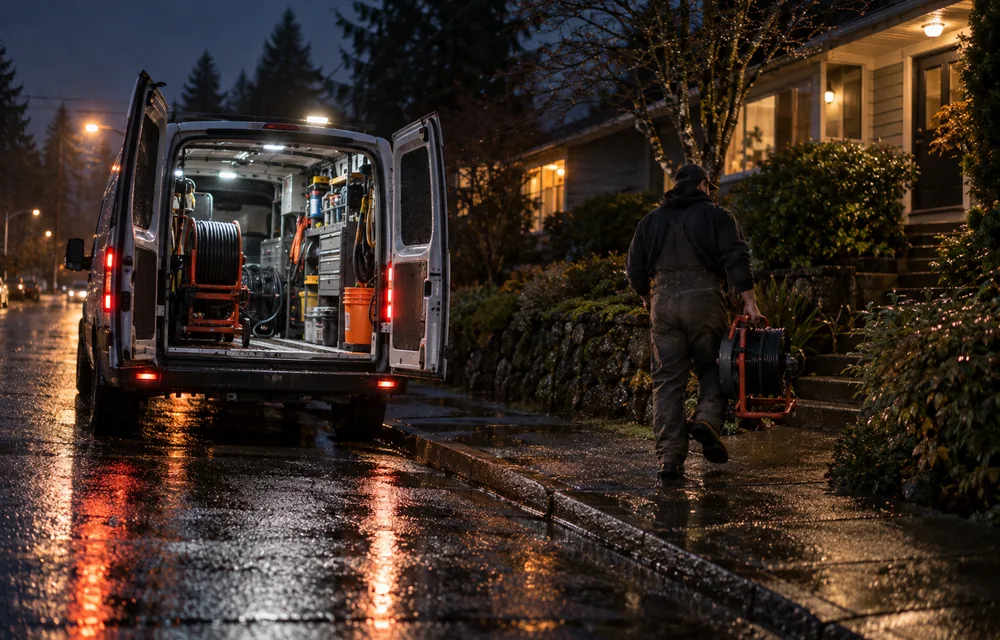
If sewage is entering your home right now, stop reading and call.
Drain Cleaning across Oregon
Drain Cleaning is covered in 26 Oregon cities. Each local page sets out the housing stock and pipe materials specific to that area.