Drain cleaning and sewer service in Springfield, Oregon
Springfield reads differently from Eugene despite sharing a metro area and a wastewater commission. Its housing skews later and more working-class, with substantial mill-era and postwar stock, and its position between the Willamette and McKenzie rivers gives it a genuinely high winter water table.
- Lane County
- Willamette Valley
- Same-day and 24/7
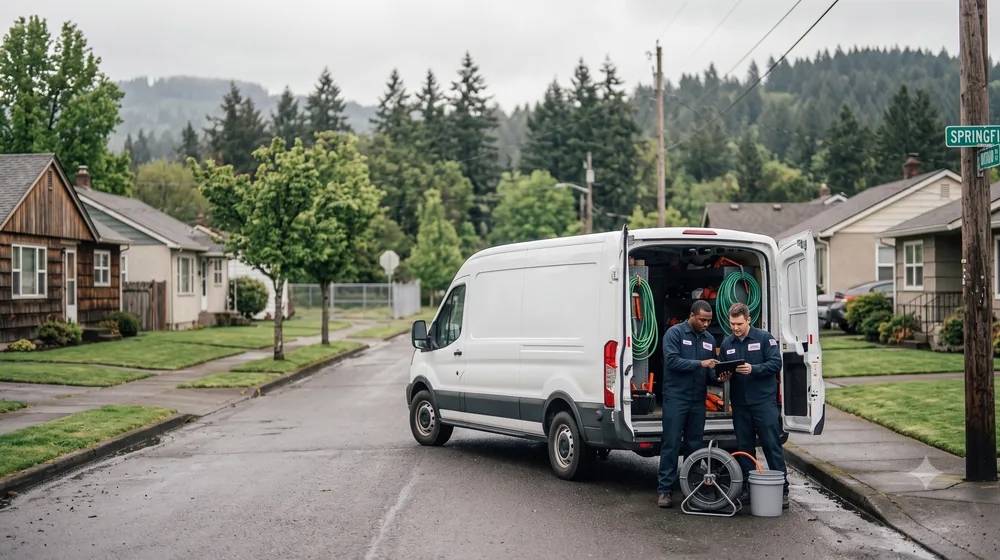
What goes wrong with Springfield plumbing
High water table between two rivers
Springfield sits in the corridor between the Willamette and the McKenzie. Winter groundwater rises to lateral depth across much of the older city, driving infiltration and putting sustained load on crawlspace sump systems.
Postwar mill housing at end of pipe life
The 1950s–1960s housing built during the timber era is now at the age where Orangeburg laterals have deformed and cast iron interior lines have corroded. Both are now presenting simultaneously.
Seasonal recurrence tied to McKenzie levels
Backup calls here correlate closely with sustained rain and river stage rather than with usage. A line that never troubled you all summer is the same line that fails in a December atmospheric river.
Housing stock and pipe materials
Housing: Mill-era housing in the historic core, heavy 1950s–1970s development, and newer growth in the Thurston and Gateway areas.
Likely pipe materials: Orangeburg and clay through the postwar core, cast iron interior, PVC in Thurston and later subdivisions.
Who is responsible for the pipe in Springfield
City of Springfield / Metropolitan Wastewater Management Commission. Springfield handles local collection; regional treatment and transmission are operated by the Metropolitan Wastewater Management Commission, the Lane County–Eugene–Springfield partnership.
Confirm your own boundary with the utility before assuming any part of the run is theirs — and check whether your homeowner's policy carries a service line endorsement, which many Oregon carriers sell cheaply.
A closer look at Springfield
Two rivers, one corridor, and a permanently high water table
Springfield sits in the corridor between the Willamette and the McKenzie, and that geography dominates everything about drainage here. Winter groundwater rises to lateral depth across much of the older city, so any line with open joints spends the wet season carrying water it was never designed to carry.
The observable pattern is that Springfield backup calls track sustained rain and river stage far more closely than they track household usage. A line that gave no trouble all summer fails in a December atmospheric river, and the homeowner reasonably concludes something suddenly broke. Nothing broke — the line has been marginal for years and winter removed its remaining margin.
It also puts genuine sustained demand on crawlspace sump systems. A Springfield pump is not handling occasional storm events; it is running through the season.
Mill-era housing is failing on two fronts at once
Springfield's major growth ran through the timber years, roughly 1950 to 1970, and it was built in a compressed window. That means its plumbing is reaching end of life in a compressed window too.
Two things are arriving together. The Orangeburg laterals from that period are all past their rated 30-to-50-year life and deforming. The cast iron interior drain lines are corroding along the invert, leaving rough scaled bores that catch everything. A homeowner experiencing both simultaneously gets a confusing picture — slow drains inside plus a main line that backs up seasonally — and is often sold a repeated clearing schedule when the honest answer is that the system needs replacing in stages.
Thurston, Gateway and the newer subdivisions are a different market entirely: PVC, structurally sound, and calling about wipes and grease rather than pipe failure.
The MWMC does not cover your lateral
This comes up constantly. The Metropolitan Wastewater Management Commission operates regional treatment and transmission for the Eugene–Springfield metro. It is a real, substantial public utility, and it has nothing to do with the pipe running under your front lawn.
The City of Springfield handles local collection; the private lateral is the property owner's. Ask the city where their responsibility begins on your specific street before assuming any part of the run is theirs, and ask about assistance programs before financing a replacement privately.
Where the line reaches in and around Springfield
Within Springfield that covers Downtown Springfield, Thurston, Gateway, Mohawk, Willamette Heights, Glenwood, Q Street corridor and the surrounding area. Same-day drain cleaning and rooter service is usually available across Springfield, and the line is answered around the clock for an active backup. Confirm coverage for your exact address on the call.
Nearby cities also covered
What the call covers in Springfield
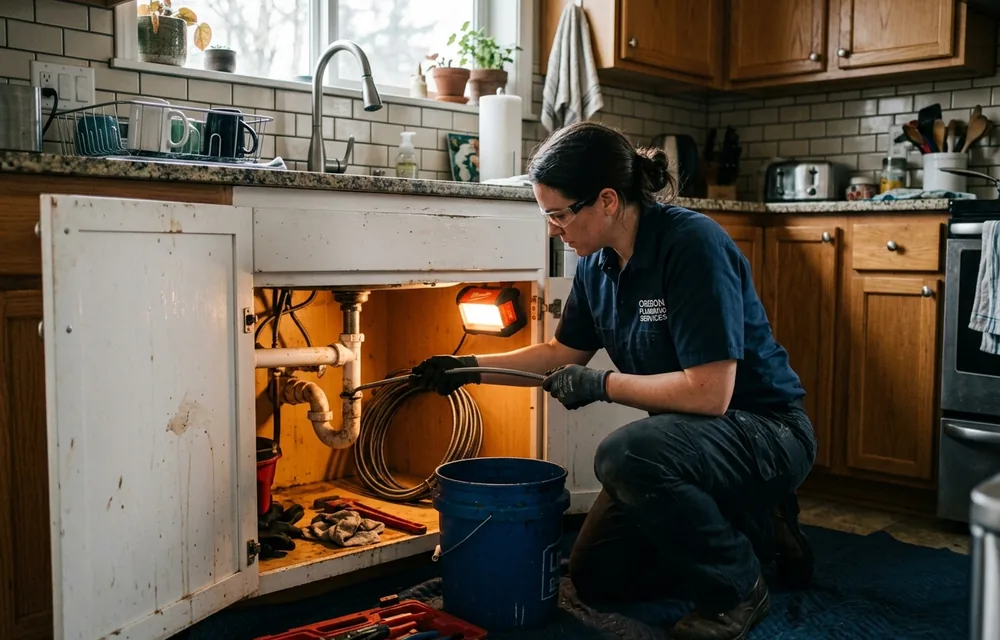
Drain Cleaning
A single slow sink is a nuisance.
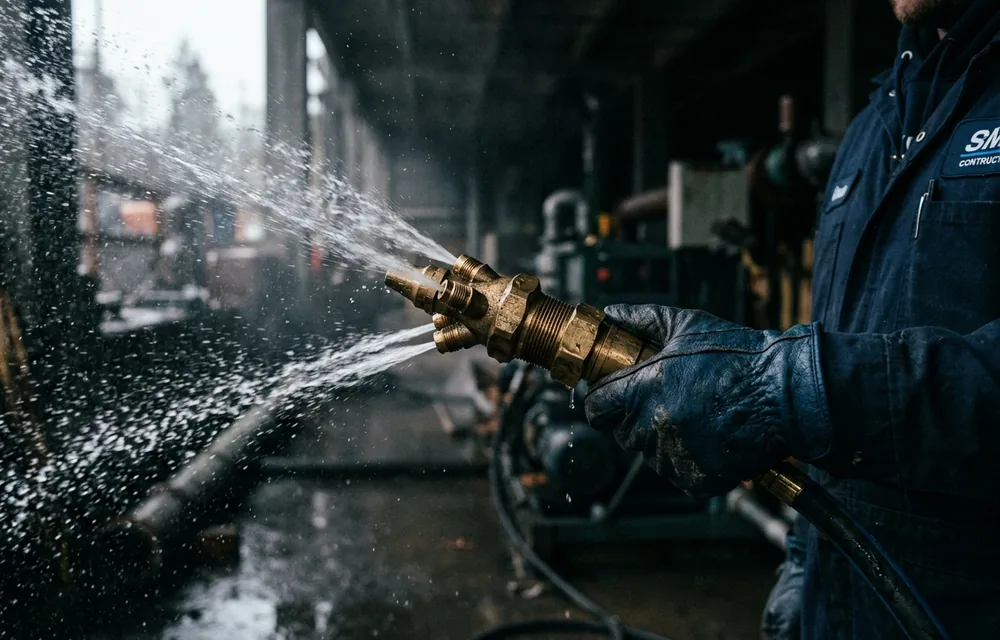
Hydro Jetting
A cable bores a hole through the clog.
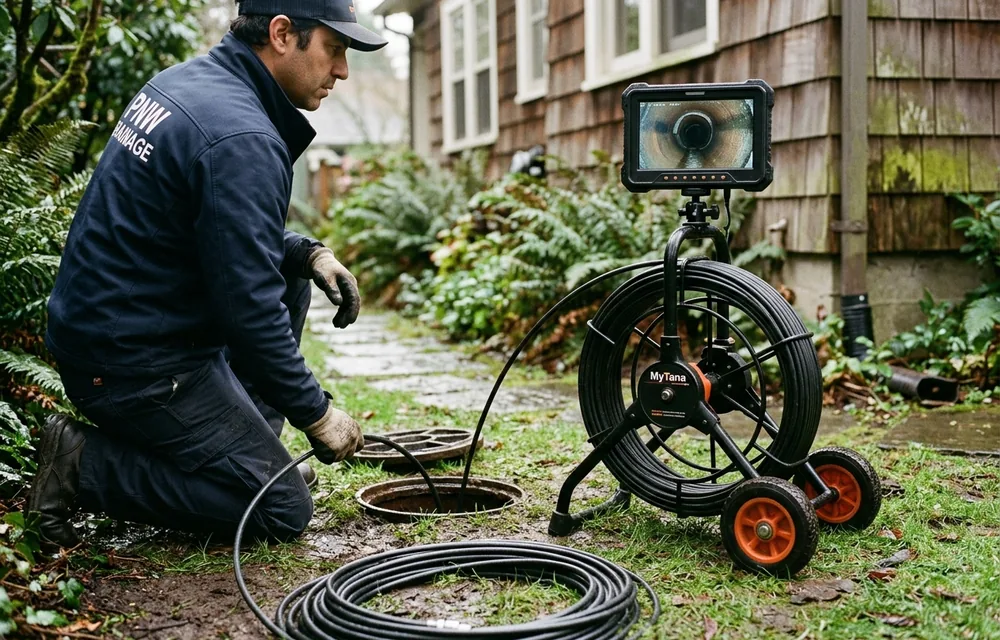
Sewer Camera Inspection
A sewer scope is the cheapest insurance in real estate and the only defensible basis for an excavation quote.
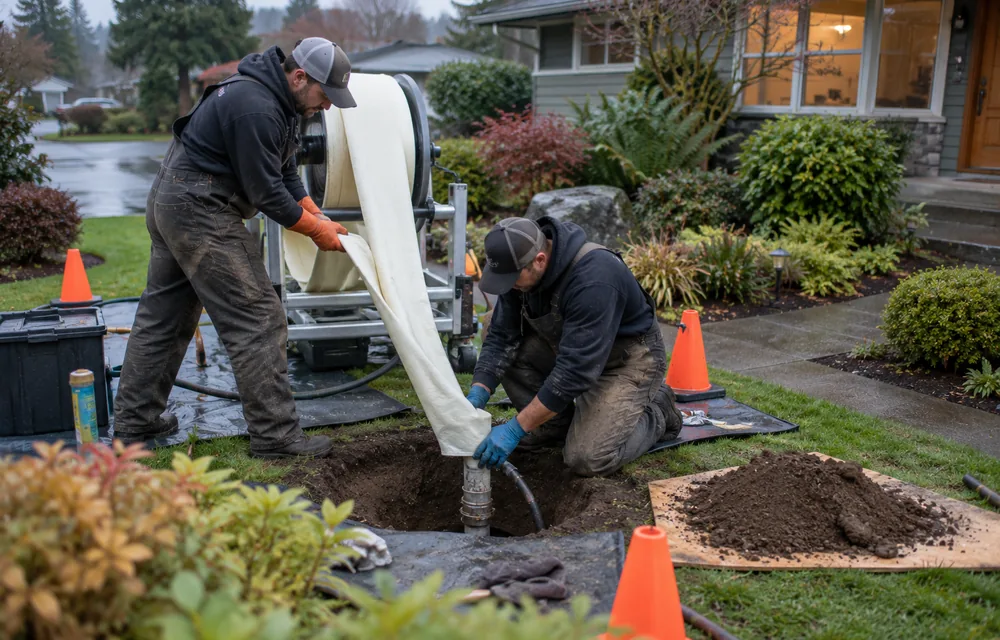
Sewer Line Repair & Replacement
Sewer replacement is the largest unexpected bill most Oregon homeowners ever face on their plumbing.
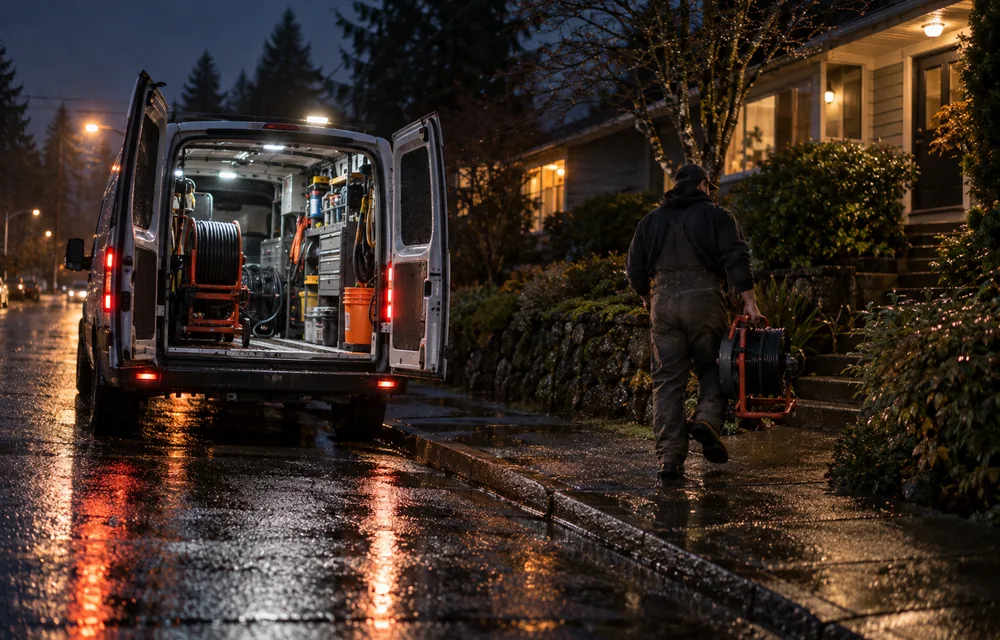
24/7 Emergency Drain & Sewer Service
If sewage is entering your home right now, stop reading and call.
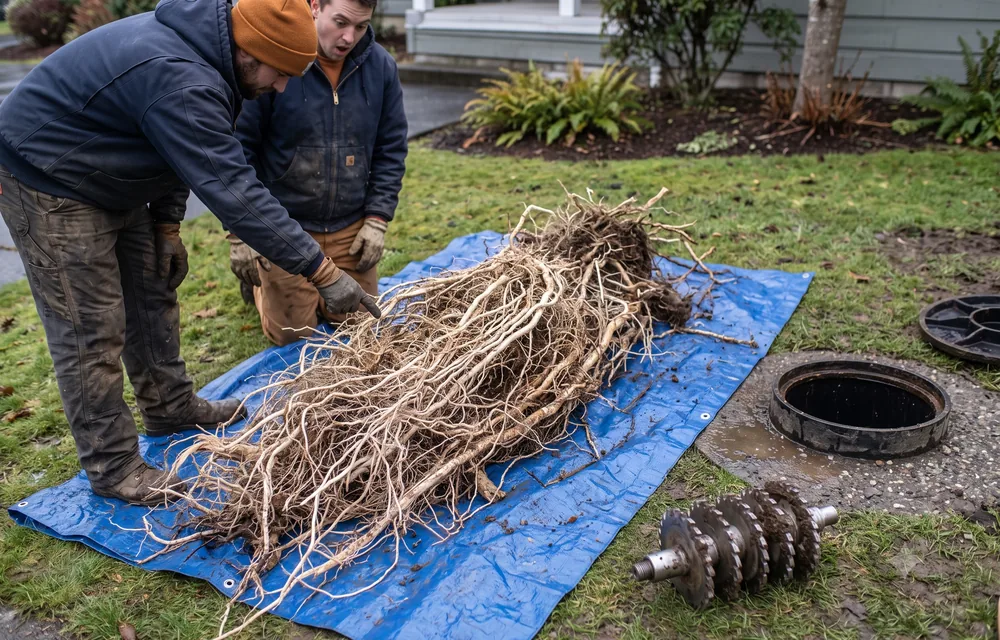
Rooter Service & Tree Root Removal
Roots do not break into a healthy pipe.
Springfield plumbing questions
Why is Springfield's water table so high?
Springfield sits in the corridor between the Willamette and the McKenzie rivers. Winter groundwater rises to lateral depth across much of the older city, which drives infiltration into any line with open joints and puts sustained demand on crawlspace sump systems. Backup calls here track sustained rain and river stage far more closely than they track household usage.
My Springfield house is from the mill era. What is failing?
Probably two things at once. Homes from the 1950s and 1960s typically have Orangeburg laterals now well past their rated life, plus cast iron interior drain lines corroding along the invert. Because Springfield's mill-era housing went up in a compressed window, these are arriving at end of life together rather than one at a time.
Does the MWMC cover my sewer repair?
No. The Metropolitan Wastewater Management Commission operates regional treatment and transmission facilities for the Eugene-Springfield metro, not private laterals. The pipe from your house to the public main is yours. Ask the City of Springfield where exactly their responsibility begins on your street before assuming any of the run is theirs.
My Springfield crawlspace sump runs all winter. Is that normal?
In the corridor between the Willamette and the McKenzie, yes, continuous winter running is the expected condition rather than a fault. What is not normal is continuous running in dry summer weather, which usually means a failed check valve letting discharge water fall back into the basin, a stuck float, or an undersized basin causing short cycles. The pump is then wearing out for nothing.
Is it worth replacing an Orangeburg lateral before it fails?
In Springfield's mill-era housing, generally yes. Orangeburg past its rated life does not fail gracefully. It deforms and collapses, usually without a useful warning period, and usually during the wet season when scheduling and excavation are both at their worst. Replacing on your own timetable costs the same as replacing in an emergency minus the emergency premium, the water damage and the disruption.