Drain cleaning and sewer service in Bend, Oregon
Bend is the exception to almost everything true about plumbing in western Oregon. Hard water, volcanic soils, genuine freeze risk, an enormous share of very new construction, and a large stock of vacation rentals — none of which are meaningful factors in the valley.
- Deschutes County
- Central Oregon
- Same-day and 24/7
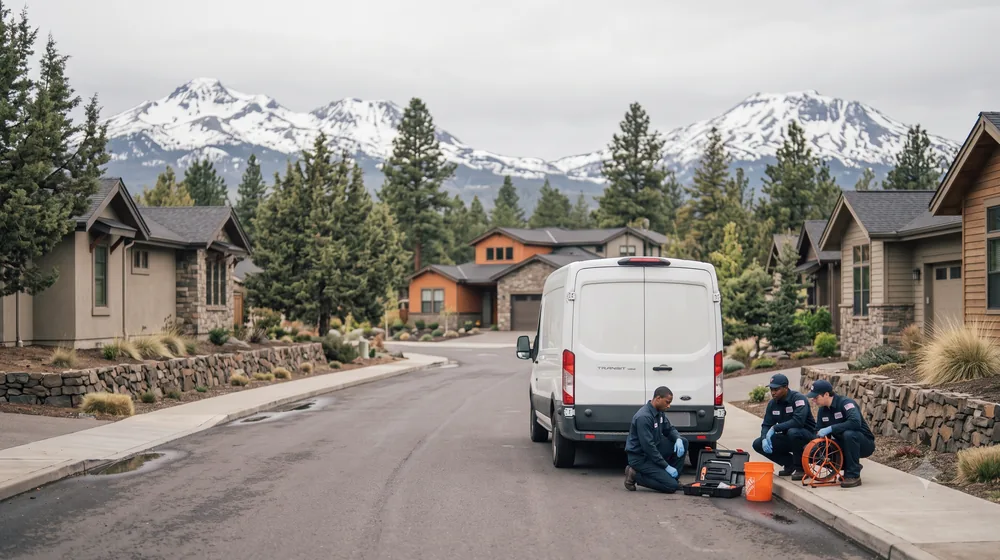
What goes wrong with Bend plumbing
Hard water and mineral scale
Bend's water is substantially harder than the valley's. Scale narrows drain lines, destroys fixture traps, and is the primary killer of water heaters and tankless heat exchangers here. Annual descaling on tankless units is genuinely mandatory rather than advisory.
Real freeze risk at elevation
At over 3,600 feet Bend gets hard freezes the valley never sees. Exposed lines, crawlspace plumbing, hose bibs, vacation-rental properties left unheated, and sump discharge lines all freeze here. Winterisation is a real seasonal task, not a precaution.
Volcanic rock and excavation cost
Deschutes County sits on basalt and volcanic tuff, often at shallow depth. Excavation costs considerably more here than in valley soils, which shifts the economics decisively toward trenchless methods when a lateral does need work.
Vacation rental turnover
Bend's large short-term rental stock sees constant guest turnover, and guests treat drains carelessly. Wipes, grease and foreign objects arrive at a rate owner-occupied housing does not match, and a backup mid-booking is a revenue problem as well as a plumbing one.
Housing stock and pipe materials
Housing: A modest historic core, limited mid-century stock, and an overwhelming share built since 1995 during Bend's sustained growth.
Likely pipe materials: PVC across the large majority of housing; cast iron and clay confined to the older core near downtown and the Old Mill area.
Who is responsible for the pipe in Bend
City of Bend Water Services. Bend assigns the property owner responsibility for the sewer service from the main into the property, including any private pump required on a pressure sewer system. The city funds the main within the right-of-way. Bend also operates a septic-to-sewer conversion program.
Confirm your own boundary with the utility before assuming any part of the run is theirs — and check whether your homeowner's policy carries a service line endorsement, which many Oregon carriers sell cheaply.
A closer look at Bend
Hard water is the defining maintenance fact here
Bend's water carries substantially more dissolved mineral than valley water, and the consequences compound across every water-using appliance in the house.
In a tank water heater, scale settles on the bottom where it insulates the burner from the water. You hear it as rumbling or popping, and it shows up as shorter hot-water duration and slower recovery. Annual flushing genuinely extends life here in a way it barely does in Eugene.
In a tankless unit, scale accumulates on the heat exchanger, and a scaled exchanger fails. Annual descaling in Bend is not advisory maintenance — skip it and the manufacturer has documented grounds to decline a warranty claim. Anyone quoting you a tankless installation in Bend without also specifying a softener or scale inhibitor is setting you up.
In drain lines, scale narrows the bore and destroys fixture traps faster than most homeowners expect.
Basalt, and why every quote here should include trenchless
Deschutes County sits on basalt and volcanic tuff, frequently at shallow depth. Cutting a trench through rock costs several times what trenching through valley loam costs, and the difference is large enough to reverse the usual method comparison entirely.
In the Willamette Valley, open trench often wins on total cost for a short shallow run under plain lawn. In Bend it frequently does not, because the excavation itself is the expensive part rather than the restoration. Pipe bursting and CIPP lining need only an entry and exit pit, which means far less rock to remove.
Any Bend sewer quote that has not assessed what is actually under your run, and has not priced a trenchless alternative, is incomplete. Ask for both.
Freeze risk and the vacation rental problem
At over 3,600 feet, Bend gets hard sustained freezes the Willamette Valley simply does not see. Exposed hose bibs, crawlspace plumbing and sump discharge lines all freeze here in winters where the valley is entirely unaffected, and valley-standard precautions are not adequate.
The expensive version of this is short-term rentals. Bend has a large STR stock, and a property left unheated between bookings through a hard freeze can burst a supply line that then runs for days before anyone walks in. Set the thermostat to at least 55°F rather than off, open cabinet doors under sinks on exterior walls, and have someone physically check the property during a cold snap.
Guest turnover creates the other half of the problem: wipes, grease and foreign objects arrive at a rate owner-occupied housing never matches, and a backup mid-booking is a refund and a review as well as a plumbing bill.
Where the line reaches in and around Bend
Within Bend that covers Old Mill District, Westside and NorthWest Crossing, Awbrey Butte, Southeast Bend, Larkspur, Orchard District, Century West, Tetherow and the surrounding area. Same-day drain cleaning and rooter service is usually available across Bend, and the line is answered around the clock for an active backup. Confirm coverage for your exact address on the call.
Nearby cities also covered
What the call covers in Bend
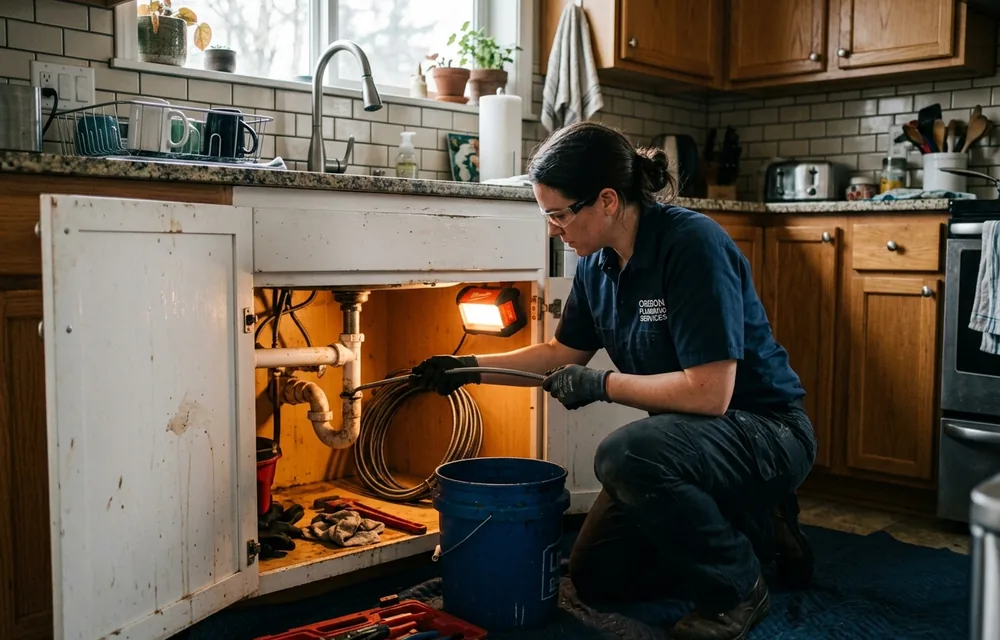
Drain Cleaning
A single slow sink is a nuisance.
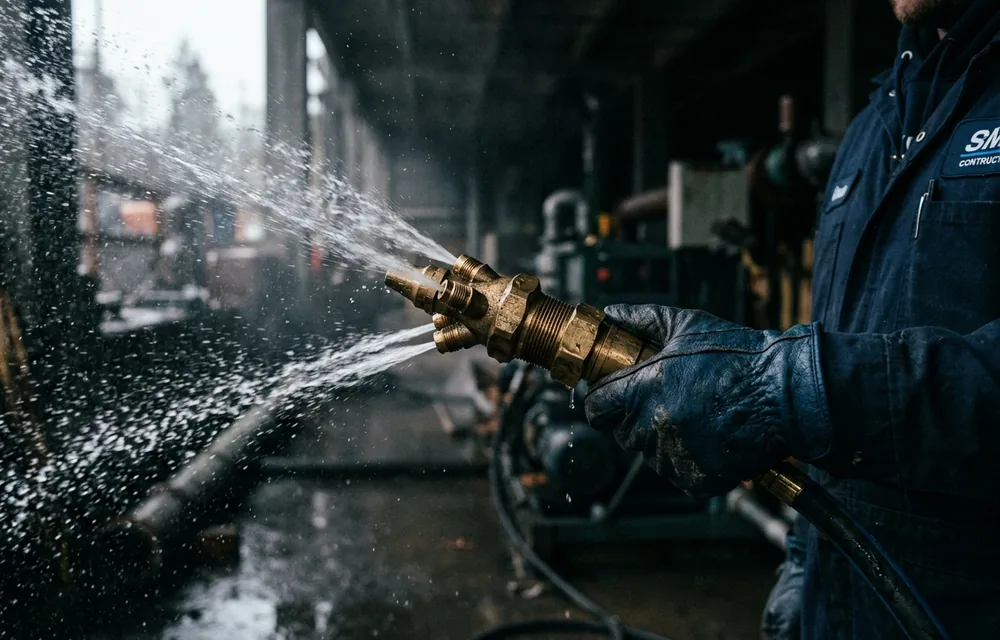
Hydro Jetting
A cable bores a hole through the clog.
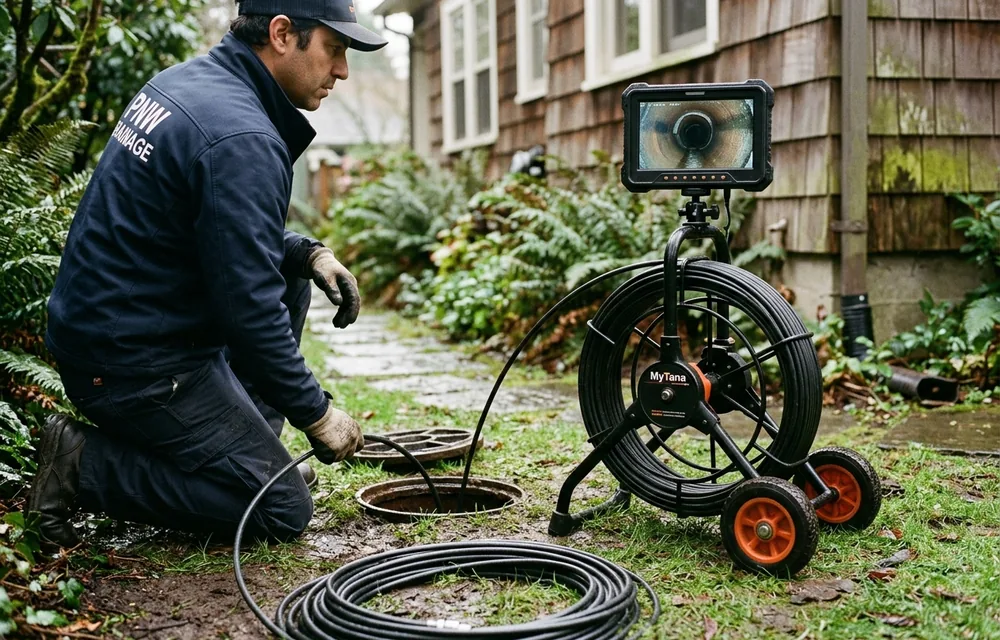
Sewer Camera Inspection
A sewer scope is the cheapest insurance in real estate and the only defensible basis for an excavation quote.
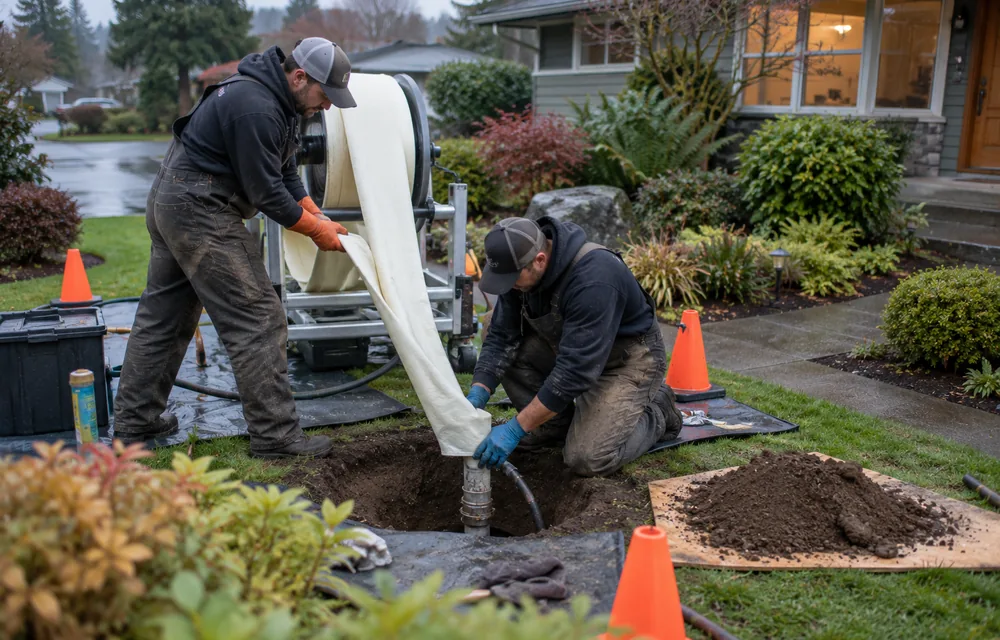
Sewer Line Repair & Replacement
Sewer replacement is the largest unexpected bill most Oregon homeowners ever face on their plumbing.
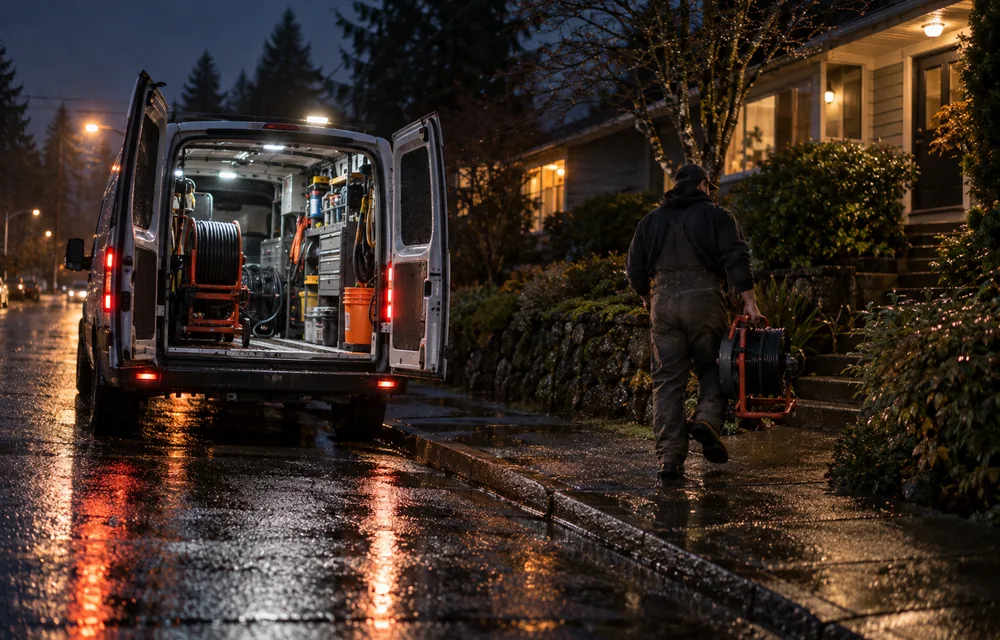
24/7 Emergency Drain & Sewer Service
If sewage is entering your home right now, stop reading and call.
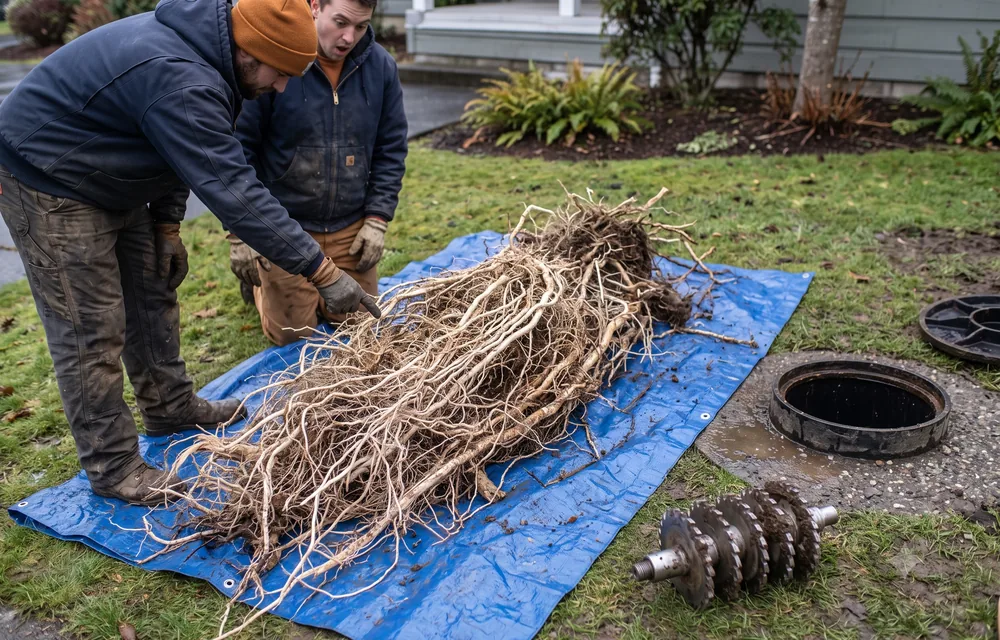
Rooter Service & Tree Root Removal
Roots do not break into a healthy pipe.
Bend plumbing questions
Why do water heaters fail so fast in Bend?
Hard water. Bend's water carries far more dissolved mineral than valley water, and that scale settles on the tank bottom where it insulates the burner from the water and forces longer cycles. You hear it as rumbling or popping. Annual flushing genuinely extends tank life here, and on a tankless unit annual descaling is mandatory rather than advisory — skip it and the manufacturer has grounds to decline a warranty claim.
Do I really need to winterise in Bend?
Yes. At over 3,600 feet Bend gets hard freezes the Willamette Valley simply does not see. Exposed hose bibs, crawlspace plumbing, sump discharge lines and — critically — vacation rental properties left unheated between bookings all freeze here. Valley-standard precautions are not adequate at Bend elevation.
Why is digging a sewer line so expensive in Bend?
Deschutes County sits on basalt and volcanic tuff, often at shallow depth. Cutting a trench through rock costs several times what trenching through valley soil costs. This shifts the economics decisively toward trenchless methods — pipe bursting and CIPP lining, which need only an entry and exit pit — whenever the pipe condition allows them.
Do I need a water softener in Bend?
For a tankless water heater, treat it as part of the installation rather than an accessory, because a scaled heat exchanger is a failed unit and a declined warranty claim. For a conventional tank you can get by with disciplined annual flushing, though a softener still extends the tank's life and reduces scale in fixtures and drain lines. Either way, budget for scale management rather than discovering it later.
How do I protect a Bend short-term rental between bookings?
Never turn the heat fully off, hold at least 55 degrees Fahrenheit. Open cabinet doors under sinks on exterior walls so warm air reaches the supply lines. Insulate any exposed crawlspace runs and the sump discharge. Have someone physically check the property during a cold snap rather than relying on a thermostat app, because the failure you care about is a burst line running unattended for days, and no remote sensor tells you that until the damage is done.