Drain cleaning and sewer service in Salem, Oregon
Salem's housing spans the full range from Victorian-era homes near the Capitol to large modern subdivisions in South Salem, and its position on the Willamette floodplain adds a groundwater dimension that inland valley cities do not share to the same degree.
- Marion County
- Willamette Valley
- Same-day and 24/7
What goes wrong with Salem plumbing
Willamette floodplain groundwater
Low-lying Salem neighbourhoods sit close enough to the river that winter water tables rise to or above lateral depth. Infiltration through compromised joints is severe here, and it converts a line that coped in summer into a line that backs up in January.
Postwar Orangeburg through the mid-century tracts
Salem expanded substantially in the 1950s and 1960s, and Orangeburg was standard for laterals during much of that period. Every remaining run is now beyond its rated life.
Heavy clay in the South Salem hills
The hill neighbourhoods drain slowly through dense clay, producing sustained crawlspace moisture and continuous sump pump duty through a wet winter.
Housing stock and pipe materials
Housing: Significant pre-1940 stock in central and northeast Salem, extensive 1950s–1980s development, and continuing growth in South Salem and West Salem.
Likely pipe materials: Clay tile on pre-war laterals, Orangeburg through the postwar tracts, cast iron interior on anything pre-1975.
Who is responsible for the pipe in Salem
In most Oregon jurisdictions the property owner is responsible for the sewer lateral from the building to the connection at the public main — including the portion running under the street. The exact split differs by city, so confirm yours with Salem's public works or wastewater department before assuming any of it is theirs.
Two things worth checking before you pay for anything: whether the city runs a lateral repair assistance or low-interest loan program, and whether your homeowner's policy carries a service line endorsement.
A closer look at Salem
The floodplain is the single biggest variable in Salem
Salem sits on the Willamette, and low-lying neighbourhoods carry a winter water table that rises to or above lateral depth. That is the mechanism behind most Salem wet-season backups, and it is worth understanding because it changes what the fix is.
The line is frequently not blocked in the ordinary sense. It is carrying groundwater that entered through cracks and open joints, on top of household flow, and it simply has no capacity left. A line running comfortably at partial capacity all summer has no headroom in January. This is why Salem backups cluster with sustained rain rather than with usage, and why clearing the line in December often produces only temporary relief while the water table stays up.
The durable answer for an infiltrating lateral is sealing it — lining eliminates the joints that groundwater enters through, which solves the infiltration and the root problem in one operation.
Three housing eras, three different failure modes
Pre-1940, central and northeast Salem. Substantial stock around the Capitol, Grant and Highland. Clay tile laterals, mature canopy, root intrusion as the default.
1950s and 1960s expansion. Salem grew substantially during the Orangeburg window and those laterals are all now past their rated 30-to-50-year life. If your home is from this era and the lateral has never been inspected, that inspection is overdue rather than optional.
South and West Salem, 1970s onward. Better pipe, worse drainage. The South Salem hills drain through dense clay that holds water against foundations through the wet season, so the calls here are crawlspace moisture and sump capacity rather than lateral failure.
What a Salem camera inspection usually finds
On a pre-1960 Salem lateral, the common picture is root hair at multiple joints plus visible infiltration — water entering the pipe from outside, which you can see on camera as seepage at a joint even when nothing is running inside the house.
That second finding is the one homeowners have usually never heard of, and it is the one that explains the seasonal pattern they have been living with for years. It also changes the repair conversation, because a lateral that leaks inward leaks outward too, and untreated it is putting groundwater into the treatment system and soil into your pipe simultaneously.
Where the line reaches in and around Salem
Within Salem that covers Downtown and Capitol Mall, Grant and Highland, South Salem, West Salem, Northeast Salem, Four Corners, Sunnyslope, Englewood and the surrounding area. Same-day drain cleaning and rooter service is usually available across Salem, and the line is answered around the clock for an active backup. Confirm coverage for your exact address on the call.
Nearby cities also covered
What the call covers in Salem
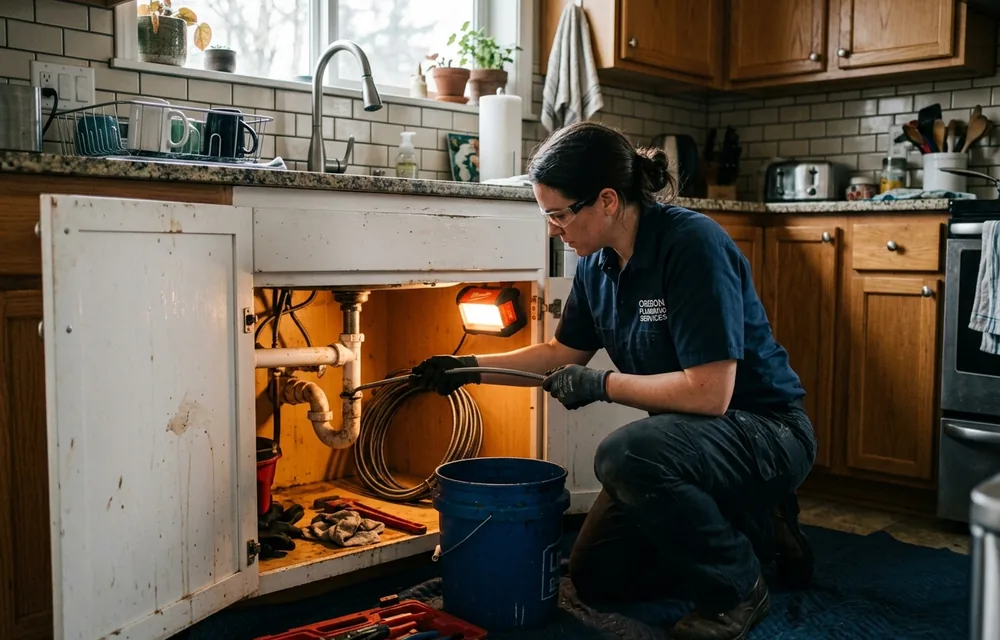
Drain Cleaning
A single slow sink is a nuisance.

Hydro Jetting
A cable bores a hole through the clog.
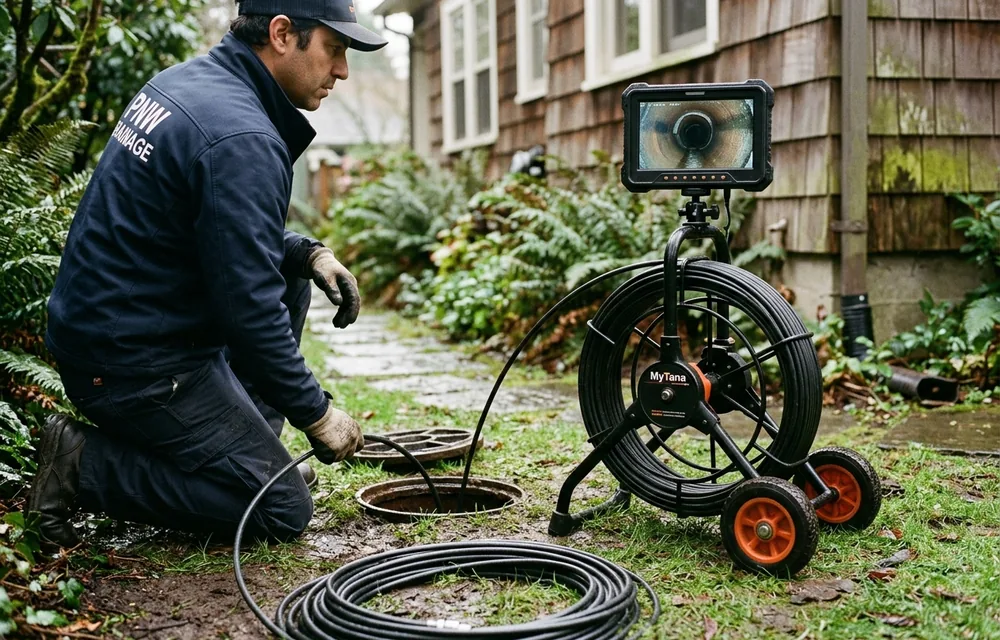
Sewer Camera Inspection
A sewer scope is the cheapest insurance in real estate and the only defensible basis for an excavation quote.
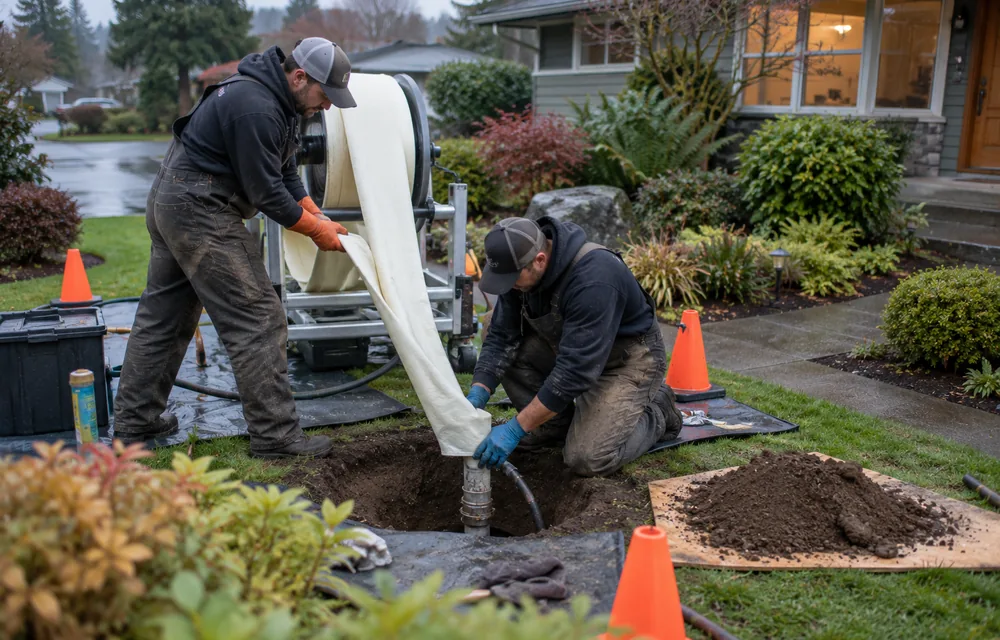
Sewer Line Repair & Replacement
Sewer replacement is the largest unexpected bill most Oregon homeowners ever face on their plumbing.
24/7 Emergency Drain & Sewer Service
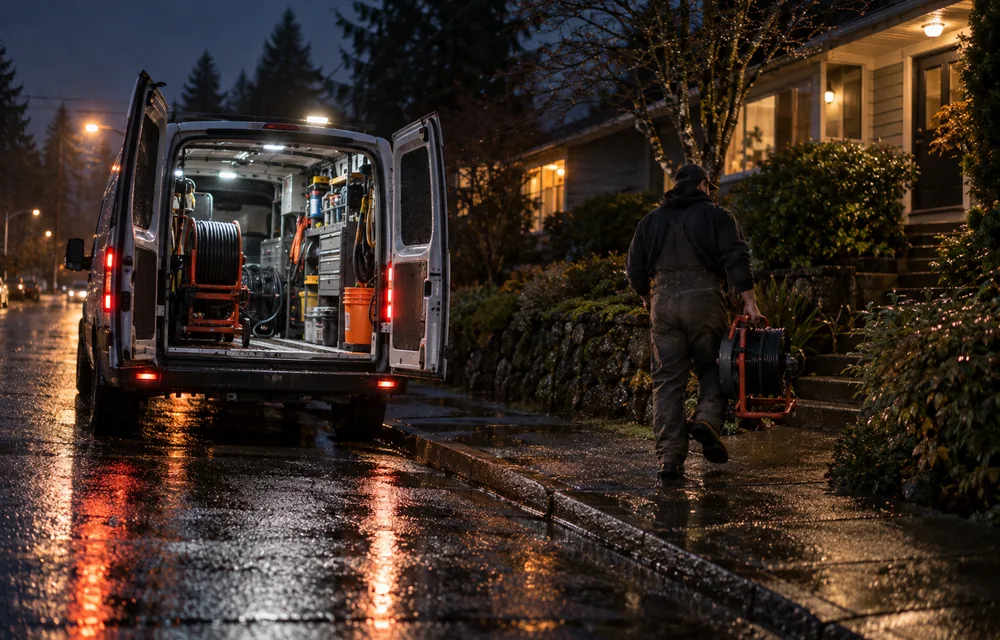
If sewage is entering your home right now, stop reading and call.
Rooter Service & Tree Root Removal
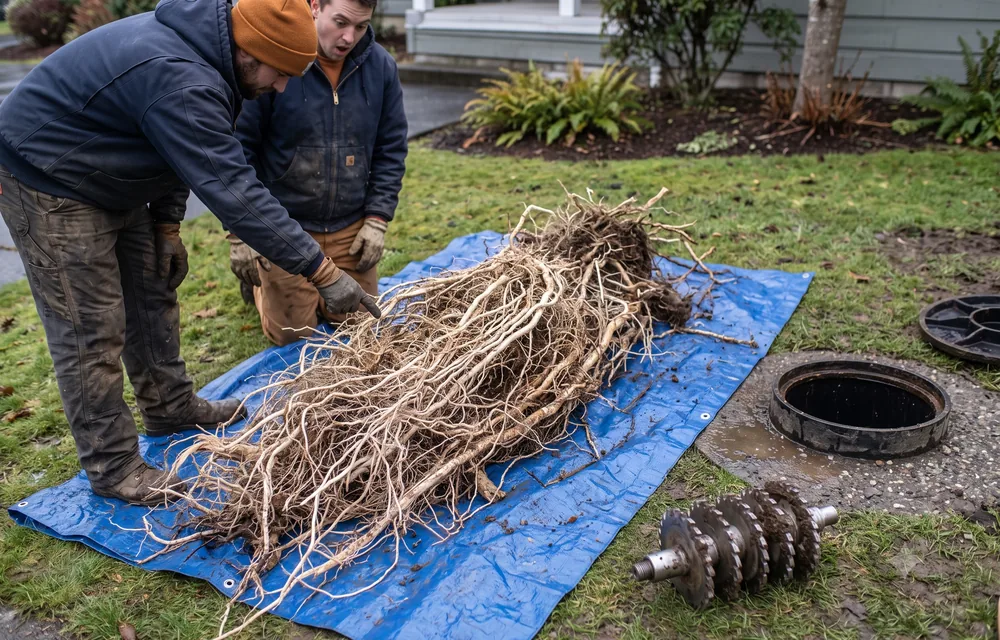
Roots do not break into a healthy pipe.
Salem plumbing questions
Why do Salem backups happen in January and not August?
Groundwater infiltration. Low-lying Salem neighbourhoods sit close enough to the Willamette that winter water tables rise to or above lateral depth. Groundwater then enters through exactly the cracks and open joints that were only a slow-drainage nuisance in summer. A line running at 60 percent capacity all summer has no headroom left when it is also carrying infiltration.
Is Orangeburg pipe common in Salem?
In the mid-century tracts, yes. Salem expanded substantially through the 1950s and 1960s, and Orangeburg was standard for laterals during much of that period. Its rated life was 30 to 50 years, so every remaining run is past it. If your home is from that era and the lateral has never been inspected, that inspection is overdue.
Why is my South Salem crawlspace always damp?
The South Salem hills drain through dense clay that holds water rather than shedding it, so moisture sits against foundations through the wet season. Before installing a pump, verify your downspouts discharge well away from the house and that grading slopes away — roof water delivered to the foundation is a common and much cheaper cause.
Should I clear my Salem line in December or wait until spring?
Clear it now if it is actually blocked, because an active backup never improves with waiting. But understand what you are buying: if the cause is winter infiltration rather than a discrete clog, clearing gives temporary relief while the water table stays up. The durable fix is sealing the joints groundwater enters through, and that work is better scheduled for drier months when excavation conditions are workable and you are not paying emergency rates.
Does living near the Willamette in Salem affect my insurance options?
It can affect flood coverage, but the one to check for drains is different: a service line endorsement, which covers the buried lateral itself. Standard policies exclude gradual failure, root intrusion and normal deterioration, which is precisely how Salem laterals fail. Many Oregon carriers sell the endorsement cheaply and a lot of homeowners already carry it without realising. Look at your declarations page before you pay for a replacement.