Tankless Water Heater Installation in Oregon
Tankless is a genuinely better appliance for the right house and a frustrating, expensive mistake in the wrong one. The variables that decide which you have are gas supply, venting path, and how cold your incoming water actually is in February.
- 5 to 8 hours
- Statewide Oregon
- 7 days a week
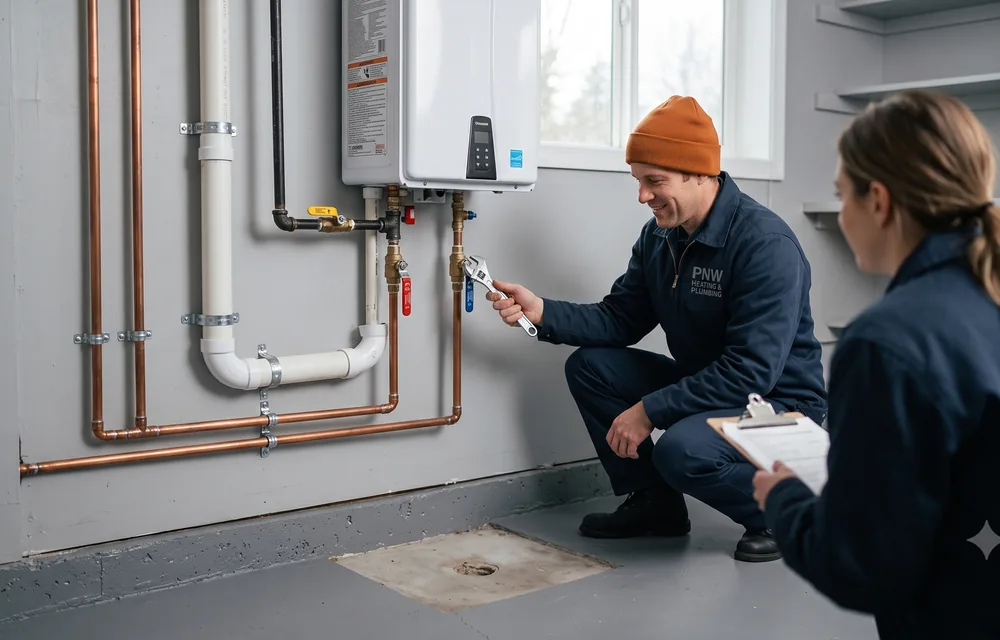
Signs you may need tankless water heater installation
Most people arrive here describing a symptom rather than naming a service. These are the three that point this way.
You run out of hot water regularly
Back-to-back showers, a large bath, or simultaneous laundry and dishwasher. Capacity, not efficiency, is the strongest argument for tankless.
The tank occupies space you want back
A tankless unit is roughly the size of a carry-on suitcase and wall-mounted. In a small utility room or a garage that doubles as storage, the floor area is worth real money.
The existing tank is at or past ten years
Replacing a working tank purely for efficiency rarely pays back. Replacing one that is about to fail anyway is when the maths changes.
Why Oregon groundwater temperature is the deciding number
A tankless heater does not store hot water. It raises the temperature of water passing through it, in real time, by a fixed number of degrees at a given flow rate. That figure is called temperature rise, and it is the whole ballgame.
Your incoming water temperature is not constant. Across most of Oregon it drops into the 40s Fahrenheit in winter, and lower in Central and Eastern Oregon and in higher-elevation communities like Bend, Sisters and La Pine. To deliver a 120°F shower from 45°F supply, the unit must produce a 75-degree rise — and every tankless unit’s flow rating falls as the required rise increases.
This is the origin of nearly every disappointed tankless owner. A unit rated at 9 gallons per minute in a manufacturer’s summer-condition table may deliver barely 4 gallons per minute at an Oregon February rise. Four gallons per minute is one shower and nothing else. Size to the January number, not the brochure number.
The free tankless sizing and payback calculator uses winter temperature rise, not the optimistic figure, and shows the payback period against a conventional tank.
What actually has to be true for a good install
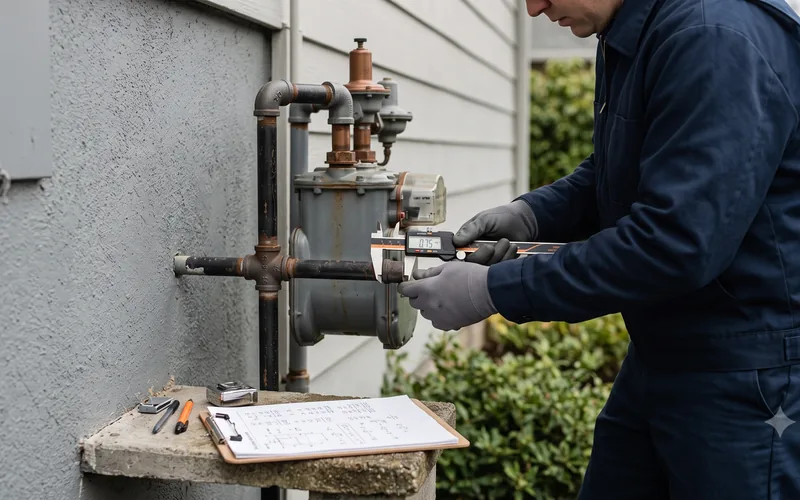
Adequate gas supply. This is the most common and most expensive surprise. A conventional tank draws roughly 40,000 BTU. A whole-house gas tankless draws 150,000 to 199,000 BTU. Existing half-inch gas line is frequently inadequate, and the meter itself sometimes is too. Upsizing the line — or having the utility upsize the meter — can add $800 to $2,500 to the job. Any quote that has not verified gas capacity is not a real quote.
A viable venting path. Condensing tankless units vent through PVC and can often run horizontally out a wall, which is a large advantage. But the termination has to clear windows, doors and property lines by code-required distances, and condensate needs a drain with neutralisation where required.
Electric capacity, if going electric. Whole-house electric tankless demands enormous amperage — commonly 120 to 150 amps of dedicated capacity. In most Oregon homes with a 100 or 200 amp service, that means a panel upgrade, and it frequently makes electric tankless uneconomic. Point-of-use electric units for a single remote fixture are a different and much easier proposition.
Water hardness within tolerance. Tankless heat exchangers scale, and scaled exchangers fail. In Bend, Redmond, Klamath Falls, Ontario and other hard-water areas a softener or scale inhibitor alongside the unit is close to mandatory, plus annual descaling. Without it, warranty claims get declined and life expectancy falls sharply.
The honest case against tankless
These are excellent units and they are still the wrong answer more often than the marketing suggests. Reasons to stay with a tank:
- You are moving within five years. Payback on the price premium typically runs eight to fifteen years in Oregon conditions. You will not recover it, and buyers rarely pay a premium for it.
- Your gas line needs upsizing and the run is long. Adding $2,000 of gas work to a $3,500 appliance changes the calculation completely.
- Low hot water usage. A one or two person household simply does not use enough hot water for the efficiency gain to add up to much in absolute dollars.
- You want a straight swap this week. Tank-to-tank is a half day. Tank-to-tankless is a permitted project involving gas, venting and often electrical.
- A heat pump water heater fits your space. If you have a garage or basement with air volume, a hybrid unit often beats gas tankless on running cost with a far simpler installation and better rebate availability.
What a proper installation includes
Winter-condition sizing
Sized on peak simultaneous demand at your coldest expected inlet temperature, not at a manufacturer’s summer rating.
Gas capacity verification
The existing supply gets measured and calculated up front, so line upsizing surfaces before the job rather than as a change order on install day. Ask whether this has been done — it is the most common expensive surprise.
Permit and inspection
Gas, venting and plumbing are inspected work in Oregon. Unpermitted gas appliance installation is both a safety and a resale problem.
Correct venting and condensate
Code-compliant terminations with required clearances, and condensate drainage with neutralisation where required.
Isolation valves fitted
Service valves so the unit can be descaled without cutting pipe. Every unit should have them. Many installs skip them, and it costs the owner every service thereafter.
Scale protection where needed
Softener or inhibitor specified in hard-water areas, because a scaled exchanger is a declined warranty claim.
Registration and a service interval
Registered for warranty, and you leave knowing when the first descale is due.
Frequently asked questions
How much does a tankless water heater cost installed in Oregon?
Typically $3,200 to $6,500 installed for a gas condensing unit, including permit, venting and condensate. Gas line upsizing, when required, adds roughly $800 to $2,500 on top — and it is required more often than homeowners expect, because a whole-house tankless draws three to five times the gas a conventional tank does.
Will a tankless water heater really never run out of hot water?
It will not run out, but it is limited by flow rate rather than volume. Correctly sized for your winter temperature rise, it supplies continuous hot water for the demand you specified. Undersized, it simply cannot raise cold Oregon groundwater fast enough for two showers at once, and you get lukewarm water indefinitely rather than hot water briefly.
Is tankless worth it in Oregon?
It depends on how long you are staying and what your gas situation is. Payback on the price premium generally runs eight to fifteen years here. If you plan to stay, use a lot of hot water, and your gas supply is adequate, the case is strong. If you are moving in five years or the gas line needs upsizing, a conventional tank or a heat pump unit is usually the better spend. The calculator on this site gives you your own number.
How often does a tankless water heater need servicing?
Annual descaling in most of Oregon, and it is genuinely mandatory rather than advisory in hard-water areas like Bend, Redmond, Klamath Falls and Ontario. Skipping it scales the heat exchanger, degrades performance, and gives the manufacturer grounds to decline a warranty claim.
Can I put a tankless unit where my tank is now?
Usually yes, and you reclaim the floor space — but the venting path, gas supply and condensate drainage all have to work from that location. Sometimes a different wall is far cheaper. The location should be assessed properly rather than assumed from where the tank sits now.
Electric or gas tankless?
Gas, for whole-house use in nearly every Oregon home. Whole-house electric tankless commonly requires 120 to 150 amps of dedicated capacity, which means a service upgrade in most homes and usually destroys the economics. Electric point-of-use units are excellent for a single remote fixture such as a detached shop sink.
Guides that cover this in more depth
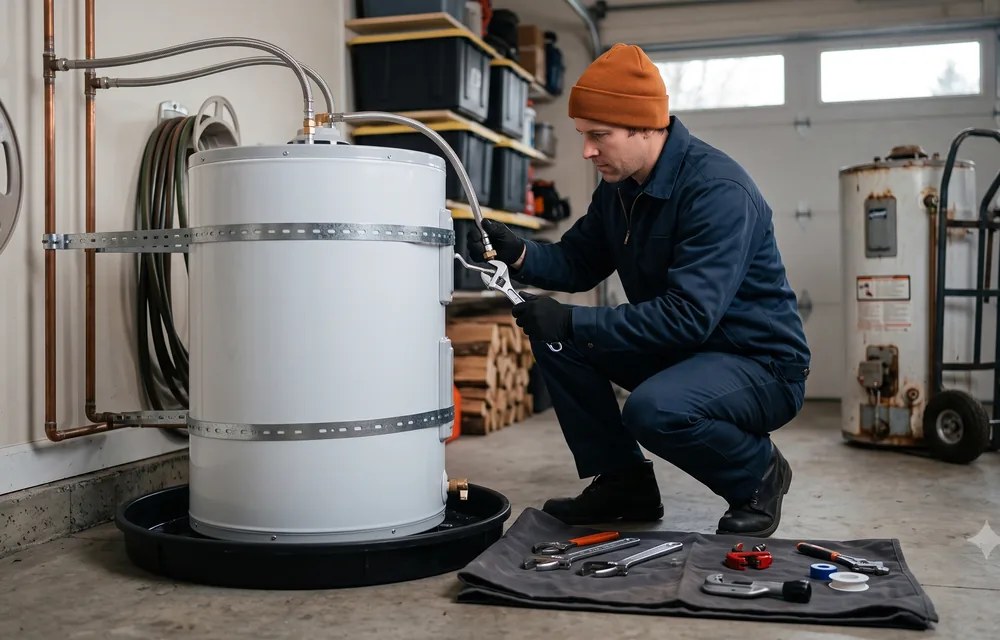
How Long Does a Water Heater Last? 8 Signs Yours Is Failing
A tank water heater in Oregon lasts eight to twelve years. Tankless runs fifteen to twenty. Most tanks give six to twe…
Hard Water in Oregon: Where It Is Worst and What It Costs
Oregon has one of the widest ranges of water hardness of any state, and it splits almost exactly along the Cascades. P…
Related services
Water Heater Repair & Replacement
Most water heater calls split cleanly into two groups: a $200 part on a tank worth keeping, and a tank that has already failed and is quietly ruining the floor.
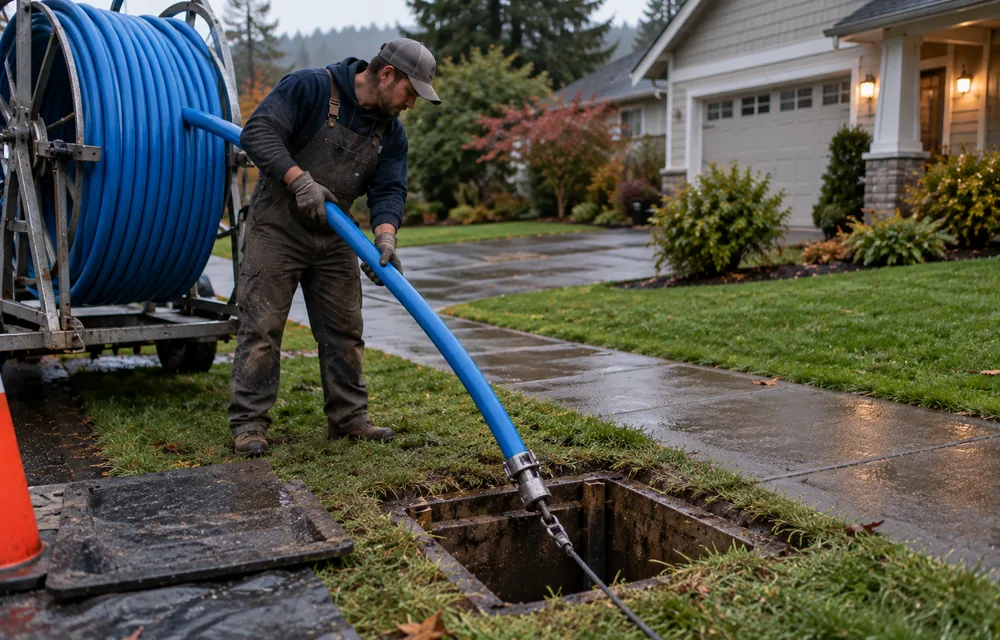
Water Service Line Replacement
The water service line is the pipe carrying potable water from the meter to your house.
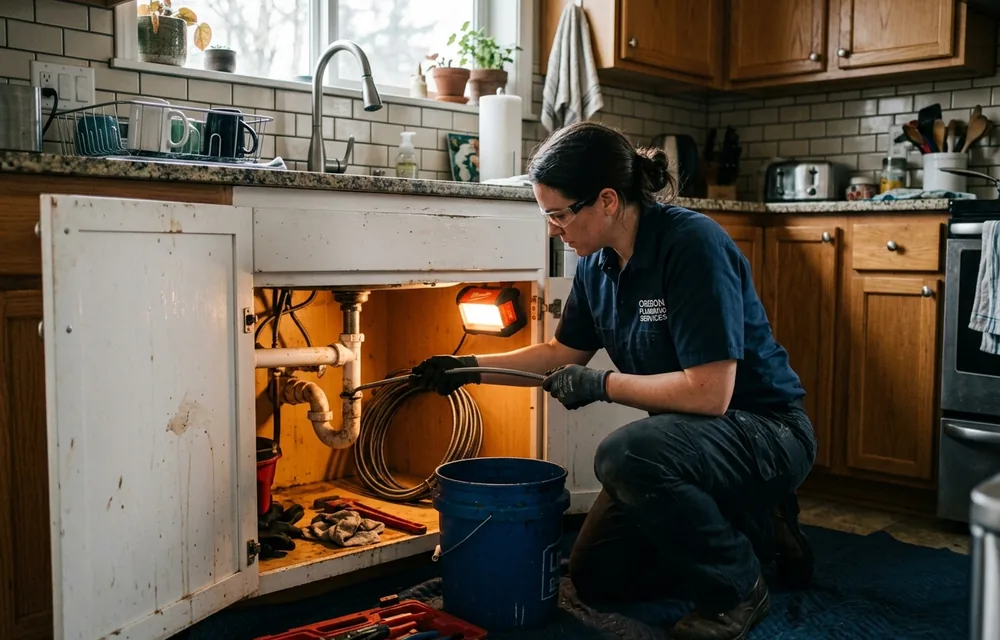
Drain Cleaning
A single slow sink is a nuisance.
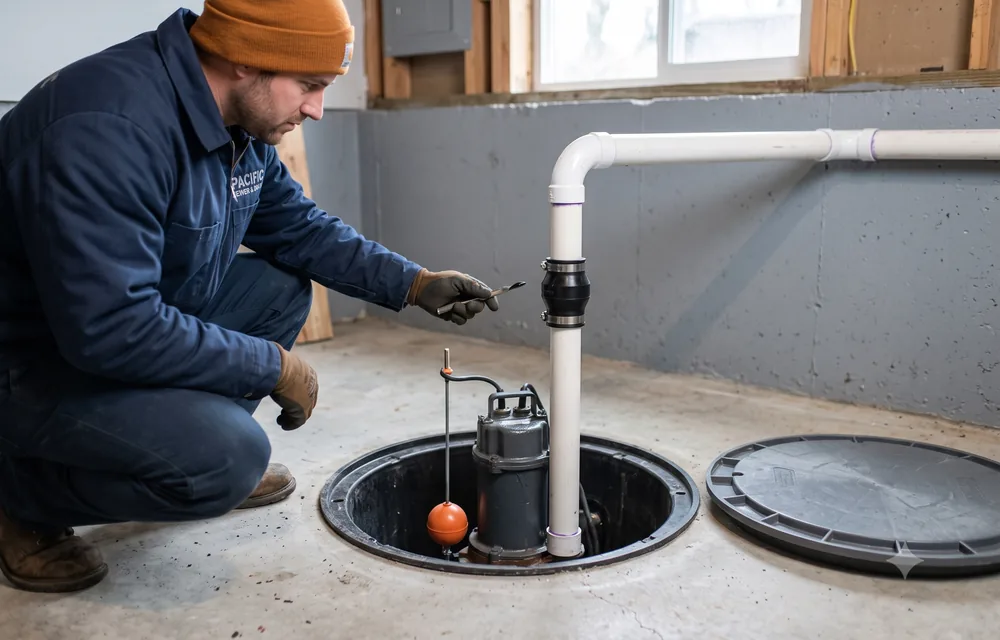
Sump Pump Installation & Repair
A sump pump is the only appliance in your house whose failure you discover at the worst possible moment, in the dark, during a storm, usually after the power has already gone out.
Tankless Water Heater Installation across Oregon
Tankless Water Heater Installation is covered in 26 Oregon cities. Each local page sets out the housing stock and pipe materials specific to that area.