Why your house smells like sewer — the seven causes, in order of likelihood
A sewer smell in your home is never mysterious. Your drain system is a sealed loop that vents above the roof, so if you can smell it inside, gas is escaping somewhere it should not. There are only seven realistic places that happens, and you can check five of them yourself in under an hour.
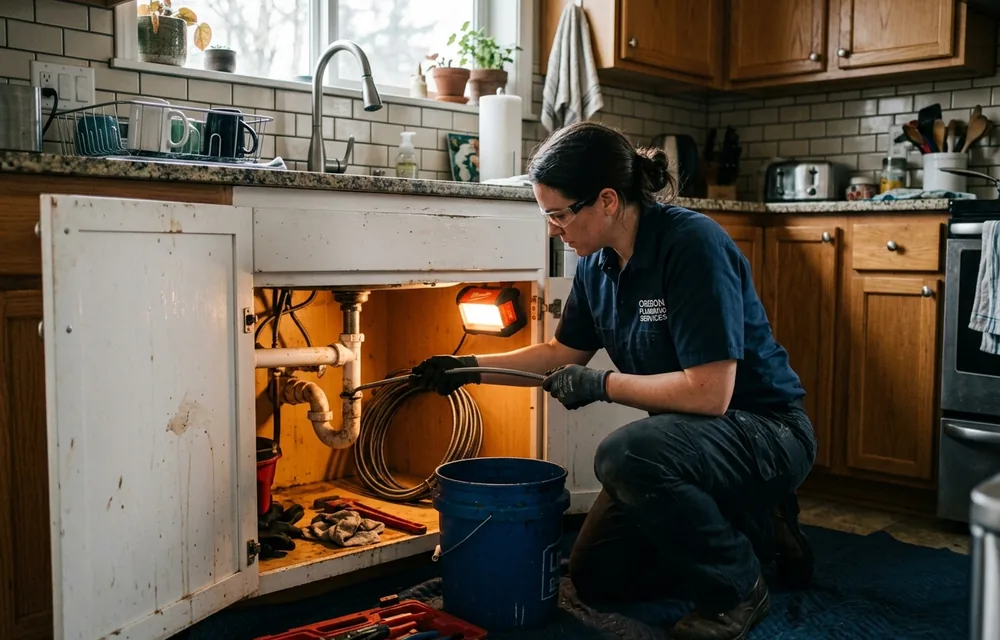
What the smell actually is, and whether it is dangerous
The odour is sewer gas: mostly hydrogen sulfide, with methane, ammonia and assorted volatile organics along for the ride. Hydrogen sulfide is what your nose registers as rotten eggs, and it is detectable at extraordinarily low concentrations — around 0.5 parts per billion, well below any level that harms you.
That sensitivity is the useful part. At the concentrations produced by a dry trap or a failed wax ring, sewer gas is unpleasant and nothing more. It becomes genuinely hazardous only at concentrations you would encounter inside a sewer, a septic tank or a sealed crawlspace with a broken line under it — and at high concentrations hydrogen sulfide paralyses the olfactory nerve, which is precisely why "the smell went away on its own" is a phrase worth treating with suspicion in an enclosed space.
Methane is the other consideration. It is flammable, and in the volumes that accumulate under a house with a broken drain line in a tight crawlspace it is a real, if uncommon, ignition risk. So: an intermittent whiff from a spare bathroom is a maintenance job. A persistent, strong smell in a basement or crawlspace, or a smell accompanied by nausea, headaches or dizziness, is something to get out of the space for and call about.
One more distinction that matters in Oregon. If the smell is more like rotten eggs at a hot tap only — not at drains, not in the air generally — that is very likely sulfate-reducing bacteria in the water heater rather than sewer gas at all. Skip to the water heater section below.
Cause 1: a dry P-trap (the answer about half the time)
Every fixture in your house has a U-shaped bend below it holding a small plug of water. That water is the entire barrier between your living space and the sewer. There is no valve, no seal, no mechanism — just a couple of inches of standing water doing all the work.
Water evaporates. A trap that is not used for roughly three weeks will drop below the seal depth, and once the water level falls past the weir, gas passes straight through. This is by a wide margin the most common cause of a sewer smell in a house, and it is free to fix.
The traps people forget are always the same ones: the guest bathroom nobody uses, the basement floor drain, the utility sink in the garage, the shower in a finished basement, the laundry standpipe when the washer sits unused, and the floor drain under a mechanical room. In Oregon houses, basement and crawlspace floor drains are the recurring culprit — they were installed for a washer that moved upstairs a decade ago and have been dry ever since.
The fix: run every fixture in the house for thirty seconds, including the ones you never use, and pour a gallon of water into every floor drain you can find. If the smell disappears within a few hours, that was it. For a trap that will keep going dry, add about a quarter cup of mineral oil or cooking oil after refilling — it floats on the water and slows evaporation dramatically, and it is the standard trick for a drain in a vacation property or a rarely used basement.
Set a calendar reminder to refill seasonal traps twice a year. It takes two minutes and prevents the call entirely.
Cause 2: a failed toilet wax ring
A toilet sits on a wax ring that seals the china horn to the closet flange in the floor. When that seal fails, sewer gas escapes at floor level around the base of the toilet, and water from each flush seeps into the subfloor rather than down the pipe.
The tell is a smell that is strongest right at the base of the toilet and worse immediately after a flush. Get down at floor level and sniff around the bowl. Then check for movement: straddle the bowl and rock it gently. Any perceptible rocking means the seal is broken or the closet bolts have loosened, and both let gas through.
Also look for discolouration or softness in the flooring around the base, and for a stain on the ceiling below if the toilet is on an upper floor. A wax ring that has been failing for months does far more damage to the subfloor than it does to the air quality.
The fix: a wax ring is a $6 part and a competent DIY job if you are comfortable lifting a toilet — shut off the supply, drain the tank and bowl, disconnect the supply line, remove the closet bolt nuts, lift straight up, scrape the old wax, set a new ring, reseat without twisting. The failure mode to avoid is a cracked or corroded closet flange underneath, which is what caused the ring to fail in the first place on older Oregon houses with cast iron flanges. If the flange is broken, sitting a new wax ring on it just repeats the problem in a year.
Cause 3: a blocked or damaged vent stack
Your drain system needs air. Every time water runs down a pipe it pushes air ahead of it and pulls air behind it, and that air comes from a vent that terminates above the roofline. Block the vent and the draining water has to get its air from somewhere — so it pulls it through the nearest trap, siphoning the water seal out of it. Now you have a dry trap, and a sewer smell, in a fixture you use daily.
The signature is distinctive and worth learning: gurgling. A sink that glugs when a nearby toilet is flushed, a toilet whose water level rises and falls on its own, a shower that burps when the washing machine drains. That noise is air being dragged through a water seal, and it is the sound of your vent not doing its job. If you hear it alongside a smell, look at the vent before anything else.
What blocks a vent in Oregon: bird and wasp nests in spring, Douglas fir and cedar needles packed into the opening after an autumn storm, moss growth on north-facing roofs, and — the seasonal one — frost closure during a cold snap, where warm moist sewer air condenses and freezes at the cold pipe opening and progressively seals it shut. Frost closure is common in Bend, Redmond and Klamath Falls, and it explains why some houses only smell in January.
The fix: if you can safely reach the roof, look down the vent for an obvious obstruction and flush it with a garden hose. If you cannot, or if the vent is a two-storey pitched roof in the rain, this is a call. Vent problems are also frequently misdiagnosed as drain clogs, so it is worth telling whoever you call about the gurgling — it changes what they look at first.
Cause 4: a broken drain line under the house
This is the expensive one, and it is more common in Oregon housing stock than most homeowners expect. Cast iron drain lines installed before the mid-1970s corrode from the inside out; the bottom of the pipe — the invert — is always the first part to fail, because that is where waste sits. A pinholed or split cast iron line in a crawlspace vents gas directly into the space under your floor, and every gap around a pipe penetration, duct boot or floor register carries it up into the house.
The signals: the smell is worst near floor vents or in the lowest part of the house, it is present regardless of which fixtures are being used, it gets noticeably worse when the furnace fan runs, and it does not respond at all to refilling traps. In a crawlspace you may also see damp or stained soil under the line, or a musty organic smell layered underneath the sewer note.
Oregon has a second variant of this: Orangeburg, a bituminised wood-fibre pipe used roughly between 1945 and 1972 with a design life of about fifty years. Every Orangeburg lateral still in service is past it. Orangeburg deforms into an oval before it collapses, so the classic sequence is repeated slow drains, then a smell, then a failure.
The fix: this needs a camera inspection before anyone quotes anything. A camera run tells you where the defect is, how deep, and whether it is a joint, a crack, a belly or a collapse — which is the difference between a spot repair and a full replacement. Do not accept a replacement quote from anyone who has not put a camera in the line, and make sure you get the video file to keep.
Cause 5: the water heater (when the smell is at hot taps only)
If the rotten-egg smell shows up only when you run hot water, your drains are fine. What you have is sulfate-reducing bacteria living in the tank, converting sulfate in the water into hydrogen sulfide. The bacteria are harmless to drink but the smell is genuinely awful, and it is common on Oregon well water and in areas with higher natural sulfate.
The reaction is accelerated by the magnesium anode rod that protects the tank from corrosion. The rod is sacrificial and doing its job — it is just also feeding the bacteria.
The fix, in order of cost: flush the tank and raise the thermostat to 160°F for a few hours to pasteurise it, then return it to 120°F (never leave it at 160°F — that is a scald risk, particularly with children or older adults in the house). If it returns, replace the magnesium anode rod with an aluminium-zinc rod, which is roughly a $40 part and usually resolves it permanently. Removing the anode entirely will stop the smell and will also void your tank warranty and rot the tank, so do not.
If the tank is over ten years old and doing this, it is worth reading our water heater lifespan guide before spending money on it — an anode replacement on a twelve-year-old tank is often money spent on a tank that is about to fail anyway.
The remaining two: a missing cleanout cap, and an air admittance valve
A missing or loose cleanout cap. Interior cleanouts exist in basements, garages and utility rooms, and the cap is a $4 plastic plug that gets removed during a service call and occasionally does not go back on tight. If your smell started within a few days of anyone working on your drains, look for an open cleanout first — it is the cheapest possible answer and it happens more often than anyone admits.
A failed air admittance valve. Also called a Studor vent or a cheater vent, an AAV is a one-way valve used where running a proper vent through the roof was impractical — typically under an island sink or in a converted basement bathroom. They are mechanical, they have a rubber diaphragm, and they fail. When one sticks open it becomes a direct, permanent opening into your drain system, usually inside a cabinet.
Check under every sink, especially island sinks and anything added during a remodel, for a small plastic dome-topped fitting on a stub of pipe. If you smell sewer inside the cabinet, that is your answer. Replacement is a $20 part and ten minutes. Note that AAVs are not accepted in every Oregon jurisdiction for every application, so if you find one serving a whole bathroom rather than a single fixture, it is worth asking whether it should have been a real vent.
A systematic hour: how to find it yourself
Map where and when
Walk the house and note where the smell is strongest, at what height, at what time of day, and whether anything makes it worse — flushing, running the washer, the furnace fan, rain. That pattern narrows it to two or three causes before you touch anything. A smell that is worse when the heating runs points under the floor; a smell that is worse right after a flush points at a toilet seal or a vent.
Refill every trap in the building
Run each fixture for thirty seconds and pour a gallon of water down every floor drain, including the ones in the garage, basement and crawlspace. Then wait a few hours. This is free, and it resolves roughly half of all cases.
Test the toilets
At floor level, sniff around the base of each toilet before and after a flush. Rock each bowl gently. Any movement, any dampness, any dark line at the base of the china means the wax ring.
Listen for gurgling
Flush a toilet and listen at the nearest sink and shower. Run the washing machine and listen everywhere. Gurgling means a vent problem and moves that to the top of the list.
Check under every sink
Look for a plastic air admittance valve, a disconnected or cracked trap arm, and an unsealed gap where the drain enters the wall. Smell inside the cabinet with the door closed for a minute first.
Look for an open cleanout
Basement, garage, utility room, and outside near the foundation. A cap that is loose or missing is an open pipe.
If none of that finds it, stop
You have now eliminated every cause you can fix without equipment. What remains — a broken line under the house, a blocked vent you cannot safely reach, or a defective lateral — needs a camera. Guessing at this point costs more than the inspection does.
What should happen when you call
A sewer smell is a diagnostic job, not a cleaning job, and it should be priced that way. Any competent visit starts with the same elimination sequence above, because there is no sense running a camera to find a dry floor drain.
If the simple causes are out, the next step is a sewer camera inspection through the accessible cleanout, looking for cracks, offset joints, root intrusion and bellies, with footage marked at each defect and a surface locate with a depth reading. Ask to keep the video file whether or not you go ahead with the repair — that is what lets you get a competing bid on anything recommended.
Where the source is genuinely elusive — the smell is real, the camera is clean, and every trap is wet — the next step is a smoke test. Non-toxic smoke is introduced into the drain system under low pressure and it emerges wherever there is a breach: a hairline crack in a stack inside a wall, an unsealed vent joint in an attic, a failed AAV behind a cabinet. It is the definitive test and it finds things nothing else will.
Typical numbers in Oregon: a diagnostic visit runs $149 to $249, a camera inspection $250 to $450 with the fee commonly credited against a repair that follows, and a smoke test $300 to $500. Our cost estimator gives you a tailored range before you call.
When to stop reading and pick up the phone
- A strong smell in a basement or crawlspace, especially an enclosed one. Leave the space, ventilate it, and call. Methane accumulation and high hydrogen sulfide concentrations are both real in confined spaces, and the loss of smell after initial exposure is a warning sign rather than an improvement.
- Anyone in the house has headaches, nausea or dizziness that improve when they leave. That is not the sort of thing to keep troubleshooting through.
- The smell is accompanied by a slow drain, a gurgle or a backup. That combination is a failing main line, and it is far cheaper to deal with as a scheduled appointment than as a 3am emergency.
- You see damp ground, sunken soil or unusually green grass in a line across the yard. That is a leaking lateral putting effluent into your soil, and it is a repair, not a cleaning.
- You have refilled every trap and checked every toilet and it is still there. You have done the free half. The rest needs a camera.
Frequently asked questions
Why does my bathroom smell like sewer only sometimes?
Intermittent smells almost always mean either a trap that is slowly evaporating between uses or a venting problem that only shows up under certain conditions. A guest bathroom used once a fortnight will smell for a day or two before it is used and then stop. A vent issue often tracks the weather — frost closure on cold mornings in Central Oregon, or a stack that only struggles when heavy rain fills the line. Note when it happens; the pattern is the diagnosis.
Can a sewer smell in the house make you sick?
At the concentrations a dry trap or failed wax ring produces, sewer gas is unpleasant rather than harmful. It becomes a genuine health concern in enclosed spaces — a sealed crawlspace or basement with a broken line — where hydrogen sulfide can reach levels that cause headaches, nausea and eye irritation, and where methane can accumulate to a flammable concentration. If anyone feels unwell and improves on leaving the house, treat it as urgent.
Why does my house smell like sewer when it rains?
Two mechanisms. Falling barometric pressure ahead of a front lets gas that is normally held in the line push up through weak seals. And in older Oregon systems, groundwater infiltration through cracked joints raises the water level in the lateral and forces air back up the vent and through marginal traps. A smell that reliably tracks Willamette Valley storms usually means a compromised lateral and is worth a camera inspection before the wet season peaks.
I poured bleach down the drain and it did not help. Why?
Because the smell is not coming from inside the drain — it is coming from a gap in the seal between the drain and your house. Bleach treats a surface you are not smelling, briefly masks the odour, and on older cast iron accelerates corrosion. It also produces toxic gas if it meets ammonia-based cleaner in the trap. Find the breach instead.
How much does it cost to fix a sewer smell?
It ranges from nothing to several thousand dollars, which is why the diagnosis matters more than the quote. Refilling a dry trap is free. A wax ring is about $6 in parts, or $150 to $250 fitted. A cleared vent is typically $175 to $350. An air admittance valve is around $150 fitted. A broken drain line under the house is where it becomes real money — $2,200 to $18,000 depending on length, depth and access — and nobody should quote that without a camera inspection and a locate first.
Services mentioned in this guide
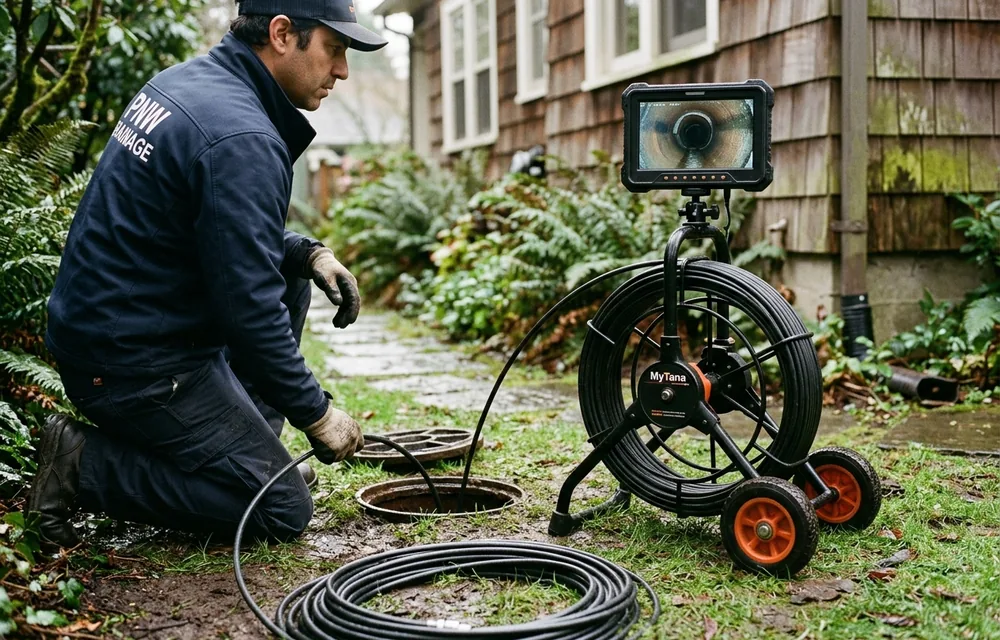
Sewer Camera Inspection
A sewer scope is the cheapest insurance in real estate and the only defensible basis for an excavation quote.
Drain Cleaning
A single slow sink is a nuisance.
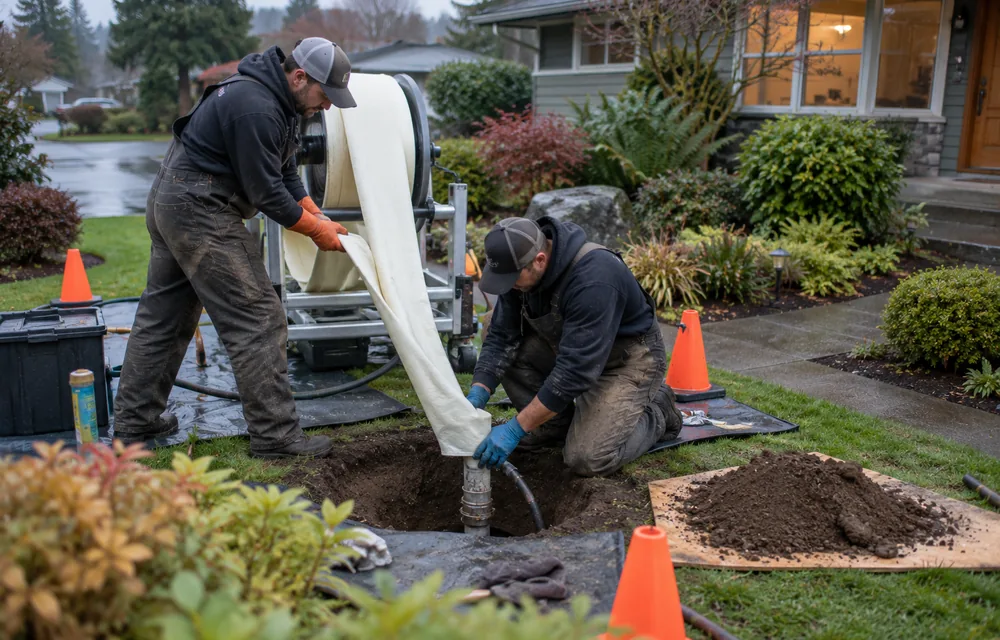
Sewer Line Repair & Replacement
Sewer replacement is the largest unexpected bill most Oregon homeowners ever face on their plumbing.
More guides
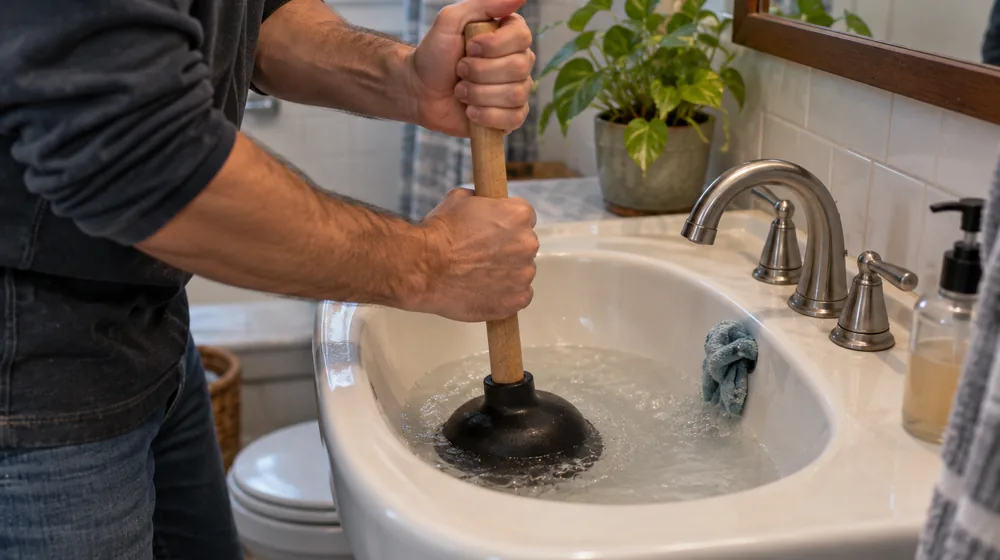
How to Unclog a Drain Yourself (and When to Stop)
Most single-fixture clogs are genuinely a DIY job. Here is what works, in the order a plumber would try it — and the p…
Sewer Backup: What to Do in the First Ten Minutes
A main line backup gets measurably worse with every gallon of water the household uses. What you do in the first ten m…
Winterizing Plumbing in Oregon: A Regional Checklist
Generic winterizing advice is written for the Midwest and it is either overkill or dangerously inadequate depending on…