Why You Need a Sewer Scope Before Buying an Oregon Home
Roughly $250 during your inspection contingency, to find out whether you are buying a $600 cleaning or a $14,000 replacement. There is no better-value line item in an Oregon home purchase.
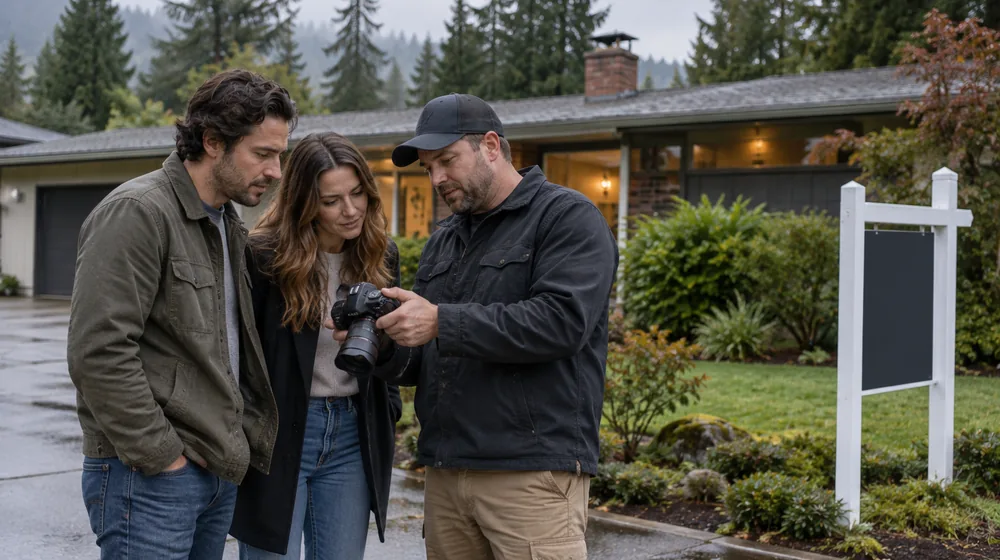
Your home inspection does not cover this
Home inspectors exclude the sewer lateral explicitly in their contracts. Buyers routinely miss it, and it is simultaneously the most expensive single component that a general inspection will not examine.
The lateral is also almost always the buyer's problem the moment they close. In most Oregon jurisdictions the property owner is responsible for at least the private-property portion, and frequently out to the connection at the public main. Portland sets its split in City Code Chapter 17.32 and requires a UR or UC permit for right-of-way lateral work. Bend assigns the owner the service from the main into the property. Oregon City runs a lateral repair assistance program. The details differ; the pattern does not.
There is no seller disclosure that reliably surfaces this either. A seller who has never had a backup genuinely does not know the condition of their lateral, and a seller who has had one may honestly report that "it was cleared and has been fine since" — which is true and tells you nothing about why it clogged.
Why the Oregon housing stock makes this urgent
It is about when the house was built.
1945 to 1972 — the Orangeburg window. Tar-impregnated wood-fibre pipe, used widely across postwar Oregon development, rated for 30 to 50 years and therefore now universally past it. In wet Oregon soil it absorbs water, swells, deforms out of round and collapses. It generally cannot be lined, so finding it means planning a replacement rather than a repair.
Pre-1945 — clay tile. Short segments with mortared joints, which is exactly what roots exploit. At eighty-plus years these lines typically show several defects at once.
Mid-century — cast iron inside. Corrodes from the invert outward, leaving a rough scaled interior that catches everything.
1978 to 1995 — polybutylene on the water side. Not the sewer, but worth knowing while you are investigating. Grey or blue flexible plastic supply pipe that embrittles from chlorine exposure and fails as a sudden split rather than a slow drip.
If the home has mature trees between it and the street, add root intrusion on top of whatever the pipe material contributes.
What to insist on, from anyone
- A recorded video file you keep. Not a verbal summary. A file you can forward to a second contractor for a competing bid, or to the seller during negotiation.
- Footage marks for every defect, so a repair can be priced without guesswork.
- A surface locate with depth. Depth is a major driver of excavation cost, and a locate tells an excavator where to dig.
- A written plain-language report: pipe material, approximate age, what is wrong, how urgent, what the options cost.
An inspection without a locate is half a service. An inspection without a video file is a story. Be cautious of a free inspection bundled with a same-day repair quote — the incentive is obvious.
Reading the footage yourself
| What you see on screen | What it means | Rough cost implication |
|---|---|---|
| Fine white hairs at a joint | Early root intrusion; joint is open | $275–$650 now, recurring |
| Thick root mass filling the bore | Established intrusion | Cutting + jetting, then a lining decision |
| Standing water mid-run | A belly — section settled below grade | Excavation; lining will NOT fix this |
| A visible step at a joint | Offset; catches paper and solids | Spot repair $2,200–$5,000 |
| Long cracks running with the pipe | Structural fatigue, progressing | Lining if the host pipe holds shape |
| Dark, blistered, oval-looking wall | Orangeburg deforming | Replacement — usually not linable |
| Orange-brown scale narrowing the bore | Cast iron corrosion | Jetting, then re-scope to assess wall |
| Camera cannot pass at all | Collapse or full blockage | Locate the point, then excavate or burst |
You do not need to become an expert. You need enough vocabulary to ask one useful question: is this a cleaning problem, a spot repair, or a full-run replacement? Those three answers are separated by roughly an order of magnitude each, and a technician who cannot give you a clear answer on camera has not done the inspection properly.
What findings are worth at the negotiating table
During the inspection contingency, a documented defect becomes a price reduction, a seller-funded repair, or a clean walk-away. After closing, the identical finding is simply your bill.
A collapsed or Orangeburg lateral on a full run is commonly an $8,000 to $18,000 conversation. Root intrusion at one joint on an otherwise sound clay line might be a $3,000 spot repair. Both are worth knowing before you sign; only one of them should change your offer materially.
How buyers actually use this, in rough order of how often it works:
- Ask for a credit at closing rather than a seller repair. You control the contractor, the timeline and the quality, and you are not inheriting whoever was cheapest and available in a hurry.
- Ask for a price reduction equal to a real quote, not an estimate. This is exactly why you insist on the video file and footage marks — they let you obtain a genuine competing bid within the contingency window.
- Ask the seller to repair with permits and provide the signed inspection card. Slower and you have less control, but it puts the liability on them.
- Walk. Rare, and usually only when the scope reveals something alongside other findings that together change the picture.
One caution: in a competitive market, sellers sometimes refuse all three. Knowing the number still lets you buy with your eyes open and budget for it, which is materially better than discovering it in year two.
Timing it inside an Oregon transaction
Book the scope the day your offer is accepted
Oregon inspection contingencies are short, often seven to ten business days, and scheduling tightens sharply in a busy spring market. Do not wait for the general inspection to finish first.
Arrange access with the listing agent
The technician needs an exterior cleanout or, failing that, permission to pull a toilet. Occupied homes need notice, and "we could not get access" wastes days you do not have.
Attend if you possibly can
Watching the footage live with someone explaining it is worth far more than reading the report afterward. Bring your agent.
Get a repair quote inside the window
A finding without a number is hard to negotiate against. With the video file and footage marks you can get a real quote in a day or two.
Put the request in writing before the contingency expires
Verbal agreements about sewer repairs have a way of evaporating at closing.
When to scope even though you are not buying
The same logic applies outside a transaction, and the trigger points are worth knowing:
- After the second clog in the same line within two years. Two failures in the same run is a structural signal, not bad luck.
- Before a remodel, addition or slab pour. Finding a failing lateral after the new concrete is down is an expensive way to learn.
- Before landscaping or a driveway. Locate the line first. Hardscape over a failing lateral multiplies the future repair cost, and it is the difference between a $3,000 spot repair and a $12,000 one.
- Before selling. A seller-side scope removes the buyer's biggest unknown and takes away their strongest negotiating lever. If the line is sound, you have documentation that says so.
- After a large tree is removed nearby. Stump grinding sometimes finds the pipe, and decaying root masses leave voids.
- On any rental or multiplex purchase. Shared laterals in older Oregon multiplexes are common, and the liability scales with the number of units.
Book a sewer camera inspection, and see sewer line repair for what the repair options actually cost once you know what you are dealing with.
What a sewer scope cannot tell you
Being straight about the limits is part of the value, and it stops you over-reading a clean report.
It cannot see past a blockage. If the line is obstructed, the camera stops there. You learn the location and depth of the obstruction — genuinely useful — but nothing about the run beyond it. Where this happens, clearing then re-scoping is the only way to see the whole picture.
It cannot see the outside of the pipe. Soil voids, external corrosion and the extent of a leak into surrounding ground are all invisible from inside.
It cannot predict timing. A camera shows a crack; it does not tell you whether that crack fails in two years or fifteen. Anyone giving you a confident date is guessing.
It does not cover the water supply line. That is a separate system with separate failure modes — galvanised corrosion, polybutylene embrittlement — and it needs its own assessment.
It is a snapshot. A clean scope in March says the line was sound in March. It is still by far the best information available, and vastly better than the alternative of no information at all.
Services mentioned in this guide
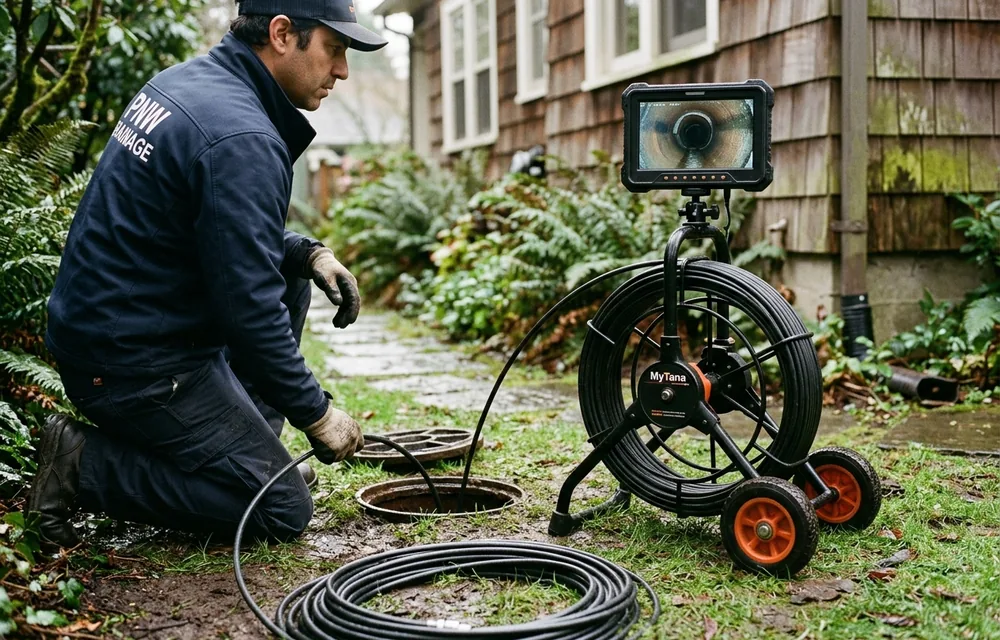
Sewer Camera Inspection
A sewer scope is the cheapest insurance in real estate and the only defensible basis for an excavation quote.
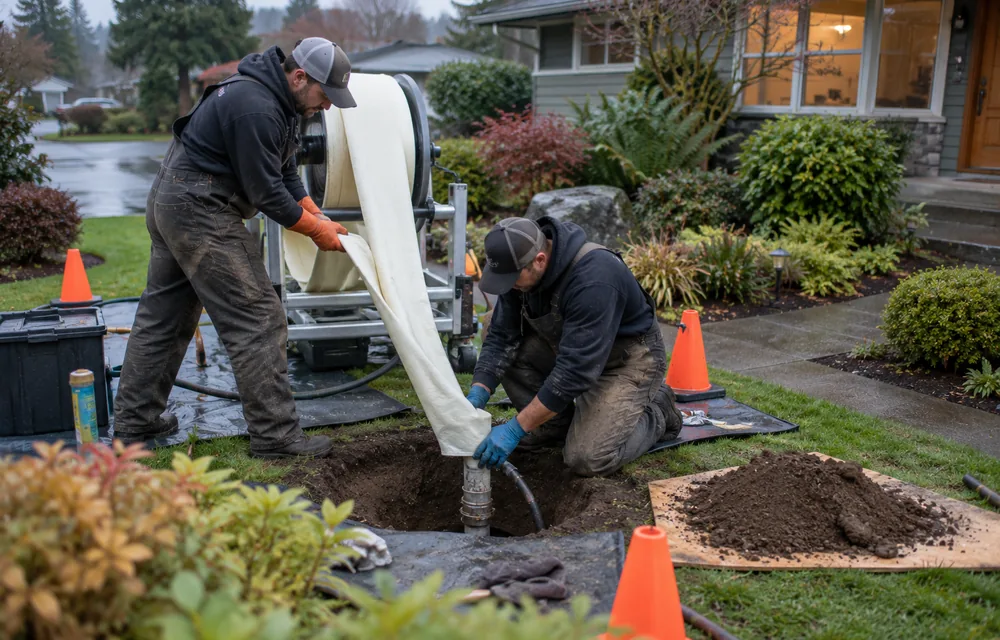
Sewer Line Repair & Replacement
Sewer replacement is the largest unexpected bill most Oregon homeowners ever face on their plumbing.
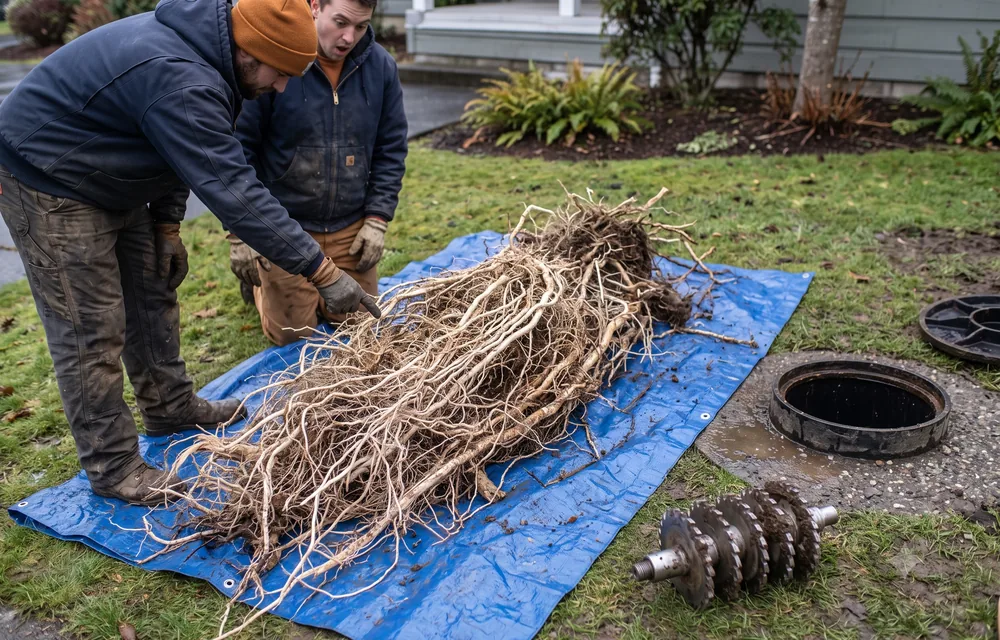
Rooter Service & Tree Root Removal
Roots do not break into a healthy pipe.
More guides
How to Unclog a Drain Yourself (and When to Stop)
Most single-fixture clogs are genuinely a DIY job. Here is what works, in the order a plumber would try it — and the p…
Sewer Backup: What to Do in the First Ten Minutes
A main line backup gets measurably worse with every gallon of water the household uses. What you do in the first ten m…
Winterizing Plumbing in Oregon: A Regional Checklist
Generic winterizing advice is written for the Midwest and it is either overkill or dangerously inadequate depending on…